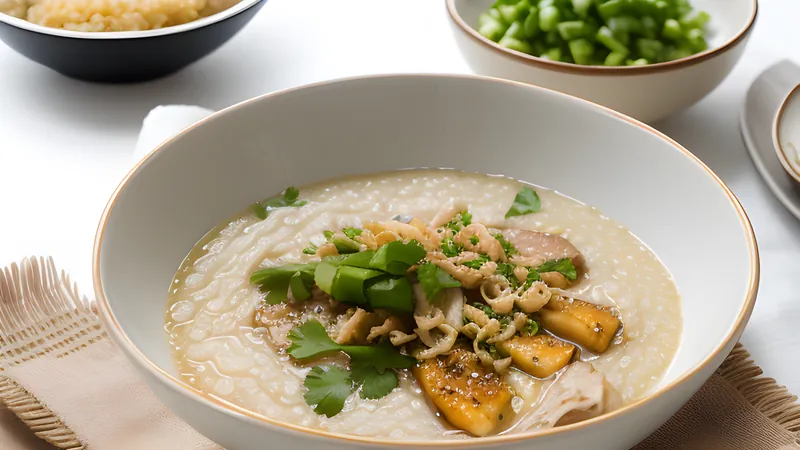
Arsenic in the Rice: The Real Problem Behind the Scare
Rice really does carry arsenic. The number that should worry you is not the one the headlines used.
Contents
In the autumn of 2012, a magazine that usually tested washing machines and car tyres tested a bowl of rice, and the result travelled further than either. Consumer Reports had bought more than two hundred samples of rice and rice products off American shelves — white and brown, basmati and short-grain, rice cereal and rice cakes and the rice milk that anxious parents poured for toddlers — and sent them to a laboratory to be assayed for arsenic. Every single sample contained some. A few contained a great deal. The story went out under headlines that did the obvious thing with the word arsenic, and within a week a staple that feeds half the planet had acquired the aura of a slow poison hiding in the cupboard. The panic was understandable. It was also, in an important sense, aimed at the wrong target.
The metal really is in the grain
Start with the part that is true, because it is the part that earns the right to say anything else. Rice does concentrate arsenic, and it does so more reliably than almost any other food crop. This is not contamination in the ordinary sense of something spilled or added. It is chemistry and agronomy working exactly as they must.
Arsenic is a natural constituent of the Earth’s crust, present in most soils and groundwater at low levels. Plants take it up along with the nutrients they need, and most of them keep the dose small. Rice does not, for a reason built into how it is grown. Rice is cultivated in flooded paddies, and a waterlogged, oxygen-starved soil changes the chemistry of the arsenic within it, converting it into forms that dissolve readily and that the rice plant absorbs as though they were phosphate. The grain then stores a good deal of that arsenic in the outer bran layer, which is why brown rice, prized for keeping its bran, carries measurably more than the polished white grain that has had the bran stripped away. The plant is not doing anything wrong. It is doing what a marsh grass does, and rice is a marsh grass we have persuaded to feed us.
There is a further complication that matters more than the raw totals, and toxicologists were quick to point it out. Arsenic comes in two broad chemical guises. Organic arsenic, bound up with carbon, passes through the body with little effect. Inorganic arsenic is the dangerous one — a confirmed human carcinogen, classified in the top tier by the International Agency for Research on Cancer, linked over long exposures to cancers of the skin, bladder and lung, to cardiovascular disease and to developmental harm. Rice takes up a substantial share of its arsenic in the inorganic form, which is precisely why it draws the scrutiny that, say, a banana does not. The Consumer Reports finding was not a laboratory fluke or a scaremonger’s trick. The metal is in the grain, and the worrying kind is well represented.
Where the arsenic came from
If you want to understand a scare, follow the arsenic backwards to where it entered the soil, and the trail leads somewhere the headlines rarely went: the cotton fields of the American South.
Much of the rice grown in the United States comes from Arkansas, Louisiana, Texas and Mississippi, and a great deal of that land grew cotton first. For most of the twentieth century, cotton was defended against the boll weevil and other pests with arsenical pesticides — lead arsenate early on, then organic arsenicals such as monosodium methylarsonate sprayed by the tonne across the Delta for decades. Arsenic does not break down. It does not wash away or decay into something harmless. It sits in the topsoil more or less forever, and when the cotton economy faded and the fields were flooded and re-sown with rice, the new crop began quietly drawing up the legacy of the old one. This is why rice from the south-central United States tends to test higher than rice grown in California, where the agricultural history is different, and why rice from parts of India and Pakistan, grown on soils never dosed with arsenical sprays, often tests lower still. The geography of the contamination is a map of what the land was made to do a century ago.
That is the mild version of the story. The severe version is playing out in Bangladesh and West Bengal, and it is one of the reasons scientists were watching rice and arsenic long before an American magazine made it news. In the 1970s and 1980s, aid agencies including UNICEF sponsored the drilling of millions of tube wells across the Bengal delta, a well-meant campaign to move families off surface water riddled with cholera and dysentery. The groundwater was clean of pathogens. What almost nobody tested for was arsenic, and the deltaic aquifers turned out to be laced with it at natural but toxic concentrations. Tens of millions of people drank that water for years, and cooked their rice in it, and grew their rice in fields irrigated with it, so the grain took up a second dose on top of the first. The World Health Organization would later call it the largest mass poisoning of a population in history. The chronic skin lesions and cancers arriving across Bengal are the real face of arsenic in rice, and they are a world away from a Western shopper worrying over a box of cereal.
The fork: from a real hazard to a household terror
Here is the point where the record and the fear part company, and it is worth marking precisely, because the departure is not a lie so much as a loss of proportion.
Everything above is real. Rice concentrates inorganic arsenic; the arsenic is a genuine carcinogen; some rice carries enough that regulators were right to act. The European Union set legal maximum limits for inorganic arsenic in rice and rice products in 2016, with a stricter ceiling for the rice used in infant food. The American Food and Drug Administration, after running its own large survey in the wake of the 2012 story, proposed a limit for infant rice cereal specifically. These are sober, defensible measures aimed at the two places the science actually points — very heavy lifelong consumers, and infants, whose small bodies and rice-heavy weaning diets give them the highest exposure per kilogram of anyone.
The scare took that carefully bounded hazard and unbounded it. In the retelling, arsenic in rice stopped being a dose problem — a question of how much, how often, which rice, for whom — and became a binary contaminant, a poison that was simply in the food, full stop. The word did the work. Arsenic is the murderer’s classic, the tasteless powder in the Victorian teacup, and a substance with that reputation does not get graded on a curve in the public mind; it is either present or absent, and if it is present, the food is poisoned. So a parent who read that rice cereal contained arsenic did not hear a modest long-term exposure worth managing. They heard I have been poisoning my baby, and no reassurance about micrograms per kilogram could easily undo a sentence like that.
This is the same machinery that turns a real study into a durable public terror across food and medicine alike. The pattern of a genuine finding, stripped of its dose and its context and amplified into an absolute, is exactly the one that carried the withdrawn vaccine–autism study so much further than its evidence could support. It is the reverse of the trick played in the great sugar cover-up, where a real risk was talked down; here a real risk is talked up past all recognition. The failure mode in both directions is the same: a number that means something only in context is set loose without it.
What actually reduces the dose
The quiet tragedy of the scare is that it made rice frightening while doing very little to make anyone safer, when the practical answers were sitting in the same research the headlines skimmed. Arsenic in rice is a dose you can lower, and the levers are unglamorous and cheap.
Rinse rice before cooking, and cook it in a generous excess of water — five or six parts water to one of rice — then drain the surplus off, the way pasta is cooked rather than the way a rice cooker absorbs every drop. Studies at Queen’s University Belfast and elsewhere found that this method strips out a substantial fraction of the inorganic arsenic, because the arsenic leaches into the cooking water and is poured away. Choose white over brown if arsenic is the specific worry, accepting the modest loss of fibre and micronutrients, since the bran that makes brown rice nutritious is also where the arsenic collects. Favour rice grown where the soil history is kinder — California rice, or basmati and jasmine from regions that never soaked in arsenical sprays. And vary the plate: a diet that leans on rice for every meal, or that weans a baby on rice cereal three times a day, concentrates the exposure in a way that a diet rotating through oats, wheat, barley and potatoes never will.
None of that is a counsel to fear rice, and it is emphatically not a reason to pull a grain that nourishes billions and carries no substitute in most of the world’s kitchens. It is the ordinary, boring shape of managing a real low-level hazard: know where it comes from, know who is most exposed, and make the small adjustments that move the dial. The infant on a rice-only weaning diet and the Bangladeshi farmer drinking from an arsenic well are the people the science was always most worried about. The adult eating a portion of rice a few nights a week was, on the evidence, never in much danger at all.
The scare was pointing at the cupboard; the problem was in the ground
What lingers about the arsenic-in-rice story is how completely the alarm and the harm failed to line up. The alarm went off in kitchens across Britain and America, aimed at boxes on shelves, at breakfast, at the choices of careful parents. The harm — the cancers, the skin lesions, the poisoned wells — was concentrated thousands of miles away, among people who had almost no voice in the coverage and whose predicament long predated it. The magazine test that lit the fuse was accurate. The chemistry was accurate. What went missing in transit was the sense of scale that turns a fact into knowledge, the difference between arsenic is present and this much arsenic, in this rice, matters this much, to these people.
A scare, at its heart, is a true thing that has slipped its proportions. The arsenic in your rice is real, and worth a few small habits, and almost certainly not the thing about your diet most likely to shorten your life. The arsenic in a tube well in the Bengal delta is a catastrophe that deserved every headline the cereal box received and got a fraction of them. Somewhere between those two facts is the whole difficulty of living in a world that contains genuine hazards, most of them a matter of degree, none of them improved by fear that has forgotten how to count.
Related Content