Zhug: The Green Yemeni Hot Sauce That Goes on Everything
a fistful of coriander, chilli and fire
Zhug: The Green Yemeni Hot Sauce That Goes on Everything
Ingredients
- 2 large bunches fresh coriander, stalks and all (about 100 g)
- 1 small bunch flat-leaf parsley (about 30 g)
- 4–6 green chillies, deseeded for less heat
- 4 cloves garlic
- 1 tsp cumin seeds (the twist, toasted whole)
- 1/2 tsp coriander seeds
- 4 green cardamom pods, seeds only
- 1/2 tsp fine salt, plus more to taste
- Juice of 1 lemon
- 6 tbsp good olive oil, plus more to top
- Pinch of caster sugar (optional, to balance)
Method
- Toast the cumin, coriander and cardamom seeds in a dry pan for about a minute until fragrant, then grind to a coarse powder.
- Roughly chop the coriander and parsley, including the tender stalks where most of the flavour lives.
- Add the herbs, chillies, garlic, ground spices and salt to a food processor.
- Pulse to a coarse paste, scraping down the sides; do not over-blend into a smooth purée.
- With the motor running, drizzle in the olive oil and lemon juice until it loosens into a spoonable sauce.
- Taste and adjust with more salt, lemon or a pinch of sugar; loosen with extra oil if needed.
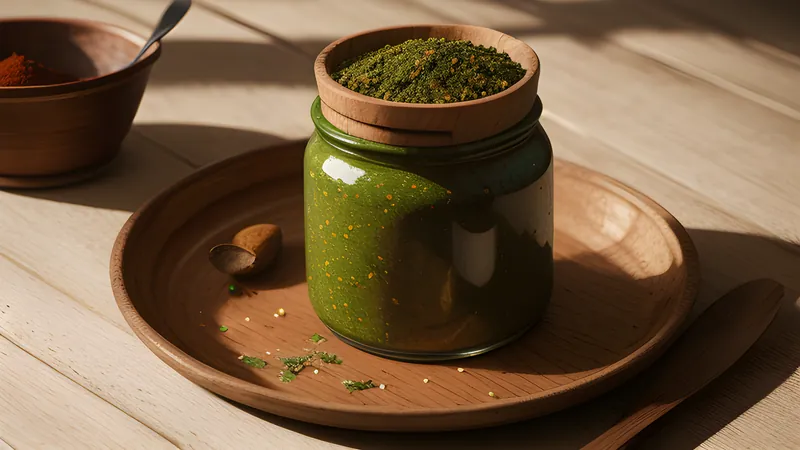
- Spoon into a clean jar, smooth the top and cover with a thin film of oil to keep it green.
Some condiments are polite. Zhug is not. It is a fistful of coriander, a handful of green chillies and enough garlic to clear a room, blitzed into a rough, electric-green paste that tastes like sunshine and arson in the best possible way. I made it for the first time to go alongside some grilled lamb and ended up putting it on everything I ate for the following week — eggs, cheese on toast, roast potatoes, a bowl of plain rice that suddenly didn’t taste plain at all.
If you are the sort of person who finds shop-bought hot sauce a bit one-dimensional — all heat, no character — this is the antidote. It is fresh, herbal, aromatic and fierce, and it takes about fifteen minutes.
1 Where it comes from
Zhug (also spelled zhoug, skhug or sahawiq, depending on whose kitchen you are standing in) is the national hot sauce of Yemen, carried from there into Israeli and wider Middle Eastern cooking by Yemeni Jewish communities, where it became a fixture in falafel shops and on hummus counters. There it is ubiquitous — a fiery green smear under the falafel, a spoonful stirred into soup, a dollop on a fried egg.
There are red versions, built on dried red chillies, but the green is the one I love: vivid, raw and alive with herbs. What sets it apart from a Mexican salsa verde or an Italian salsa is the spicing. Zhug is perfumed with cardamom, cumin and coriander seed, which give it a warm, almost incense-like depth underneath the heat. It is a hot sauce that tastes of somewhere, not just of capsaicin.
2 The twist that makes it sing
The clever move — and the one people always notice — is toasting the whole spices before grinding them. It is tempting to reach for the jar of ground cumin, and you can, but you will get a flatter, dustier result. Thirty seconds of cumin, coriander and cardamom seeds rattling around a dry pan until they smell nutty and warm, then a quick grind, gives the whole sauce a smoky, aromatic backbone that lifts it from “spicy herb paste” to something genuinely special. That fragrant base is what makes the difference between zhug you put on the table and zhug you crave.
Use the cardamom sparingly — the seeds from four pods, no more. It should hum in the background, not announce itself. Too much and the sauce starts to taste like pudding.
3 Making it well
Two rules matter. First, use the stalks. Coriander stalks are where most of the flavour concentrates, and they are tender enough to blend smooth. Trim only the very bottom of the bunch and throw the rest in. Stripping the leaves off and discarding the stalks is a waste of the best part. Second, keep it coarse. Zhug is not a smooth purée; it wants some texture, little flecks of herb and chilli you can see. Pulse the processor rather than running it, and stop while it still has some bite. A blender will turn it into a smooth green slick, which tastes fine but lacks the rustic charm.
The oil and lemon go in last, drizzled while the motor runs, just enough to loosen the paste into something you can spoon. Don’t drown it; you want a thick, spoonable consistency, not a runny dressing.
4 Heat, and how to control it
The chilli is yours to dial. Deseeding the green chillies takes a good deal of the fire out while keeping their fresh, grassy flavour, which is how I usually make it for a mixed crowd. Leave the seeds in, or add an extra chilli or two, and it climbs quickly toward proper, eyes-watering heat. Serrano-style chillies are ideal; ordinary green finger chillies work well. Taste a sliver of your chillies raw before you start — they vary wildly, and a single fierce one can dominate the whole jar.
A pinch of sugar is optional but useful. It does not make the sauce sweet; it just rounds off the raw garlic and sharp lemon so everything sits together more comfortably. Salt generously — zhug should taste assertive, because you only ever eat it in small amounts.
5 Keeping it and using it
Spoon it into a clean jar and pour a thin film of olive oil over the top; this seals it from the air and keeps the colour vivid for longer. It will fade from electric green toward olive over a few days regardless — that is normal and the flavour holds — but the oil slows it. Kept in the fridge, it is good for a week, perhaps a little more.
As for what to put it on: easier to list what it doesn’t suit. It is glorious on grilled meat and fish, stirred into hummus or yoghurt to make a quick dip, spooned over roast vegetables, folded through rice or couscous, dolloped on fried eggs, or simply spread on bread with a slab of feta. I have whisked it into a salad dressing and slathered it on a cheese toastie at midnight. Make a jar once and you will understand why, in its homeland, it goes on absolutely everything.
Related Content