Zaru Soba with a Cold Dipping Sauce
Chilled buckwheat noodles and a dashi-dark dipping sauce for the hottest days
Contents
↓ Jump to recipeThe first time I ate zaru soba properly was in a Tokyo train-station basement in August, when the air outside was thick enough to lean on. The noodles came piled on a little slatted bamboo tray, cold and glistening, with a cup of dark sauce beside them and nothing else pretending to be dinner. I remember thinking it looked like almost no food at all. Ten minutes later I understood: on a genuinely hot day, this is the most refreshing plate of savoury food I know, and it works precisely because it asks so little of you and gives back a clean, nutty, mineral sort of pleasure.
Soba are buckwheat noodles, and buckwheat is the whole story. It is not wheat and not even a grass — it is a seed, closer kin to rhubarb — with a grey-brown colour and a toasty, almost cocoa-ish flavour that hot noodles can bury but cold noodles show off. Serving them chilled is a summer tradition across Japan, and the ritual is simple: you lift a small bundle with chopsticks, dip the very end into the sauce, and eat with a frank slurp that both cools the noodle and aerates the flavour. The dipping sauce is called tsuyu, and making your own takes ten minutes and puts the bottled stuff to shame.
Zaru Soba with a Cold Dipping Sauce
Ingredients
- 200g dried soba noodles
- 300ml water
- 10g katsuobushi (bonito flakes), plus a small extra pinch
- 1 x 5cm piece kombu
- 60ml soy sauce
- 60ml mirin
- 1 tsp caster sugar
- 2 spring onions, finely sliced
- 1 tbsp toasted sesame seeds
- 1 sheet nori, cut into fine shreds
- wasabi, to serve
- ice cubes, for shocking the noodles
Method
- Heat 300ml water with the kombu slowly to a bare simmer over about 10 minutes, then lift out the kombu.
- Bring to a simmer, turn off the heat, add the 10g katsuobushi and steep for 2 minutes, then strain to make dashi.
- Return the dashi to the pan with the soy sauce, mirin and sugar; simmer 2 minutes, add the extra pinch of bonito, steep 5 minutes off the heat, strain, and chill the tsuyu thoroughly.
- Stir half the toasted, crushed sesame seeds into the chilled tsuyu.
- Boil the soba in a large pan of unsalted water for 4-5 minutes until just tender, then drain.
- Rinse the noodles under cold running water, rubbing off the surface starch until they feel almost squeaky, then chill in iced water and drain thoroughly.
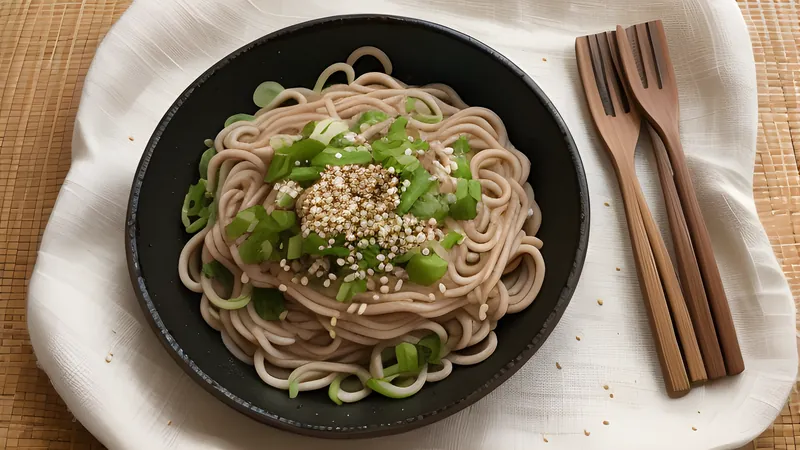
- Pile the noodles on a tray, scatter with shredded nori, and serve with the chilled tsuyu, spring onions, remaining sesame and wasabi to stir in and dip.
Buckwheat, and why cold suits it
Cheap soba is mostly wheat flour with enough buckwheat to justify the name and the colour. Better soba runs at 80 per cent buckwheat to 20 per cent wheat — hachiwari — and the very best, juwari, is pure buckwheat, fragile and expensive. For a home cook learning the dish, an 80/20 dried soba is the sweet spot: robust enough to survive rinsing, honest enough to actually taste of buckwheat. Read the packet; if wheat is the first ingredient, keep looking.
Cold is not a compromise here. Chilling firms the starch and tightens the noodle so it stays springy under the teeth, and it lets the roasty buckwheat note come forward that a hot broth would flatten. My one small twist is toasting the sesame seeds hard, until they are properly fragrant and beginning to pop, then crushing half of them into the tsuyu so the sauce carries a faint nuttiness that echoes the buckwheat. It is a tiny thing and it makes the sauce taste like someone thought about it.
Making the tsuyu
The dipping sauce is a concentrated cousin of the broth that flavours a hundred Japanese dishes, built on dashi. Start there. Put the water and the piece of kombu in a small pan and heat it slowly over a low flame — you want it to reach a bare simmer over about ten minutes, drawing the glutamates out of the kelp without boiling it, which turns kombu slimy and bitter. Just before it simmers, lift out the kombu. Now bring it to a proper simmer, kill the heat, and scatter in the katsuobushi. Let it steep off the heat for two minutes while the flakes sink, then strain through a fine sieve. You have made dashi.
Return the strained dashi to the pan with the soy sauce, mirin and sugar. Bring to a simmer for two minutes to cook off the alcohol in the mirin and let the flavours marry, then add the small extra pinch of bonito flakes and take it off the heat. Steep for five minutes, strain again, and chill the tsuyu thoroughly — over ice if you are in a hurry, or in the fridge for an hour. It should taste intensely savoury and a touch sweet, salty enough that you would not drink it neat; the noodles will dilute it as you dip. Stir in half the toasted, roughly crushed sesame seeds just before serving.
Cooking and rinsing the noodles
This is the part people rush, and it is the part that matters. Bring a large pan of unsalted water to a rolling boil — soba needs no salt, and it likes plenty of room. Add the noodles, stir once so they do not clump, and cook for the time on the packet, usually four to five minutes, tasting a strand a minute early. You want them cooked through with a slight resilient chew.
Drain immediately and tip the noodles into a bowl of cold water. Now rinse them properly: work the noodles gently with your hands under running cold water, or through two or three changes of cold water, rubbing off the surface starch until the water runs clear and the noodles feel almost squeaky. This rinse is non-negotiable — it stops the noodles gluing together and it is what gives zaru soba its clean, cool bite. Finish with a plunge into iced water to chill them right through, then drain thoroughly, shaking off every drop so the tsuyu is not watered down.
Pile the noodles on a bamboo zaru if you have one, or a plate with good drainage, and scatter the shredded nori over the top. Divide the chilled tsuyu between two small cups, add the spring onions, the rest of the sesame and a dab of wasabi alongside, and serve at once. To eat, stir a little of the spring onion and wasabi into your dipping cup, lift a small bundle of noodles, dip the ends, and slurp.
Tips, pitfalls and the drink at the end
The commonest mistake is under-rinsing, which leaves the noodles claggy and dull. The second is over-diluting the sauce by not draining the noodles hard enough. The third is boredom with the tsuyu, which is why the fresh aromatics matter — the wasabi, spring onion and sesame are stirred in by the diner precisely so the last mouthful tastes as bright as the first.
There is a lovely coda to a real soba meal. When you have finished the noodles, the traditional touch is sobayu — the starchy, cloudy water the soba cooked in, poured into your leftover dipping sauce to make a warm, savoury broth you drink to round things off. Reserve a cup of the cooking water before you drain, and try it; it turns a light lunch into something that feels complete.
The health note behind the habit
There is a reason soba earned its place as everyday food rather than treat food. Buckwheat carries a decent load of protein for a noodle, along with rutin, a flavonoid it holds in unusual quantity, and it is naturally gluten-free in its pure juwari form — though most dried soba contains wheat as a binder, so a coeliac cook needs to read the packet with real care and hunt down a certified pure-buckwheat brand. It sits lighter than a wheat noodle and releases its energy more slowly, which is part of why a cold plate of it in high summer leaves you refreshed rather than leaden. None of that is why you should make it; you should make it because it tastes clean and nutty and cold. It is a happy accident that the most refreshing thing on the table in August also happens to be the most sensible.
Variations and what to serve alongside
Zaru soba is the plain, cold template, and once you have it you have a small family of dishes. Top the noodles with a raw egg yolk and a spoon of grated mountain yam for tororo soba. Add a heap of finely shredded raw spring onion and a tangle of tempura crumbs for tanuki. In winter, warm the same tsuyu with more dashi to loosen it and serve the noodles hot in the bowl as kake soba. And a single crisp prawn tempura balanced on the tray turns a light lunch into a proper meal.
For a fuller table, this sits beautifully next to other Japanese classics. The savoury heft of a tonkatsu with shredded cabbage and Bulldog sauce makes the cold noodles feel like the elegant, cooling counterpoint they are, while a bowl of katsudon, pork cutlet and egg over rice turns two light plates into a generous lunch for a hungry table. If you want to stay in the noodle world entirely, the hot, smoky richness of yaki udon with pork and cabbage is the exact opposite temperature and mood, and the two together make a rather good study in what the same country does with a bowl of noodles.
Storage
Tsuyu keeps for a week in a sealed jar in the fridge and only improves after a day, so it is worth making a double batch. Cooked, rinsed soba is best eaten within the hour — it firms and dries in the fridge — but if you must hold it, toss the drained noodles with a few drops of neutral oil and cover; refresh under cold water before serving. Dried soba keeps for months in the cupboard, which means this whole meal is only ever fifteen minutes away on the hottest afternoon of the year.
Related Content