Zabaglione with Marsala and Berries
A warm Italian wine custard whisked to a cloud, with toasted almond and macerated fruit
Contents
↓ Jump to recipeZabaglione is the pudding you make when guests are already at the table and you have forgotten to make a pudding. Four yolks, a spoon or two of sugar, a slug of Marsala, a bowl over a pan of simmering water, and eight minutes of honest whisking — and you produce a warm, pale gold cloud of a custard, so light it barely holds its own weight, tasting of wine and eggs and warmth. There is no other classic dessert that goes from nothing to this in the time it takes to clear the main course, and no other that rewards a bit of arm-ache so completely. It is, in the best sense, a trick, and once you can do it you will never be caught out by a dinner again.
The dish is Italian, though the name shifts as you cross the country: zabaglione in the north, zabaione in the older spelling, and sabayon once the French borrowed it. The most-repeated origin story sends it to sixteenth-century Turin and a Franciscan friar, San Pasquale Baylón, later adopted as a patron of cooks, whose name is said to have been Italianised into the dish — a lovely story that food historians treat with a raised eyebrow, since firm references only really firm up later. What is certain is that by the nineteenth century it was a Piedmontese speciality, traditionally made with the region’s own Moscato or with Marsala, the fortified wine from the west coast of Sicily that has become its default partner. Marsala’s caramel-and-raisin depth is what gives a good zabaglione its backbone, and it explains why a wine you might otherwise only splash into a risotto or a chicken pan earns a permanent place in the pudding cupboard.
Zabaglione with Marsala and Berries
Ingredients
- 300g mixed berries (raspberries, blackberries, halved strawberries)
- 1 tbsp caster sugar (for the fruit)
- 1 tsp lemon juice
- 4 large egg yolks
- 60g caster sugar
- 80ml dry Marsala
- 1 tbsp amaretto (optional)
- 1 pinch fine salt
- 2 tbsp flaked almonds, toasted
Method
- Toss the berries with 1 tbsp caster sugar and the lemon juice and set aside to macerate for 15 minutes.
- Toast the flaked almonds in a dry pan until golden, then tip out to cool.
- Bring a pan with a few centimetres of water to a bare simmer.
- In a large heatproof bowl, whisk the egg yolks, 60g caster sugar, Marsala, amaretto and salt until combined.
- Set the bowl over the simmering water without letting the base touch the water, and whisk vigorously and constantly for 6 to 8 minutes until pale, tripled in volume and thick enough to hold a ribbon.
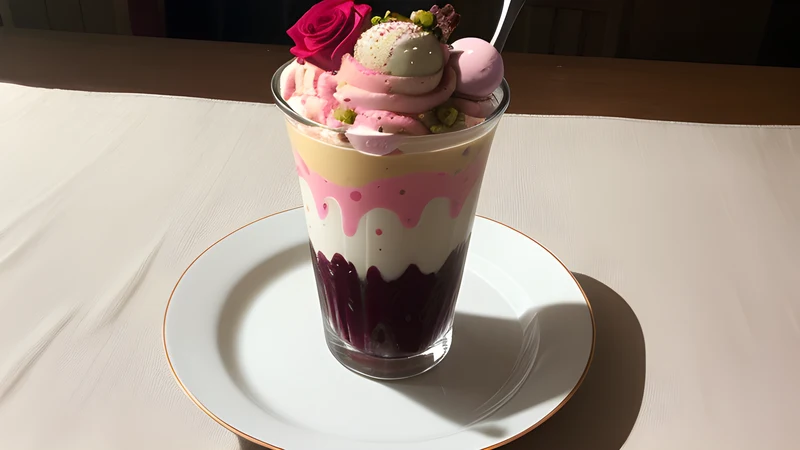
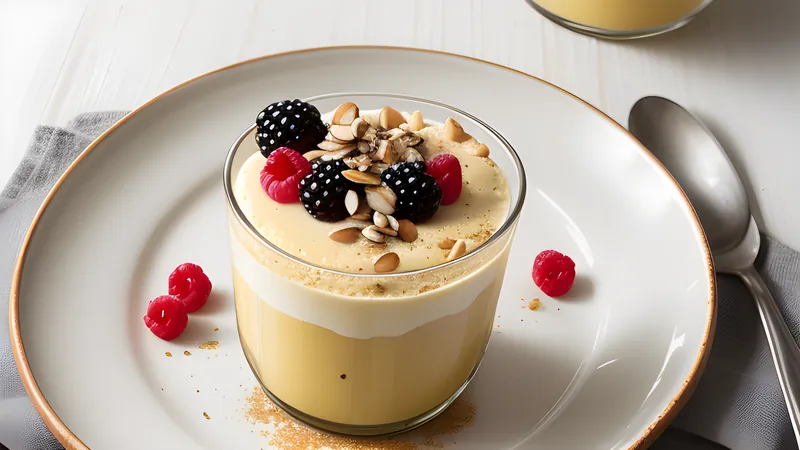
- Divide the macerated berries between 4 glasses, spoon the warm zabaglione over the top, and scatter with toasted almonds. Serve at once.
The technique is the whole dish
There are only three ingredients doing the real work, so the method carries everything. What you are making is an emulsion foam: the whisking beats air into the yolks while the gentle heat cooks the proteins just enough to trap that air and thicken the mixture, and the alcohol and sugar keep it loose and glossy. Two temperatures matter. Too cool and it will froth but never thicken, staying thin and boozy. Too hot and the yolks curdle into sweet, wine-flavoured scrambled egg with no way back. The safeguard is a bain-marie — a bowl set over, and never touching, barely simmering water — so the yolks only ever feel indirect, moderate heat, and you keep the whisk moving the entire time so no part of the mixture sits still against the hot glass.
You are whisking for volume as much as for cooking. A finished zabaglione should have roughly tripled, gone from deep yolk-yellow to a pale straw colour, and thickened to the point where a trail of it drizzled from the whisk sits on the surface for a couple of seconds — the ribbon stage. That is your signal to stop. If you keep going past it on too much heat, you tip over the edge; pull it while it still flows like softly whipped cream and you have it exactly right. A hand whisk gives you the most control and the most reliable arm-warning when the base is getting too hot, but an electric one shortens the labour considerably if you keep the heat low and the bowl moving — the physics is identical either way, and it is only ever air, heat and time.
The almond, which is the twist
Classic zabaglione is served alone in a glass, or over fruit, unadorned. I do two small things to it. First, a tablespoon of amaretto goes in alongside the Marsala, which deepens the wine with a bittersweet almond note and a faint marzipan warmth. Second, I scatter toasted flaked almonds over the top, so there is a thread of crunch and a toasted, nutty smell running through all that softness. The almond and the Marsala are natural allies — both carry that dried-fruit, faintly caramelised character — and the textural contrast stops the pudding feeling one-note. A pinch of salt in the base does the quiet work of sharpening everything and keeping the sweetness in check. If you like that toasted-almond register with soft fruit, it is the same pairing that makes grilled peaches with amaretti and mascarpone sing.
Why the berries need macerating
Warm, sweet, alcoholic custard needs something sharp and cold underneath it, and macerated berries are the ideal foil. Tossing the fruit with a spoon of sugar and a little lemon juice fifteen minutes ahead draws out some of their juices by osmosis — the sugar pulls water from the berries — softening them slightly and creating a bright, syrupy pool at the bottom of the glass. That acidity and coolness cuts straight through the richness of the zabaglione above. Raspberries and blackberries are ideal for their tartness; strawberries want halving so they release their juice; and if you are making this in winter, poached rhubarb or sharp orange segments do the same job. The interplay of warm custard over cold sharp fruit is a close relative of the sherry-soaked layers in a proper trifle.
Method, step by step
Fifteen minutes before you start, toss 300g of mixed berries with a tablespoon of caster sugar and a teaspoon of lemon juice, and leave them to macerate at room temperature. Toast two tablespoons of flaked almonds in a dry frying pan over a medium heat, shaking often, until golden and fragrant — a minute or two, and watch them, because they scorch the moment you turn your back — then tip them onto a plate to cool.
Bring a few centimetres of water to a bare simmer in a saucepan over which your mixing bowl will sit snugly without its base dipping into the water. In that heatproof bowl, whisk four egg yolks with 60g of caster sugar, 80ml of dry Marsala, the tablespoon of amaretto if using, and a pinch of fine salt, until evenly combined. Set the bowl over the simmering water and start whisking, and don’t stop. For six to eight minutes you keep the whisk moving hard, scraping round the sides, until the mixture pales, swells to about three times its volume, and thickens enough to hold a ribbon when it falls from the whisk.
Divide the macerated berries and a little of their juice between four glasses. Spoon the warm zabaglione generously over the top, scatter with the toasted almonds, and take it to the table immediately, while it is still warm and billowing.
Timing, holding and a cold variation
Zabaglione is at its most spectacular the instant it is made, warm and mousse-like, and the honest advice is to serve it straight away — this is a last-second pudding by nature. That said, it is more forgiving than its reputation suggests. If you keep whisking as it cools, or set the bowl over a second bowl of iced water and whisk until cold, it will hold its aeration for a while, and you can even spoon it over the fruit and slide the glasses under a hot grill for thirty seconds to glaze the top. For a genuinely make-ahead version, fold the cooled zabaglione through an equal quantity of softly whipped cream — this stabilises it into something closer to a mousse that will sit happily in the fridge for a few hours and is the base of a fine chilled trifle or a semifreddo.
A few practical notes. Use the freshest eggs you can, since so few ingredients means each one is tasted. Dry Marsala is traditional and gives a cleaner, less sugary result; sweet Marsala works but drop the added sugar to 45g to compensate. And if the unthinkable happens and it starts to look grainy at the edges, pull it off the heat at once and whisk furiously off the flame — you can sometimes bring it back from the brink before the curdle spreads, and a few flecks strained out through a sieve will never be noticed under a scatter of almonds.
Related Content