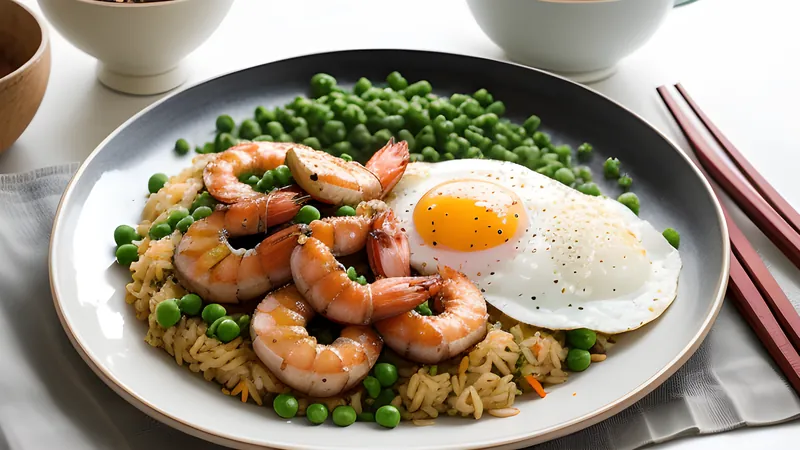
Yangzhou Fried Rice with Char Siu and Prawn
The benchmark fried rice, and how to get every grain to fly
Contents
↓ Jump to recipeYangzhou fried rice is the benchmark against which every other fried rice is quietly measured. In China it’s the standard by which a cook is judged: get it right and the grains are separate, glossy and toasty, each one carrying flavour but never clumping; get it wrong and you have a wet, sticky, steamed heap. The whole difference comes down to a handful of decisions made before the wok is even hot.
It’s named for the city of Yangzhou in Jiangsu province, a wealthy salt-trade hub on the Grand Canal, and the classic version is a study in restraint — a mosaic of small, colourful pieces bound by egg and rice, seasoned lightly so the ingredients speak. The two things I insist on are properly cold rice and a wok hot enough to frighten you. Get those and the rest is just tossing. My small twist is treating the egg two ways, which gives you both silky curds and a thin coating on the grains — the trick behind so-called “golden” fried rice.
Yangzhou Fried Rice with Char Siu and Prawn
Ingredients
- 600g cooked jasmine rice, cold (ideally a day old)
- 150g char siu (Chinese barbecue pork), diced
- 150g raw prawns, peeled and roughly chopped
- 4 eggs, beaten with a pinch of salt
- 100g frozen peas, thawed
- 1 carrot, finely diced
- 4 spring onions, whites and greens separated, sliced
- 2 tbsp light soy sauce
- 1 tsp toasted sesame oil
- 1/2 tsp white pepper
- 1/2 tsp fine sea salt
- 3 tbsp neutral oil (groundnut or rapeseed)
Method
- Prep everything first: beat the eggs with a pinch of salt, break up the cold rice, dice the char siu, pat the prawns dry, and ready the vegetables and measured sauces beside the hob.
- Heat a wok over the highest heat until smoking. Add 1 tbsp oil and pour in three-quarters of the beaten egg, scramble into soft curds and tip out onto a plate while still slightly wet.
- Add another 1 tbsp oil and the prawns, stir-fry 1 minute until pink, then add the char siu and toss 30 seconds. Scoop both out with the egg.
- Add the last of the oil, the spring onion whites and the carrot, and stir-fry 1 minute.
- Add the cold rice, press it against the hot metal and toss, keeping the heat brutal until the grains dance and jump in the wok.
- Pour the remaining quarter of beaten egg over the rice and toss immediately so it coats the grains in a thin golden film.
- Return the egg, prawns and char siu, add the peas, 2 tbsp soy sauce, white pepper and salt, and toss 1 minute until piping hot.
- Off the heat, add 1 tsp sesame oil and the spring onion greens, toss once, taste and serve at once.
Why the rice must be cold
Freshly cooked rice is soft, moist and full of surface starch, and it steams and clumps the moment it hits the wok. Cold rice that has spent a night in the fridge has dried out and firmed up — the grains have retrograded, their starch recrystallising into separate, distinct kernels that fry rather than steam. That’s the single biggest factor, ahead of any sauce or ingredient.
If you forgot to cook rice yesterday, spread freshly cooked and slightly under-done rice on a tray in a thin layer, let the steam escape, and chill it uncovered for an hour or freeze it for twenty minutes. Break up any clumps with your fingers before it goes in the wok. Use jasmine rice, cooked slightly firm and on the dry side — a touch less water than usual. This is the opposite of what you want for a creamy risotto alla Milanese, where you keep the starch and coax it out; here you’re doing everything you can to keep the grains apart.
The char siu
Char siu — Cantonese barbecue pork, sweet, sticky and edged with red — is the classic protein, along with prawns and sometimes ham. You can buy it ready-made from any Chinese barbecue shop, hanging in the window beside the roast duck, and that’s what most home cooks do. If you’re making it from scratch, marinate pork shoulder in hoisin, honey, soy, five-spice and a little fermented bean curd, then roast until lacquered. Dice it small so it distributes evenly through the rice.
The prawns want to be chopped roughly, not left whole — small pieces cook through in seconds and spread through every mouthful. Pat them very dry, because wet prawns will bring unwanted water into the wok.
Method
Get everything prepped and lined up beside the hob before you light it. Stir-frying is fast and there’s no time to chop once you start. Beat the eggs with a pinch of salt. Have the rice broken up, the char siu diced, the prawns dried, the vegetables ready and the sauces measured.
Heat a wok or your widest, heaviest frying pan over the highest heat until it’s smoking. Add a tablespoon of oil, swirl it round, and pour in three-quarters of the beaten egg. Let it puff and scramble into soft curds, then tip it back onto a plate while still slightly wet. Don’t overcook it — it’ll cook again later.
Add another tablespoon of oil and the prawns. Stir-fry for a minute until they turn pink and opaque, then add the char siu and toss for thirty seconds to warm through. Scoop both out onto the plate with the egg.
Now the rice. Add the last of the oil, throw in the spring onion whites and the carrot, and stir-fry for a minute. Add the cold rice and press it against the hot metal, then toss and repeat. Keep it moving and keep the heat brutal — you’re trying to fry each grain, driving off moisture until the rice starts to dance and jump in the wok. This is where wok hei comes from, the “breath of the wok”, that faintly smoky, toasted aroma a hot pan gives food.
Once the rice is hot and loose, pour the remaining quarter of beaten egg straight over it and toss immediately, so it coats the grains in a thin golden film rather than setting into curds. Return the egg, prawns and char siu to the wok. Add the peas, the soy sauce, white pepper and salt, and toss everything together for a final minute until evenly mixed and piping hot.
Off the heat, add the sesame oil and the spring onion greens and give it one last toss. Sesame oil is a finishing flavour; add it early and the aroma cooks away. Taste, adjust the salt, and serve at once.
What goes wrong, and why
Sticky, clumping rice is warm or fresh rice, every time. It must be cold, dry and broken up before it goes near the wok.
A wet, steamed result means the pan wasn’t hot enough or was overcrowded. Cook in two batches if your hob is weak, and get the wok smoking first.
Bland fried rice is usually under-seasoned or missing that toasty edge. Don’t drown it in soy — the flavour should come from the wok heat and the ingredients, with soy as a seasoning, not a sauce.
Rubbery prawns come from overcooking. They need barely a minute; pull them early and let them finish in the residual heat.
Make-ahead, storage and variations
Fried rice is a dish for using things up, so treat the recipe as a template. Swap the char siu for diced ham, cooked chicken or Chinese sausage (lap cheong); trade the prawns for extra egg to keep it pescatarian-free; add sweetcorn, diced pepper or edamame for colour. Keep the pieces small and uniform so everything cooks at the same rate.
It’s best eaten straight from the wok, though leftovers keep two days and reheat well in a hot pan with a few drops of water to loosen them. Don’t microwave it if you can help it — you lose all the texture you worked for.
For a vegetarian version, drop the meat and prawns, double the egg, and add diced firm tofu fried until golden and a handful of shiitake for savoury depth. A dash of Shaoxing wine splashed down the side of the hot wok just before the rice goes in adds a lovely fragrance if you have a bottle open.
If you’re building a spread around this, it sits happily beside bolder Sichuan and Cantonese plates — twice-cooked pork with leek and doubanjiang brings the heat, while sweet and sour pork, done properly covers the crowd-pleasing sweet-and-sharp corner. Fried rice was born to mop up the sauce from both.
The last word is on heat, because it’s the thing home cooks can’t quite match against a restaurant. Domestic hobs are far cooler than the roaring jet burners in a Chinese kitchen, so give the wok time to get properly, dangerously hot, cook in batches to avoid crowding, and keep the food moving so nothing burns while everything toasts. That’s as close to wok hei as a home kitchen gets, and it’s closer than you’d think.
The egg question, settled
Fried rice cooks argue endlessly about the egg, and the argument is really about texture. Scramble all of it first and you get soft, distinct curds throughout, which is the classic Yangzhou look — little clouds of egg scattered through the grains. Beat it into the rice raw and toss fast, as in Yangzhou’s “golden” variant, and each grain gets lacquered in a thin egg film that turns it glossy and sunshine-yellow. Splitting the difference, as this recipe does, gives you both, and I think it’s the most satisfying result: you get the curds and the sheen.
Whichever way you go, the eggs must be at room temperature and well beaten with just a pinch of salt, and the wok must be hot enough that they set on contact. Cold eggs from the fridge lower the pan temperature and stick; a lukewarm wok gives you a rubbery omelette welded to the metal. Have a plate ready to catch the curds the second they look barely set — they carry on cooking off the heat, and a slightly under-done egg here is exactly right, because it goes back into the screaming wok for a final toss and finishes there. Get the egg right and the rest of the dish tends to follow.
Related Content