Yam Nua: Thai Grilled Beef Salad with Lime and Chilli
Charred steak, raw shallot and a dressing that hits every corner of the tongue
Contents
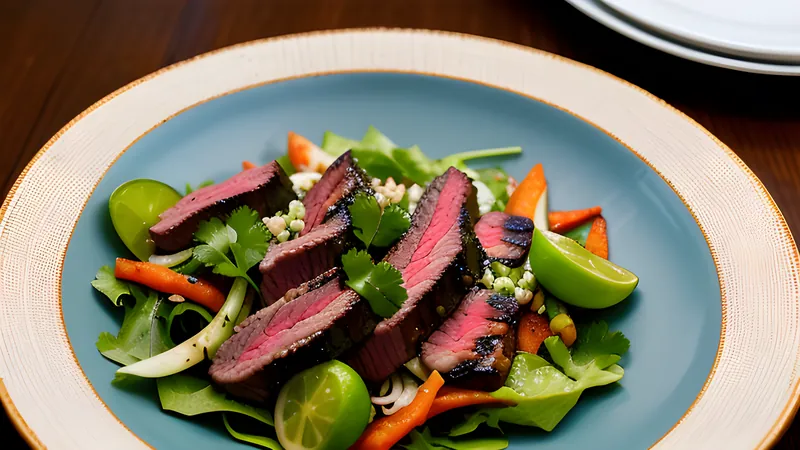
↓ Jump to recipeYam nua is the salad that first taught me a plate of leaves could be as loud as any curry. There is barely any leaf in it, for a start: the bulk is thin-sliced seared beef, raw shallot and a fistful of herbs, all pulled together by a dressing that lands sour, salty, sweet and hot in roughly that order. The twist here is a spoonful of toasted rice powder, khao khua, ground from jasmine rice you brown yourself in a dry pan. It costs nothing, takes eight minutes, and gives the finished salad a nutty, faintly smoky grip that stops the whole thing sliding off the fork.
Yam Nua: Thai Grilled Beef Salad with Lime and Chilli
Ingredients
- 400g sirloin or rump steak, about 2.5cm thick, at room temperature
- 1 tbsp neutral oil, for the pan
- 1/2 tsp flaky salt
- 2 tbsp uncooked jasmine rice, for the toasted rice powder
- 3 tbsp fresh lime juice (about 2 limes)
- 2 tbsp fish sauce
- 1 tsp caster sugar
- 2 to 3 bird's eye chillies, thinly sliced
- 2 banana shallots, very thinly sliced
- 4 spring onions, cut into 3cm lengths
- 1/2 cucumber, halved and sliced on the diagonal
- A large handful of mint leaves
- A large handful of coriander, leaves and tender stems
- A handful of cherry tomatoes, halved (optional)
Method
- Toast the raw rice in a dry pan over medium heat for 6 to 8 minutes, shaking often, until it turns a deep golden brown and smells nutty, then grind to a coarse sand in a mortar or spice grinder.
- Pat the steak dry and season with the flaky salt. Heat the oil in a heavy frying pan or griddle over high heat until smoking, then sear the steak for 2 to 3 minutes a side for medium-rare, pressing it flat for good contact.
- Rest the steak on a board for at least 5 minutes so the juices settle before you slice it.
- Whisk the lime juice, fish sauce and sugar together until the sugar dissolves, then stir in the sliced chillies.
- Slice the rested steak thinly against the grain, holding the knife at a slight angle, and add it and any resting juices to the dressing.
- Add the shallots, spring onions, cucumber and tomatoes if using, and toss well so everything is coated.
- Fold through most of the mint and coriander, tip onto a plate, and scatter with the remaining herbs and a generous pinch of the toasted rice powder.
The story
Yam nua belongs to the enormous Thai family of yam, a word that means to mix or toss and covers hundreds of salads built on the same sour-salty-hot-sweet architecture. It sits closest in spirit to the salads of Isan, the north-eastern region bordering Laos, where grilled meat, raw aromatics and toasted rice powder are the everyday grammar of a meal, though yam nua itself is eaten the length of the country and turns up on menus from Chiang Mai to the beach shacks of the south. Beef was historically a treat in much of rural Thailand, where the working animal was the water buffalo and a cow was worth more alive than eaten, so a salad that stretched a single seared steak to feed a table with herbs and dressing made good sense at the family level long before it became a restaurant staple.
What holds all the yam together is the dressing, the so-called nam yam, and its balance is the whole skill of the dish. The classic Thai teaching is that four flavours have to be audible at once: sour from lime, salty from fish sauce, sweet from a little sugar, and hot from fresh chilli, with the beef and herbs carrying an underlying savouriness beneath all four. Get the ratio right and the salad tastes bright and alive; tip it too far towards any one corner and it collapses into something one-note. The proportions I give here (roughly three parts lime to two parts fish sauce to one part sugar) are a solid starting point, but limes vary wildly in sharpness and fish sauces in saltiness, so taste the dressing before it meets the beef and adjust in small increments until it makes you wince slightly and then want another taste.
Why the toasted rice matters
Khao khua is the detail that separates a home yam nua from a memorable one, and it is almost always the thing people leave out. Toasting raw jasmine rice in a dry pan until it goes deep gold develops the same nutty, roasted flavours you get from browning anything starchy, and grinding it coarse gives you a powder with a faint grit that clings to the wet slices of beef. That texture does real work: a lime dressing is thin and runs straight to the bottom of the bowl, and the rice powder thickens it just enough to coat everything and carry a toasty flavour into each mouthful. Grind it coarse rather than to a fine flour, so you keep a little sandy bite; ground too fine it dissolves and you lose the point of making it. It keeps for a couple of weeks in a sealed jar, so it is worth toasting a larger batch while you have the pan hot.
The other technique worth getting right is the beef itself. You want a good crust and a rosy, tender interior, which means a properly hot pan, a dry surface on the meat, and the confidence to leave the steak alone once it hits the metal. Patting the steak bone dry before it goes in is not fussiness: surface moisture has to boil off before browning can start, and a wet steak steams grey rather than searing brown. Resting the cooked steak for a full five minutes lets the muscle fibres relax and reabsorb their juices, so when you slice it you keep those juices in the meat and on the board (where they go straight into the dressing) instead of losing them to the plate. Slice against the grain, at a slight bevel, and the pieces stay tender enough to eat with a fork; slice with the grain and even good rump turns chewy.
What can go wrong
The most common failure is a dressing that has gone flat and salty because it sat too long before serving. Lime juice loses its high, fresh top note within an hour or so of squeezing, turning dull and slightly bitter, so squeeze it fresh and dress the salad at the last minute. If you are cooking for guests, sear and slice the beef ahead, prep every vegetable and herb, and mix the dressing only when everyone is at the table.
The second is overcooking the beef out of nervousness. A yam wants the meat pink and juicy so it stays tender against the acidic dressing; a well-done steak turns tough and dry, and the lime only makes that dryness more obvious. If you are unsure, pull the steak a shade earlier than you think and let carry-over heat finish it during the rest.
Finally, go carefully with the chilli if you are not used to bird’s eye heat. Two are lively, three are genuinely hot, and the seeds carry most of the burn, so deseed them for a gentler version. You can always add more sliced chilli at the table, but you cannot take it back out once the dressing is mixed.
Substitutions and make-ahead
If you would rather not stand over a hot pan, this salad is a beautiful home for leftover roast beef or barbecued steak, sliced cold and tossed straight into the dressing; the smoky char from a grill suits it especially well. Cooks in a rush sometimes use bought crispy shallots and a pinch of ground toasted rice from an Asian grocer, both of which are perfectly good shortcuts. Vegetarians can build the same dressing around thick slices of grilled king oyster mushroom or firm tofu that has been seared hard, though you will want to add a little light soy or a vegetarian fish-sauce substitute to replace the savoury depth the beef would bring.
Everything except the final toss can be done a few hours ahead: keep the herbs wrapped in a damp cloth, the shallots and cucumber in the fridge, the dressing in a jar, and the toasted rice in its sealed pot. The assembled salad does not keep, since the herbs wilt and the beef greys in the acid, so make only what you will eat.
If you like the raw-shallot-and-lime backbone here, my Gỏi Gà, the Vietnamese chicken and cabbage salad, works the same magic with a lighter bird and a mountain of herbs. And for a cold-noodle partner that leans nutty and sesame-rich alongside this bright, sharp plate, my sesame-ginger soba noodle salad makes a fine second bowl on the table.
Related Content