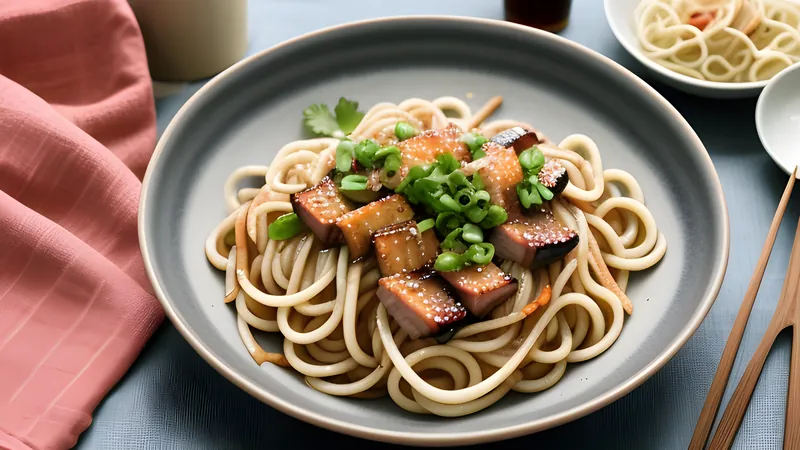
Yaki Udon with Pork and Cabbage
Fat, chewy udon seared hard in a smoky soy-and-dashi glaze
Contents
↓ Jump to recipeYaki udon is the dish I make when I want something loud and fast and slightly greasy in the best way, and I have exactly one clean pan to work with. It is the udon world’s answer to yakisoba — the same idea of noodles fried hard on a screaming-hot surface with pork and vegetables and a dark, sweet-savoury sauce — but built on udon, which changes everything. Where yakisoba noodles are thin and springy, udon are fat, soft and impossibly chewy, and when you sear them properly they pick up a smoky char on the outside while staying pillowy within. That contrast is the whole reason to cook it.
The dish has a nice origin story. It is generally credited to the city of Kokura in Kitakyushu, on the southern island of Kyushu, in the lean years just after the Second World War, when a restaurant owner ran short of the buckwheat used for yakisoba and reached for local udon instead. What began as a substitution became a regional speciality, and it spread across Japan as exactly the kind of cheap, filling, endlessly adaptable food that a home cook loves. There is no fixed recipe, which is the point; you use what the fridge offers and lean on the sauce and the heat.
Yaki Udon with Pork and Cabbage
Ingredients
- 400g pre-cooked or frozen udon noodles (2 portions)
- 150g pork belly, thinly sliced
- 1/4 pointed or sweetheart cabbage, cut into 3cm pieces
- 1 small onion, sliced
- 1 carrot, cut into fine matchsticks
- 2 spring onions, cut into 3cm lengths
- 2 tbsp neutral oil
- 1 tbsp unsalted butter
- 2 tbsp soy sauce
- 1 tbsp mirin
- 1 tbsp oyster sauce
- 1 tsp caster sugar
- 1 tsp instant dashi powder dissolved in 1 tbsp hot water
- 1/2 tsp white pepper
- katsuobushi (bonito flakes) and pickled red ginger, to serve
Method
- Mix the soy sauce, mirin, oyster sauce, sugar, dissolved dashi and white pepper in a small bowl.
- Loosen the udon in boiling water for 30 seconds, then drain well and keep the strands separate.
- Heat 1 tbsp oil in a very hot large pan or wok and fry the pork belly for 2-3 minutes until crisp and the fat has rendered, then set aside.
- Add 1 tbsp oil, then the onion, carrot and cabbage cores; stir-fry 2 minutes over high heat, add the leafier cabbage and cook 1 minute more.
- Return the pork, add the udon and pour the sauce down the side of the pan; toss and press for 2-3 minutes until glazed and lightly charred.
- Add the butter and spring onions in the last 30 seconds and toss until glossy.
- Serve at once, topped with bonito flakes and pickled red ginger.
Why udon behaves differently
Udon are wheat noodles, thick as a pencil and prized for their koshi — the specific springy, chewy resistance that good udon has under the tooth. That thickness is a gift and a trap. It means the noodle can take a hard sear without disintegrating, but it also means it clumps the moment it cools, and cold clumped udon fried in a crowded pan will steam into a stodgy mass rather than char. Two rules follow: get the noodles loose and hot before they hit the pan, and give them room.
For frozen udon — which is genuinely excellent, often better than the vacuum-packed “fresh” kind — a 30-second dunk in boiling water is all it takes to loosen the strands. Drain them hard and keep them separate. Vacuum-packed udon need only a brief soak in just-boiled water to unstick. Whatever you use, the noodles should be warm, slippery and separated before they meet the oil.
My small twist is the finishing knob of butter, a modern touch that is common in the Kokura style and transforms the dish. Melted through at the end, it rounds off the salt of the soy and gives the sauce a glossy, faintly nutty richness that clings to every noodle. Butter and soy is one of Japan’s great quiet pairings, and this is one of its best uses.
Method
Get everything cut and to hand before you light the hob, because from here it moves fast. Mix the soy sauce, mirin, oyster sauce, sugar, dissolved dashi and white pepper in a small bowl and set the sauce by the stove. Loosen the udon: drop them into a pan of boiling water for 30 seconds, or until the strands separate, then drain thoroughly and set aside.
Put your largest frying pan or a wok over the highest heat you have and get it properly hot. Add 1 tablespoon of the oil, then the sliced pork belly in a single layer. Leave it alone for a minute to take on colour, then stir-fry for another minute or two until the fat has rendered and the edges are crisp and golden. Scoop the pork to one side or onto a plate.
Add the second tablespoon of oil to the same pan, then the onion, carrot and the thicker cores of the cabbage. Stir-fry over high heat for two minutes — you want the vegetables to catch a little colour and soften while keeping their crunch, so keep them moving and resist crowding. Add the leafier cabbage pieces and cook for another minute until just wilted.
Now the noodles. Add the loosened udon and the pork back to the pan, pour the sauce down the side, and let it hit the hot metal so it sizzles and reduces on contact. Toss and press the noodles against the pan for two to three minutes, letting them sit for a few seconds between tosses so they pick up char and the sauce reduces to a glaze that coats everything. Add the butter and the spring onions in the last thirty seconds, tossing until the butter has melted through and the pan looks glossy.
Pile into warm bowls, shower with bonito flakes — they will dance in the rising heat, which is half the fun — and add a tangle of pickled red ginger on the side. Eat immediately, while the char is still audible.
The things that go wrong
Stodgy yaki udon is almost always a heat problem. A home hob cannot match a restaurant burner, so the fix is to cook in a big pan, keep the batches sensible, and never pour cold sauce over a cooling mass of noodles. If you are cooking for four, do it in two pans or two batches rather than choking a single pan — a crowded pan drops in temperature, the noodles steam, and you lose the char that defines the dish. Cut the cabbage cores thin so they cook in the same time as the leaves, and separate the two so you can add them in stages.
The other frequent miss is a sauce that is either scorched or watery. Pouring it down the side of the pan onto the hot surface, rather than straight onto the noodles, lets it caramelise for a second before you toss it through, which deepens the flavour. If your pan runs cooler and the sauce pools, just keep tossing over high heat until it reduces and clings.
Swaps and add-ins
Pork belly gives the best flavour because its rendered fat seasons the whole pan, but thinly sliced pork shoulder, chicken thigh or even prawns all work. For a vegetarian version, drop the pork, use a mushroom-based sauce in place of the oyster sauce, and add sliced shiitake and firm tofu for savoury depth. Beansprouts, thinly sliced peppers and shiitake are all natural additions; add quick-cooking ones late so they keep their bite.
A fried egg on top, yolk broken over the hot noodles, is never a mistake. A squeeze of Japanese mayo and a scattering of aonori (dried green seaweed flakes) push it towards the festival-stall version. And a shake of shichimi togarashi brings a gentle chilli warmth if you want heat.
A word on the noodles you buy
It is worth being fussy about the udon, because it is the one ingredient you cannot fake. Frozen Sanuki-style udon, made in the tradition of Kagawa prefecture on the island of Shikoku, are my default: flash-frozen within moments of being made, they thaw with their springy koshi fully intact and cost very little. Vacuum-packed shelf-stable udon are the convenient runner-up, softer and a touch gummier, and they benefit from a slightly longer soak to wake them up. Dried udon exist and will do in a pinch, but they need a proper boil and never quite regain the bounce of the frozen kind. Avoid tinned or jarred udon entirely; they are cooked to mush before you even open them. Whatever you buy, budget for two generous portions per person if it is the whole meal, since fat noodles are more filling than they look and this is not a dish anyone eats delicately.
What to serve with it, and keeping notes
Yaki udon is a full meal in a bowl, but it sits happily in a bigger spread of Japanese food. Its hot, smoky richness is a fine foil to the cool cleanness of zaru soba with a cold dipping sauce if you are feeding a crowd across two temperatures, and it makes good sense next to a crisp tonkatsu with shredded cabbage and Bulldog sauce, since both share that sweet-savoury sauce DNA. For something with a chilli kick alongside, the numbing heat of twice-cooked pork with leek and doubanjiang plays well against the mellow soy-and-butter glaze here.
Yaki udon is best eaten the moment it leaves the pan, when the char is fresh and the noodles are still bouncy. It reheats poorly — the noodles go soft and the sauce dulls — so cook only what you will eat. The upside is that it is a genuine ten-minute dinner once the chopping is done, which is exactly the sort of fast, satisfying food the dish was born to be. Keep a bag of frozen udon in the freezer and a bottle of oyster sauce in the door and you are never more than a hot pan away from it.
Related Content