Whole Roasted Mackerel with Gooseberry
An old English pairing that still knows exactly what it is doing
Contents
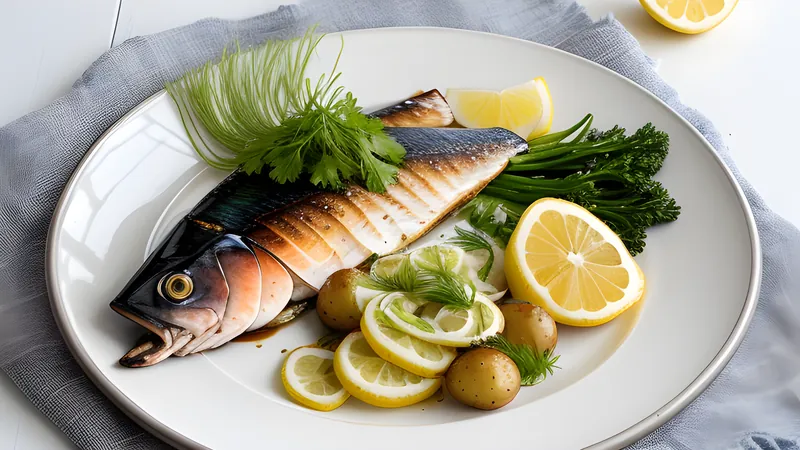
↓ Jump to recipeSometime in early summer, when gooseberries appear for their absurdly short season and mackerel are running fat and cheap, a very old English partnership comes back into its own. Whole roasted mackerel with a sharp gooseberry sauce is one of those pairings that has survived for centuries because it is simply correct: the tart green fruit cuts straight through the oily richness of the fish, and each makes the other taste better. It is a plate that feels both rustic and quietly clever.
The mackerel here is roasted whole, which is the best way to cook it: the skin crisps and blisters, the flesh stays moist against the bone, and there is a generosity to serving a whole fish that fillets never quite manage. The gooseberry sauce is barely a recipe, just fruit collapsed with a little butter and sugar, but it is the making of the dish.
Whole Roasted Mackerel with Gooseberry
Ingredients
- 2 whole mackerel (about 300g each), gutted and cleaned
- 200g gooseberries, topped and tailed (fresh or frozen)
- 20g unsalted butter
- 1 tbsp caster sugar, or to taste
- 1 tsp cider vinegar
- 2 tbsp water
- 1 tbsp olive oil
- a few sprigs of thyme
- 0.5 tsp fennel seeds, lightly crushed
- 1 lemon, half sliced, half for juice
- flaky sea salt and black pepper
- a small handful of chopped parsley or fennel fronds, to serve
Method
- Heat the oven to 220C (200C fan). Pat the mackerel dry inside and out. Slash each side 2-3 times through the skin to the bone.
- Rub the fish with olive oil and season generously inside and out. Tuck a slice of lemon and a sprig of thyme into each cavity, and press the crushed fennel seeds onto the skin.
- Lay the mackerel on a lined baking tray and roast for 12-15 minutes, until the skin is blistered and the flesh at the thickest part is opaque and pulls from the bone.
- Meanwhile, put the gooseberries in a small pan with the water, sugar and butter. Cook over medium heat for 6-8 minutes, until the berries burst and collapse into a rough, jammy sauce.
- Stir in the cider vinegar and a squeeze of lemon. Taste and balance the sharpness with a little more sugar if needed; it should stay tart. Season lightly with salt.
- Serve each mackerel with a spoonful of warm gooseberry sauce alongside, scattered with parsley or fennel fronds.
A pairing with real history
The marriage of mackerel and gooseberry is genuinely old. In France the gooseberry is groseille a maquereau, literally “mackerel currant”, a name recorded for centuries precisely because the fruit was the classic accompaniment to the fish. English cookery books from the eighteenth and nineteenth centuries give gooseberry sauce for mackerel as a matter of course; it appears in Hannah Glasse and runs right through Victorian household manuals. The logic is seasonal as much as culinary: gooseberries ripen in May and June, exactly when mackerel are at their best in British and Irish waters, so cook and fishmonger were handed a pairing by the calendar.
There is sound sense underneath the tradition. Mackerel is an oily fish, high in those excellent omega-3s but also rich and prone to feeling heavy. A sharp fruit sauce provides the acidity that oily fish craves, the same job that a wedge of lemon does for sardines or a splash of vinegar does for herring. Gooseberries, being naturally high in pectin and pleasingly sour, cook down into a sauce that is at once fruity and bracing.
Choosing and preparing the fish
Mackerel is one of the most sustainable and best-value fish you can buy in Britain, and it is at its finest absolutely fresh, because its high oil content means it goes off faster than leaner fish. Look for bright, taut skin with vivid blue-green markings, clear eyes and a clean, sea-fresh smell. If it smells strongly fishy, it is past its best; walk away. A good fishmonger will gut and clean it for you, which saves the least pleasant job.
Before roasting, pat the fish thoroughly dry; a wet skin steams rather than crisps. Slash the skin two or three times on each side down to the bone. This is not decoration: the cuts help the heat penetrate evenly, stop the skin from tearing as it contracts, and give the seasoning somewhere to go. I press lightly crushed fennel seeds onto the skin, because fennel and mackerel are another old friendship, and I tuck lemon and thyme into the cavity so the fish perfumes itself from the inside as it cooks.
Roasting, and knowing when it is done
A hot oven is the key. At 220C the skin blisters and the thin flesh cooks quickly before it can dry out. Twelve to fifteen minutes is usually right for a 300g fish; the surest test is at the thickest part behind the head, where the flesh should be opaque and just beginning to pull away from the backbone. If you have a probe, you are looking for around 60C at the core. Overcooked mackerel turns dry and cottony, so err on the side of pulling it early and letting the residual heat finish the job while you plate up.
You can grill or barbecue the fish instead, and the smoke suits it beautifully. The slashes and the dry skin matter even more over live fire, where you want a proper char. Either way, the gooseberry sauce is the constant.
The gooseberry sauce
This could not be simpler. Gooseberries, a splash of water, a knob of butter and a little sugar go into a small pan and cook until the berries burst and slump into a rough purée, somewhere between a compote and a jam. Six to eight minutes does it. You are aiming for a sauce that stays assertively tart; the sugar is there to take the edge off, not to make it sweet, so add it cautiously and taste as you go. A teaspoon of cider vinegar and a squeeze of lemon sharpen it back up if the fruit is on the ripe side.
Leave it deliberately rough. A few whole berries and a bit of texture are far nicer against the soft fish than a smooth, baby-food purée. Frozen gooseberries work perfectly and mean you can make this well outside the fleeting fresh season; they collapse just as readily, if anything faster.
If you like the way sharp, herby sauces play against rich flesh, you will see the same principle at work in my grilled whole sea bass with salsa verde, where capers and herbs do the cutting instead of fruit.
What to serve alongside
Keep the plate simple so the fish stays the star. New potatoes boiled with mint, crushed lightly and dressed with butter, are the traditional and correct choice. A pile of peppery watercress dressed with lemon and oil adds freshness and looks handsome next to the blue-skinned fish. For something more substantial, a slice of good bread to mop up the gooseberry sauce and the fishy, buttery juices does the job. In high summer I sometimes serve it with a fennel salad, shaved raw and dressed with lemon, to echo the fennel seeds on the skin.
Tips, swaps and storage
No gooseberries at all? Rhubarb makes a fine stand-in, cooked the same way, as does a mix of tart cooking apple and a little cranberry. The point is sharp, tart fruit; the specific fruit is flexible. A sauce of cooked-down sharp plums works well in late summer.
Whole versus fillets. If you would rather use fillets, roast them skin-side up for about 6-8 minutes at the same heat, or crisp them skin-down in a hot pan. Whole fish keeps the flesh moister and is more forgiving, which is why I default to it.
Balancing the sauce. Gooseberries vary wildly in sharpness depending on variety and ripeness. Always taste and adjust: too sour and the dish puckers, too sweet and you lose the whole point. A pinch of salt in the sauce brings the fruit into focus.
Storage. The sauce keeps in the fridge for up to five days and freezes well, so it is worth making a double batch in gooseberry season to see you through. It is excellent, incidentally, with roast pork or a strong cheese, so nothing goes to waste. The cooked fish is best eaten fresh; leftover mackerel is good flaked cold into a salad the next day but does not reheat gracefully.
For a lighter seafood supper from the same corner of the fishmonger’s slab, my sardines on toast with charred lemon runs on exactly this idea that oily fish wants acidity and not much else.
Why this old dish still earns its place
There is a reason a pairing this old refuses to die. It is thrifty, using two of the cheapest and most seasonal ingredients Britain offers. It is quick, on the table in under twenty minutes. And it tastes of somewhere and something: of early summer, of a fishmonger’s slab, of a fruit bush at the end of a garden. Cook it once when the gooseberries are in and you will understand why the French named the berry after the fish.
Related Content