Watermelon, Feta and Mint with Black Olive
The classic summer salad, sharpened with a salty black-olive crumb
Contents
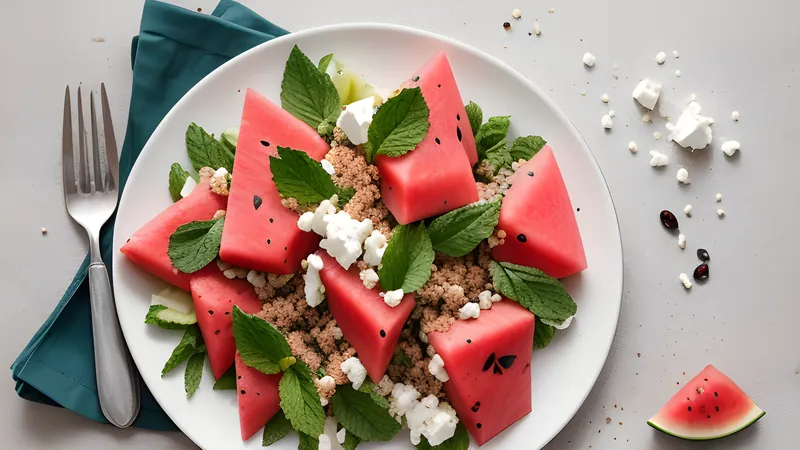
↓ Jump to recipeWatermelon, feta and mint has become a summer cliché for a good reason: cold sweet fruit against salty cheese and cool herb is one of the great flavour combinations. Most versions, though, stop there and end up tasting a little one-note and sweet. My fix is a black-olive crumb, made by drying olives in a low oven until they turn leathery and then chopping them to a savoury, salty gravel, which scatters over the top and gives the whole salad a dark, briny anchor that stops it drifting into pudding territory.
Watermelon, Feta and Mint with Black Olive
Ingredients
- 1kg cold watermelon flesh, deseeded and cut into 3cm chunks
- 60g pitted black olives (Kalamata or dry-cured), for the crumb
- 200g feta, in one block
- A large handful of mint leaves, torn
- 1/2 small red onion, sliced paper-thin
- Juice of 1 lime
- 1 tbsp red wine vinegar
- 3 tbsp extra-virgin olive oil
- 1/2 mild red chilli, finely chopped (or a pinch of chilli flakes)
- 1/2 tsp runny honey
- Flaky salt and black pepper
- Extra mint and a little olive oil, to finish
Method
- Heat the oven to 120°C fan. Scatter the pitted olives on a lined tray and dry them out in the oven for 35 to 40 minutes until shrunken and leathery, then cool completely.
- Chop or pulse the dried olives to a coarse, gravelly crumb; keep it in a small bowl.
- Soak the sliced red onion in cold water for 10 minutes to soften its bite, then drain and pat dry.
- Sit the watermelon chunks on kitchen paper for a few minutes to blot excess juice, then arrange over a large platter.
- Whisk the lime juice, red wine vinegar, olive oil, chilli and honey with a pinch of salt to a dressing.
- Scatter the drained onion and torn mint over the watermelon, then crumble the feta over in rough pieces.
- Spoon the dressing over, shower with the black-olive crumb, add flaky salt, black pepper, a few extra mint leaves and a final drizzle of olive oil. Serve at once.
The Story
The marriage of watermelon and salty white cheese is far older than the modern restaurant salad that made it famous. Across the eastern Mediterranean and the Balkans, watermelon eaten with a wedge of brined cheese and a piece of bread is a traditional hot-weather supper, cheap, cooling and sustaining, and versions turn up from Greece and Turkey through the Levant and into Egypt. In Greece the pairing of karpouzi with feta is a summer commonplace, and in parts of the Middle East watermelon with a slab of nabulsi or a soft white cheese is breakfast in the fields at harvest time, when the fruit is at its ripest and the day is at its hottest.
The logic behind it is the oldest one in cooking: salt makes sweet things taste sweeter and more vivid, and it comes down to the way the two register on the palate together. A watermelon on its own is refreshing but slightly flat; add salt from the cheese and the fruit’s sweetness snaps into focus, while the cheese’s richness is cut by the fruit’s water and acidity. Mint, the third classic element, brings a cooling, aromatic top note that lightens the whole thing and keeps it feeling like a salad rather than a fruit plate.
Watermelon itself is thought to have originated in north-eastern Africa, with domesticated forms cultivated in Egypt thousands of years ago; seeds were found in Tutankhamun’s tomb, and the fruit spread through the Mediterranean world in antiquity. The sweet, red-fleshed varieties we eat today are the product of long selection from ancestors that were paler and far less sweet, bred over centuries for sugar and colour. Feta, meanwhile, is a protected designation in the EU, made in Greece from sheep’s milk (with up to a third goat’s milk) and brined for weeks, which is what gives it the sharp, salty tang that makes it such a good foil for sweet fruit.
The black-olive crumb
Drying olives in a low oven is a trick worth knowing well beyond this salad. As the olives lose their moisture their flavour concentrates and intensifies, and their texture firms up so they can be chopped to a coarse crumb that scatters evenly rather than smearing. The result reads almost like a savoury, briny version of a soil or gravel garnish, and it clings to the wet surfaces of the watermelon and feta far better than whole olives, which tend to roll off and sit in a corner of the plate.
Use a properly flavoured olive here, a Kalamata or a wrinkled dry-cured black olive rather than a bland, canned pitted one, because the crumb is concentrating whatever flavour you start with. Forty minutes at a low temperature is enough to drive off the surface moisture without cooking the olives to bitterness; you want them leathery and chewable, not hard as stones. Once cool they chop cleanly, and any you do not use keep in a jar for scattering over roasted vegetables, hummus or a bowl of pasta.
Building the salad
The order of assembly matters more than it looks. Watermelon sheds juice constantly once cut, so blotting the chunks on kitchen paper before they hit the plate keeps a puddle from forming and diluting the dressing. Feta is best crumbled over in generous, uneven pieces rather than neat cubes, so some bites are all cheese and others all fruit, which keeps the salad interesting across a plateful. Soaking the raw red onion in cold water for ten minutes tames its harsh, sulphurous bite while keeping its crunch and colour, a small step that makes the difference between onion as a background hum and onion as an aggressive intrusion.
Dress the salad only at the very last moment, as watermelon and salt together draw water fast, and a salad left to sit will weep into a pink pool within a quarter of an hour. Everything can be prepped and held separately; the assembly takes two minutes and should happen as you carry it to the table.
What can go wrong
A watery, sad salad is the usual failure, and it comes from dressing too early or from under-ripe fruit that has been salted and left. Keep the components apart until serving, blot the melon, and bring it together at the last second. Choose a watermelon that feels heavy for its size with a creamy-yellow patch where it sat on the ground, the sign of a fruit ripened properly before picking; a pale, hollow-sounding melon will be mealy and bland however you dress it.
Over-salting is the second trap, easy to fall into because there are three salty elements in play: the feta, the olive crumb and any flaky salt you add. Taste before you reach for the salt cellar, since the cheese and olives may have done the job already. And do not skip the acid: the lime and vinegar are what keep the salad bright and stop the fruit-and-cheese richness from cloying, so if it tastes heavy or flat, more lime rather than more salt is almost always the answer.
Storage, make-ahead and variations
This is a salad to eat the day it is made, ideally within the hour, and it does not keep once assembled because the watermelon collapses. You can get ahead by cutting the melon and keeping it chilled and covered, crumbling the feta, making the dressing and preparing the olive crumb, all up to a day in advance, so that final assembly is nothing more than tipping things onto a platter. The olive crumb keeps for a week in a sealed jar.
For variations, cucumber cut into chunks adds extra crunch and cooling, and a handful of rocket or purslane turns it into more of a green salad. A drizzle of pomegranate molasses in place of, or alongside, the honey pushes it further towards the Levant, and toasted pistachios or a scatter of nigella seeds add texture. If you like watermelon with a savoury, herby edge, my halloumi, watermelon and za’atar grills the cheese and swaps mint for a spiced herb blend, and for another salad that leans on black olives against sweet fruit, my fennel, orange and black olive salad plays the same briny-sweet trick with citrus and aniseed.
Related Content