Walnut and Espresso Rugelach
Buttery little crescents with a grown-up coffee hit
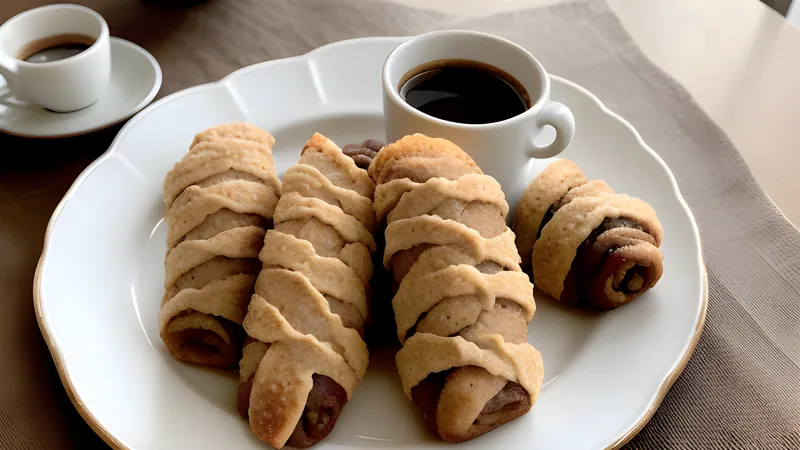
Walnut and Espresso Rugelach
Ingredients
- 250g plain flour
- 225g cold unsalted butter, cubed
- 200g full-fat cream cheese, cold
- 0.5 tsp fine salt
- 1 tbsp caster sugar (for the dough)
- 150g walnuts, finely chopped
- 75g soft light brown sugar
- 1 tbsp instant espresso powder
- 1 tsp ground cinnamon
- 60g apricot jam, warmed and sieved
- 1 egg, beaten, to glaze
- 2 tbsp demerara sugar, to finish
Method
- Pulse the flour, salt and 1 tbsp caster sugar in a food processor, then add the cold butter and cream cheese and pulse just until the dough comes together in clumps.
- Tip out, gently bring together, divide into four discs, wrap and chill for at least 2 hours or overnight.
- Mix the chopped walnuts, brown sugar, espresso powder and cinnamon together for the filling.
- Working with one disc at a time and keeping the rest chilled, roll out on a floured surface into a circle about 25cm across.
- Spread thinly with warmed apricot jam, then scatter over a quarter of the walnut filling and press it down lightly.
- Cut the circle into 8 wedges like a pizza, then roll each wedge up from the wide outer edge towards the point.
- Place point-side down on a lined baking tray, curving into crescents, and chill the formed rugelach for 20 minutes.
- Heat the oven to 175C fan. Brush each rugelach with beaten egg and sprinkle with demerara sugar.
- Bake for 22 to 25 minutes until deep golden, then cool on the tray for a few minutes before moving to a rack.
Rugelach are the kind of biscuit-pastry hybrid that disappears off a plate before you have quite worked out what you are eating. Each one is a little rolled crescent of impossibly tender, faintly tangy cream-cheese pastry wrapped around a sweet, nutty filling. They are a fixture of Jewish bakeries, sold by the bagful, and once you have made your own you will understand why people are evangelical about them. The twist here is espresso: a tablespoon of instant espresso powder folded through the classic walnut-and-cinnamon filling gives these a deep, slightly bitter, grown-up edge that pairs perfectly with the coffee you will inevitably want alongside them.
1 A pastry that crossed an ocean
Rugelach come from the Ashkenazi Jewish kitchens of central and eastern Europe, where versions were made with a yeasted or sour-cream dough and filled with whatever was to hand: nuts, jam, poppy seeds, dried fruit. The name comes from a Yiddish word meaning little twists or little corners, a nod to their rolled crescent shape. They were, and are, a Sabbath and holiday treat, the sort of thing baked in big batches to have around for guests.
The version most people know today, made with a rich cream-cheese pastry, is largely an American invention, refined in the Jewish bakeries of New York where rugelach became a deli-counter staple alongside black-and-white cookies and babka. Cream cheese was abundant and cheap there, and it transformed the dough into something more like a tender shortcrust than the older yeasted style, easier to make and quicker too. That is the dough I use here, because it is forgiving and reliably delicious, and it carries the coffee-walnut filling beautifully.
2 Rolling and shaping
The dough is the heart of it, and the trick is to keep everything cold. Cold butter and cold cream cheese, pulsed into the flour just until it clumps, then chilled hard before rolling. Warm pastry turns sticky and impossible to handle, so work with one disc at a time and keep the rest in the fridge. Roll each disc into a rough circle, spread it thinly with warmed, sieved apricot jam, which acts as glue and adds a fruity tang, then scatter over the espresso-walnut filling and press it in gently.
Cutting and rolling is the satisfying part. Slice each circle into wedges as if cutting a pizza, then roll each wedge up from the wide outer edge towards the point, so it curls into a little crescent with the seam tucked underneath. Chill the shaped rugelach again before baking; this keeps them from spreading and slumping. A brush of beaten egg and a sprinkle of crunchy demerara sugar gives them a glossy, crackly finish.
Bake until they are properly deep golden. Underbaked rugelach are pale and a touch doughy; you want them well coloured so the pastry shatters. The filling will likely leak and caramelise on the tray, which is normal and delicious, so line your trays well.
3 Tips, fillings and getting ahead
This is a recipe that rewards making ahead at every stage. The dough can be made and chilled up to three days in advance, or frozen for a month. You can even shape the rugelach completely, freeze them raw on a tray, and bake them straight from frozen with a couple of extra minutes, which makes them a brilliant thing to have stashed away for unexpected guests.
The filling is wide open to experiment. Skip the espresso for the classic, or swap in pecans or hazelnuts for the walnuts. A spoonful of cocoa and some dark chocolate chips makes a chocolate version; dried sour cherries or chopped dates add chewy sweetness; raspberry jam in place of apricot turns them fruity. Whatever you choose, keep the filling fairly fine and not too wet, or it will burst out as they bake.
Two honest pitfalls to avoid. First, do not overfill, however tempting; a thin, even layer rolls up neatly, while a thick one bursts and unrolls. Second, do not skimp on the chilling steps, because soft dough and warm-shaped rugelach are the two reasons home batches go wrong. Get those right and you will have a tin of buttery, coffee-scented crescents that taste like a very good bakery and vanish twice as fast.
Related Content