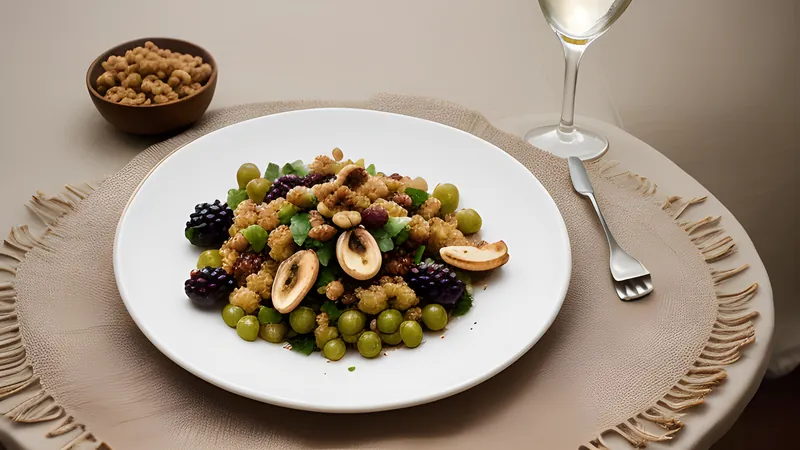
Waldorf with Toasted Walnuts and Grapes
The old hotel salad, crunchier and less claggy
Contents
↓ Jump to recipeThe Waldorf salad has an image problem, and most of it is deserved. Too many versions are a beige, gluey bowl of apple drowned in a jar of mayonnaise, the celery gone limp and the walnuts, if there are any, soft and slightly rancid. It is the sort of thing that turns up at a buffet and gets politely avoided. That reputation is a shame, because underneath the abuse there is a genuinely clever salad built on the play between crisp fruit, snappy celery and rich nuts.
Rescuing it takes only a few small decisions: toast the walnuts properly, lighten the dressing so it coats rather than smothers, and cut everything to sizes that stay distinct in the bowl. The result is fresh, crunchy and sharp, a summer salad that earns its place next to cold chicken or a slice of ham rather than lurking at the edge of the plate.
Waldorf with Toasted Walnuts and Grapes
Ingredients
- 80g walnut halves
- 15g unsalted butter
- 2 crisp eating apples (Cox or Braeburn), unpeeled
- 4 celery sticks, plus a handful of pale inner leaves
- 150g seedless red grapes, halved
- 3 tbsp mayonnaise
- 3 tbsp full-fat natural yoghurt
- 1 tbsp lemon juice, plus more for the apples
- 1 tsp Dijon mustard
- 0.5 tsp fine sea salt
- Black pepper, to taste
- Little gem or crisp lettuce leaves, to serve
Method
- Melt the butter in a frying pan over medium heat until it smells nutty and turns pale gold. Add the walnuts and toast, stirring, for 4-5 minutes until fragrant and a shade darker. Tip onto a plate, season with a pinch of salt, and cool completely.
- Whisk the mayonnaise, yoghurt, 1 tbsp lemon juice, Dijon, salt and pepper into a smooth dressing.
- Slice the celery finely on the diagonal. Core and dice the apples into 1.5cm pieces, tossing them in a little lemon juice to stop them browning.
- Halve the grapes. Roughly chop two-thirds of the cooled walnuts, keeping the rest whole for the top.
- Fold the apple, celery, grapes and chopped walnuts through the dressing until lightly coated.
- Pile onto lettuce leaves, scatter over the reserved whole walnuts and the celery leaves, and serve within the hour.
A salad born in a Manhattan hotel
The Waldorf was invented at the Waldorf Hotel in New York in the 1890s, credited to Oscar Tschirky, the celebrated maître d’hôtel known simply as Oscar of the Waldorf. His original was a spare thing: diced apple and celery bound in mayonnaise, and nothing more. The walnuts that now define the salad were a later addition, folded in during the early twentieth century, and grapes came later still. It appeared in Oscar’s 1896 cookbook and rode the prestige of the hotel across America and then the world.
For a few decades it was the height of sophistication, a fixture of grand dinners and ladies’ luncheons. Then, like so many mayonnaise-bound salads, it slid down the social ladder into buffet mediocrity and the butt of a Fawlty Towers joke. Its bones are sound, though. The contrast of sweet apple, aromatic celery and rich walnut is a proper flavour idea, and once you treat the components with respect it comes right back to life. It sits in the same retro-British-hotel drawer as coronation chicken, reconsidered, another mayonnaise classic that rewards a bit of modern attention.
The twist: toast the walnuts in brown butter
Raw walnuts are the quiet failure of most Waldorfs. Straight from the bag they are soft, a little bitter and prone to that stale, oily edge that walnuts develop as their fats oxidise. Toasting fixes all of it, driving off moisture, crisping the nut and coaxing out a warm, rounded flavour. Toasting them in a knob of browned butter takes it a step further.
As the butter’s milk solids brown they turn nutty and faintly toffee-ish, and that flavour clings to the walnuts as they toast. A pinch of salt over the hot nuts seasons them from the outside and amplifies the whole effect. It is a five-minute job that transforms the single most important texture in the salad, and once you have tasted the difference you will not go back to raw. Let the walnuts cool completely before they meet the dressing, or the residual heat will slacken the mayonnaise and wilt the celery. The same trick works wonders elsewhere; I candy and toast walnuts to top my beetroot, goat’s cheese and candied walnut salad, where the sweet, crunchy nut plays against earthy beetroot.
Lightening the dressing, and the cutting that keeps it crisp
The classic dressing is straight mayonnaise, which is heavy and can bury the fruit. I cut it half and half with full-fat natural yoghurt, which keeps the richness but brings a welcome tang and a lighter, more pourable texture. A teaspoon of Dijon mustard sharpens it, and a good squeeze of lemon does two jobs at once: it seasons the dressing and, tossed over the diced apple first, it stops the flesh browning.
The dressing should coat the salad in a thin, glossy film so you can still see and taste each ingredient. Add it a little at a time and stop when everything is lightly slicked; a puddle at the bottom of the bowl means you have gone too far. Cut matters as much as the dressing. Dice the apple into pieces around a centimetre and a half, big enough to keep their crunch, and slice the celery finely on the diagonal so it stays snappy and elegant rather than stringy. Leave the apple skin on for colour and bite, and choose a properly crisp, slightly tart variety such as Cox or Braeburn; a soft, floury apple collapses into the dressing and turns the whole thing to mush.
Halved seedless grapes bring bursts of juice and sweetness that balance the savoury celery and rich nuts. I keep a third of the walnuts whole and scatter them over the top, along with the pale, tender celery leaves from the heart of the bunch, which look pretty and taste of concentrated celery.
Choosing apples, grapes and the right walnuts
The apple is doing the heavy lifting, so pick one that holds its shape and keeps a tart edge under the creamy dressing. Cox is my first choice for its honeyed sharpness, with Braeburn a close second; both stay crisp and resist browning better than softer eaters. Avoid Golden Delicious and Gala, which are too sweet and too soft, and skip cooking apples, which are far too sour raw. Leaving the skin on adds flecks of red or green that stop the salad looking uniformly pale.
Red seedless grapes give the prettiest colour contrast and a rounder sweetness than green, though either works; taste one first, since a bland, out-of-season grape adds nothing. For the walnuts, buy the freshest you can and taste before you toast, because walnuts turn rancid faster than most nuts and a single stale one will haunt the whole bowl. Store them in the freezer if you buy in bulk. Pecans make a sweeter, softer substitute if walnuts are not to your taste, and toasting them in brown butter works just as well.
What goes wrong, and how to avoid it
The three classic failures are a claggy dressing, browned apple and soggy nuts, and each has a simple fix. Too much dressing is the commonest, so err on the side of less and add more only if it looks dry. Browned apple comes from cutting it too early or skipping the lemon; toss the dice in lemon juice the moment it is cut, and keep it covered until you assemble. Soggy nuts come from either not toasting them or dressing the salad too far ahead, so toast them well and combine everything at the last minute.
A watery salad an hour on usually means the grapes were not halved, or the celery was wet from washing. Halving the grapes lets any weeping juice mix into the dressing rather than pooling, and drying the celery thoroughly keeps the whole bowl crisp.
Serving, storage and variations
Waldorf is at its best freshly made, within an hour, while the apple is crisp and the walnuts still crunch. It does not keep especially well, since the apple softens and the celery weeps overnight, though the flavour on day two is fine if the texture matters less to you. If you want to get ahead, toast the nuts and mix the dressing in advance, chop the apple and celery, and fold everything together just before serving.
For variations, a handful of shredded cold roast chicken turns it into a proper lunch, and a few crumbs of blue cheese or a little grated horseradish push it in a sharper, more grown-up direction. Some people love a scatter of raisins for extra sweetness. Pile it onto crisp little gem leaves and eat it as a light lunch, or serve it as a side where its crunch and acidity cut through something rich, the way it works alongside my roasted Brussels sprouts with bacon and chestnut at a cold-cuts spread. Made with care, the old hotel salad is one worth putting your name to.
Related Content