Spiced Vegetable Samosas with Mint Chutney
Crisp pastry parcels with a fresh dip
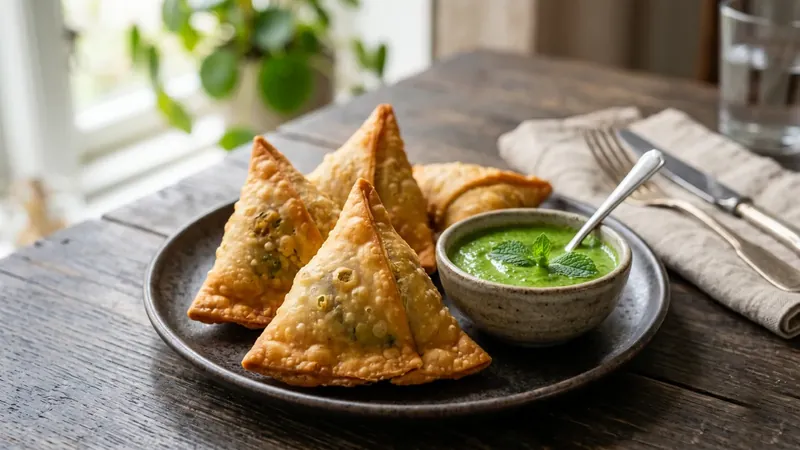
The samosa needs no introduction: a crisp, golden triangle of pastry around a warmly spiced filling. The twist here is in the detail — a classic pea-and-potato filling sharpened with amchur for a gentle tang, served with a vivid, zingy mint-and-coriander chutney that cuts through the richness of the fried pastry. Made from scratch they are deeply satisfying, and the homemade dough fries up far crisper and flakier than anything from a packet. Perfect with tea.
Spiced Vegetable Samosas with Mint Chutney
Ingredients
- 250g plain flour, plus extra for dusting
- 4 tbsp vegetable oil, plus more for frying
- 0.5 tsp salt
- 100ml warm water, approximately
- 400g floury potatoes, peeled and diced
- 150g frozen peas
- 1 tsp cumin seeds
- 1 tsp grated fresh ginger
- 1 green chilli, finely chopped
- 1 tsp ground coriander
- 0.5 tsp garam masala
- 0.5 tsp ground turmeric
- 0.5 tsp amchur (dried mango powder)
- Salt, to taste
- Large bunch fresh mint leaves
- Small bunch fresh coriander
- 1 tbsp lemon juice
- 0.5 tsp sugar
- 2 tbsp natural yoghurt
Method
- Rub the 4 tbsp oil into the flour and salt, then add enough warm water to form a firm, smooth dough; knead briefly, cover and rest for 30 minutes.
- Boil the diced potatoes until just tender, adding the peas for the final 2 minutes, then drain well.
- Heat 2 tbsp oil in a pan, fry the cumin seeds for 20 seconds, then add the ginger and green chilli for 1 minute.
- Add the ground coriander, garam masala, turmeric, the potatoes and peas, amchur and salt; mash coarsely and cook for 2-3 minutes, then cool.
- For the chutney, blitz the mint, coriander, lemon juice, sugar, yoghurt and a pinch of salt to a smooth green sauce; chill.
- Divide the dough into 6 balls, roll each into a thin oval, and cut in half to make 12 half-circles.
- Form each half-circle into a cone, fill with the potato mixture, and seal the top edge with a little water, pressing firmly.
- Heat oil to 170C and fry the samosas in batches for 5-6 minutes, turning, until deep golden and crisp; drain and serve with the chutney.
3 The Story
The samosa is one of the most travelled snacks in the world. Its ancestors are usually traced to the Middle East and Central Asia, where pastries of a similar shape, filled with minced meat, were known by names such as sambusak or sanbusaj. Carried along trade and conquest routes, the form reached the Indian subcontinent centuries ago and was thoroughly adapted, most distinctively into the vegetarian potato-and-pea version that is now the default across much of India.
That spiced potato filling is the heart of the Indian samosa. Floury potatoes are essential — they mash to a fluffy, absorbent texture that drinks up spice, where waxy potatoes stay stubbornly firm and watery. Peas add sweetness and colour, cumin and garam masala bring warmth, and a pinch of amchur, dried green-mango powder, supplies the bright, tart edge that keeps the filling lively. Many regional versions add other touches — paneer, lentils, dried fruit and nuts, or a coarser, chunkier potato mash.
The pastry deserves attention too. A good samosa shell is firm and shatteringly crisp rather than soft, achieved by working a generous amount of fat into the flour (a step sometimes called moyan) and keeping the dough on the dry, firm side. Rolling it thinly and frying at a moderate temperature, rather than a fierce one, allows the pastry to cook through and blister into characteristic bubbles without the outside browning too fast. Patient frying is what produces that signature crunch.
The mint chutney served alongside is the cooling, herbaceous counterpoint to the rich fried pastry, and is itself a workhorse of Indian and Pakistani cooking. Built on fresh mint and coriander, sharpened with lemon and given body with a little yoghurt, it appears with countless snacks, grills and street foods. Cool, fresh and faintly tart against the hot, savoury parcels, it turns a good samosa into a great one — and it takes barely a minute in a blender.
Related Content