Crispy-Bottomed Vegetable Gyoza
Golden, juicy potstickers with a chilli-soy dip
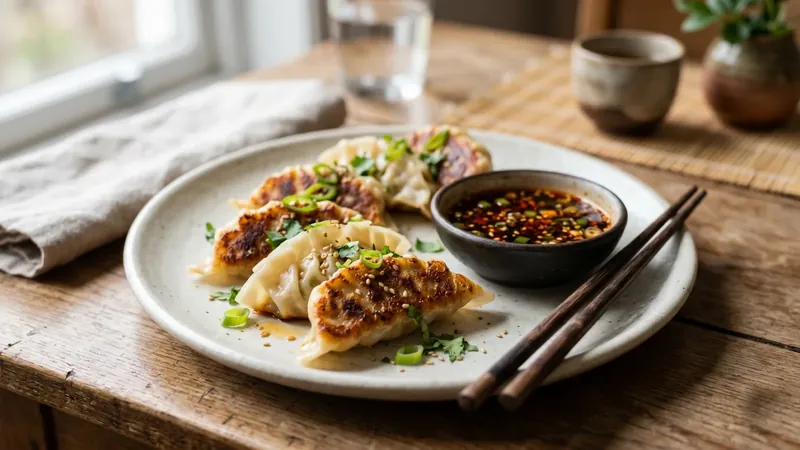
Gyoza are all about contrast: a lacy, crisp-fried base giving way to a soft, juicy steamed top and a savoury vegetable filling. The twist is technique, the classic crisp-steam method that fries the bottoms golden, then steams the parcels through under a lid in one pan. A sharp chilli-soy dip, bright with vinegar and a slick of chilli oil, cuts the richness. They take a little folding patience, but the reward is a proper plate of potstickers.
Crispy-Bottomed Vegetable Gyoza
Ingredients
- 200g white cabbage, very finely chopped
- 1 tsp fine salt
- 100g shiitake mushrooms, finely chopped
- 1 carrot, finely grated
- 3 spring onions, finely sliced
- 2 garlic cloves, grated
- 1 tbsp grated fresh ginger
- 1 tbsp soy sauce
- 1 tsp toasted sesame oil
- 1 tsp cornflour
- 24 round gyoza wrappers
- 2 tbsp neutral oil, for frying
- 100ml water, for steaming
- 3 tbsp soy sauce, for the dip
- 1 tbsp rice vinegar, for the dip
- 1 tsp chilli oil, for the dip
- 1 tsp toasted sesame seeds, for the dip
Method
- Toss the chopped cabbage with the salt and leave for 15 minutes, then squeeze out as much liquid as you can in a clean cloth.
- Mix the drained cabbage with the shiitake, carrot, spring onions, garlic, ginger, soy sauce, sesame oil and cornflour to make the filling.
- Place a wrapper on your palm and add a heaped teaspoon of filling in the centre. Wet the edge with water.
- Fold the wrapper over and pleat one side towards the centre, pressing firmly to seal into a half-moon that sits flat. Repeat with the rest.
- Heat the oil in a large non-stick frying pan over a medium-high heat and arrange the gyoza flat-side down in a single layer.
- Fry undisturbed for 2-3 minutes until the bases are golden.
- Pour in the water, cover at once and steam for 4-5 minutes until the wrappers are translucent and the water has gone.
- Uncover and cook for another minute to re-crisp the bases.
- Mix the soy sauce, rice vinegar, chilli oil and sesame seeds for the dip and serve alongside the hot gyoza, crisp-side up.
3 The Story
Gyoza are the Japanese version of the dumpling, and like much of Japan’s most beloved everyday food, they arrived from elsewhere and were made entirely their own. Their direct ancestor is the Chinese jiaozi, the crescent-shaped dumplings eaten across northern China, and gyoza became popular in Japan in the mid-twentieth century. Over time a distinctly Japanese style settled in: thinner wrappers, a more pronounced hit of garlic, and a strong preference for the pan-fried form over the boiled or purely steamed ones common in China.
The signature of a Japanese gyoza is that crisp base, which is why they are so often described as potstickers. The crisp-steam method is a small piece of kitchen cleverness: the dumplings are first fried so their bottoms turn golden and crunchy, then a splash of water is added and the pan is covered, trapping steam that cooks the filling and softens the upper wrapper. As the water boils away, the bases re-crisp, leaving a single dumpling with two textures. Some cooks add a little flour to the water to create a delicate, lacy crust connecting the dumplings, a flourish worth trying once the basic method feels comfortable.
The filling here leans fully vegetable, and it loses nothing for it. Finely chopped cabbage is the traditional bulk, salted and squeezed first so it does not flood the parcels with water, while shiitake mushrooms bring a savoury, almost meaty depth. Ginger, garlic, spring onion and sesame oil supply the aromatic lift that makes the filling taste unmistakably of gyoza. A pinch of cornflour helps bind everything and keeps the juices inside.
Folding takes a little practice, and the pleats matter less than a firm seal, so press the edges well and do not overfill. The dipping sauce is the final, essential touch. A simple blend of soy sauce and rice vinegar, sharpened with chilli oil and a scatter of sesame, brings acidity and gentle heat that cut cleanly through the fried richness. Served crisp-side up so the golden bases stay crunchy, they rarely last long on the table.
Related Content