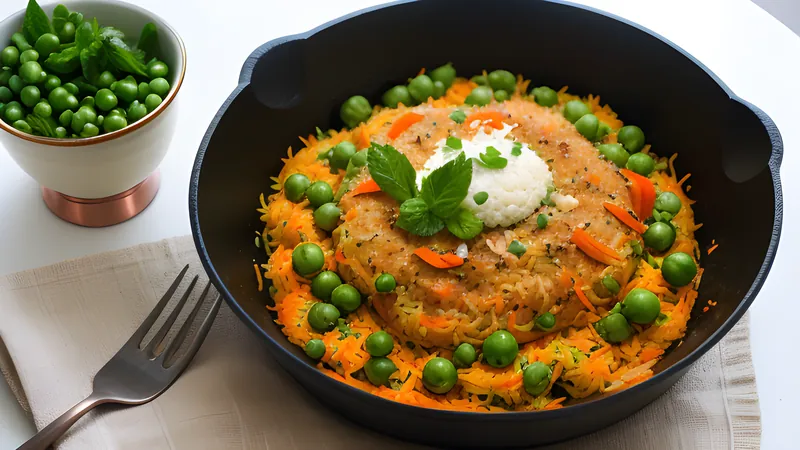
Vegetable Biryani with Saffron and Fried Onion
Layered rice and vegetables sealed and steamed
Contents
↓ Jump to recipeBiryani has a reputation for being difficult, and I want to gently argue with that. It is not difficult so much as sequential. There is no single hard technique in the whole process; there are simply several stages that each need to be done properly and in order, and the mistake most people make is trying to collapse them into one pot to save time. The dish resists that. Every shortcut shows up in the finished rice.
What you are actually making is two separate things that meet at the end. There is a spiced, saucy vegetable base, and there is a pot of rice cooked to about seventy per cent, and then you layer them and let steam finish the job in a sealed pan. The magic is in that final steaming, the dum, where the rice drinks up the aromatics rising from the vegetables below and every grain finishes cooking in scented vapour rather than water.
Vegetable Biryani with Saffron and Fried Onion
Ingredients
- 350g basmati rice
- 2 onions, thinly sliced
- 150ml neutral oil (for frying onions)
- 60g ghee
- 1 large carrot, diced
- 150g cauliflower florets
- 100g green beans, cut short
- 100g frozen peas
- 1 tbsp ginger-garlic paste
- 2 green chillies, slit
- 200g full-fat yoghurt
- 1 tsp Kashmiri chilli powder
- 1 tsp ground coriander
- 1/2 tsp ground turmeric
- 1 tsp garam masala
- 4 green cardamom pods, 1 black cardamom, 1 cinnamon stick, 4 cloves, 1 bay leaf
- 1 tsp cumin seeds
- Large pinch saffron, soaked in 4 tbsp warm milk
- Small handful mint and coriander, chopped
- Salt to taste
Method
- Soak the basmati 30 minutes, then drain. Fry the sliced onions in oil over medium heat until deep brown and crisp; drain on paper (this is the birista).
- Brown the ghee gently until it smells nutty and turns pale amber, then set aside.
- In a wide pan, temper cumin and whole spices in 2 tbsp of the browned ghee, add ginger-garlic paste and chillies, then the vegetables and ground spices; cook 5 minutes.
- Stir in yoghurt and a splash of water, cover and cook 8 minutes until vegetables are just tender; season well and fold in half the fried onion, mint and coriander.
- Boil plenty of salted water, add the whole spices, cook the drained rice 5 minutes until 70 per cent done, then drain.
- Layer the rice over the vegetables. Drizzle over saffron milk, the rest of the browned ghee, remaining fried onion and herbs.
- Seal the pan with a tight lid (or dough), steam (dum) on the lowest heat for 20 minutes, rest 10 minutes, then fold gently and serve.
A little history
Biryani travelled into the Indian subcontinent with Persian and Central Asian cooking, and its name shares a root with the Persian birian, to fry or roast before cooking. It flourished under the Mughal kitchens and then splintered into a glorious number of regional styles: the layered pakki biryani of Hyderabad and Lucknow, the fierier Kolkata version with its whole potato, the coconut-scented biryanis of the south. There is no single correct biryani, which is liberating once you accept it.
The vegetable version is sometimes treated as an afterthought, the meat-free box to tick, and that is a shame because vegetables give you texture and sweetness that a single protein cannot. The trick is choosing vegetables that hold their shape through steaming: carrot, cauliflower, green beans and peas are my standard, cut so they finish tender rather than falling apart. This shares its DNA with a proper chicken dum biryani; the method is nearly identical, and once you have it you can layer almost anything.
The twist: browned ghee
My small departure from tradition is to brown the ghee before I use it. Ghee is already clarified, so it will not burn its milk solids the way butter does, and a gentle heat coaxes it from plain richness into something nutty and toasted, close to a brown butter in aroma. Drizzled over the rice before the dum, it perfumes the whole pot. It is a tiny change that makes people ask what you did differently, and usually they cannot place it.
The birista matters
The fried onions, birista, are not a garnish you can skip. Cooked slowly to a deep, even brown and drained crisp, they melt into the rice during steaming and give biryani its characteristic dark sweetness. Fry them too fast and they burn bitter before they colour through; too pale and they go soft and bring nothing. Low and patient is the way, and it is worth frying a double batch because they keep in a jar and improve everything from dal to a plate of khichdi with ghee and crispy onion.
Making it
Rinse and soak the basmati for half an hour, then drain. Long-grain basmati that has soaked cooks into separate, elegant grains; skip the soak and you risk a claggy pot.
Fry the sliced onions first, in a generous slick of oil over medium heat, stirring often, until they are deep brown and crisp. Lift them onto kitchen paper and reserve the fragrant oil. Now brown your ghee gently in a small pan until it smells like toasted nuts and turns pale amber, and set it aside.
Build the vegetable base in a wide, heavy pan. Temper the cumin seeds and whole spices in a couple of spoons of the browned ghee until they crackle and smell fragrant. Add the ginger-garlic paste and green chillies, cook out their rawness, then add the vegetables and the ground spices and stir for five minutes to coat and toast everything. Stir in the yoghurt off a rolling boil, a spoonful at a time so it does not split, add a splash of water, cover, and cook for eight minutes until the vegetables are just tender. Season firmly; this layer has to carry the plain rice above it. Fold in half the fried onions and half the herbs.
Meanwhile, boil a big pot of well-salted water with a few whole spices, add the drained rice and cook for exactly five minutes. You are aiming for grains that are soft at the ends but still firm at the core, about seventy per cent done, because they will finish in the steam. Drain immediately.
Now layer. Spread the par-cooked rice evenly over the vegetables. Drizzle the saffron milk across the top in streaks so you get pockets of gold and white, then the remaining browned ghee, the rest of the fried onions and herbs. Seal the pan with a very tight lid, or a collar of simple flour-and-water dough pressed around the rim for the traditional airtight seal, and set it on the lowest possible heat for twenty minutes. A heat diffuser or a flat tava under the pan protects the base from scorching.
Take it off the heat and let it rest, still sealed, for ten minutes. Then open it, and instead of stirring, fold gently from the bottom up with a flat spoon so you lift the layers together without smashing the grains.
What goes wrong
Mushy rice comes from overcooking it in the first boil; when in doubt, pull it a minute early, because the dum will finish it. A scorched base comes from too much heat during steaming, so keep it low and use a diffuser. Bland biryani comes from timid seasoning of the vegetable layer, since the rice arrives unsalted and dilutes everything.
If your saffron gives no colour, it is either old or fake; a genuine pinch bloomed in warm milk should stain it gold within minutes. Never use so much that it turns medicinal.
Serving, storage and swaps
Biryani wants coolness alongside it: a simple raita of yoghurt, cucumber and mint, and perhaps a sharp onion salad. A bowl of dal makhani turns it into a feast.
Leftovers keep three days and reheat beautifully with a sprinkle of water and a lid, steaming rather than frying so the grains stay separate. Swap the vegetables freely for what is in the fridge, so long as you keep to things that hold their shape; paneer cubes, browned first, are a lovely addition, and a scatter of fried cashews and raisins over the top nods to the richer wedding-feast versions.
On the seal
The dough collar is the part that looks like showing off and is actually the most practical step in the whole dish. Biryani cooks in trapped steam, and any gap around the lid lets that steam escape, which is exactly the vapour you spent all this effort perfuming. A simple paste of plain flour and water, rolled into a rope and pressed around the rim before the lid goes on, holds everything in and turns your ordinary pan into a sealed steamer. If you would rather not, lay a sheet of foil over the pan, press the lid down on top and crimp the edges tight; the effect is much the same. When you crack the seal at the table the rush of scented steam is half the pleasure of serving it, and it tells everyone the rice underneath has been treated with the patience it deserves. Do not lift the lid to peek during the twenty minutes, however tempted you are, because every look costs you steam and time.
Related Content