Vada Pav: Mumbai's Potato Burger
A fried potato dumpling, a soft bun, and three chutneys doing the arguing
Contents
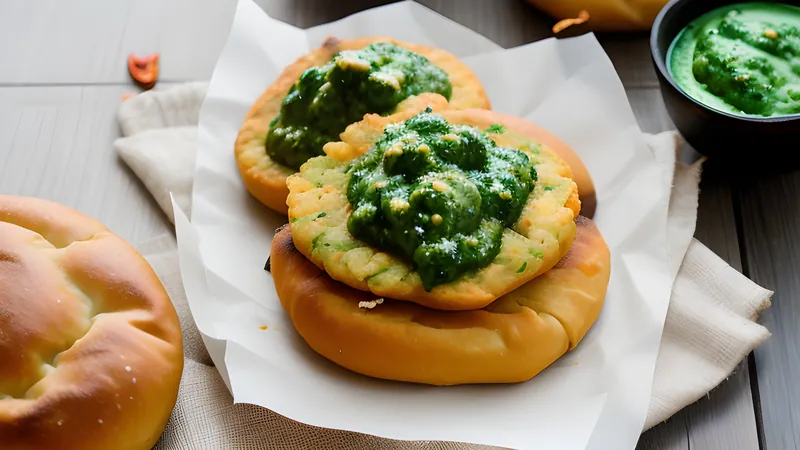
↓ Jump to recipeThe vada is the whole show, but the bun is not innocent. In Mumbai it gets a knife of butter and a minute on a hot tava until the crumb goes brown and faintly crisp at the edges, and that browning is doing real work — it is the difference between a soft roll that goes damp under a hot potato fritter and one that holds its structure through the first three bites. I griddle mine properly rather than just warming it through, because a vada pav with a flabby bun is a vada pav that has missed the point.
Vada Pav: Mumbai's Potato Burger
Ingredients
- 500g floury potatoes, peeled and diced
- 3 tbsp neutral oil, divided
- 1 tsp black mustard seeds
- 1 tsp cumin seeds
- 0.25 tsp asafoetida (hing)
- 15 fresh curry leaves
- 1 tbsp finely grated fresh ginger
- 5 garlic cloves, crushed
- 3 green chillies, finely chopped
- 0.5 tsp ground turmeric
- Small bunch fresh coriander, chopped
- 1 tbsp lemon juice
- 1.5 tsp salt, plus more to taste
- 150g gram flour (besan)
- 0.25 tsp ground turmeric, for the batter
- 0.25 tsp baking soda
- 150ml cold water, approximately
- 750ml vegetable oil, for deep-frying
- 4 tbsp desiccated coconut
- 8 garlic cloves, for the dry chutney
- 2 tbsp Kashmiri chilli powder
- 0.5 tsp salt, for the dry chutney
- Large bunch fresh coriander, for the green chutney
- Small bunch fresh mint, for the green chutney
- 2 green chillies, for the green chutney
- 1 tbsp lemon juice, for the green chutney
- 6 soft pav buns or dinner rolls
- 3 tbsp unsalted butter, for the griddle
- 6 small green chillies, slit lengthways, for frying
Method
- Boil the diced potatoes in salted water until completely soft, about 15 minutes, then drain and mash roughly, leaving some texture.
- Heat 2 tbsp oil in a pan, splutter the mustard and cumin seeds, add the asafoetida and curry leaves, then the ginger, garlic and green chillies; cook 1 minute.
- Stir in the turmeric, then the mashed potato, coriander, lemon juice and salt; mash together over the heat for 2 minutes so the spices bind, then cool completely and roll into 6 balls.
- Whisk the gram flour, turmeric and baking soda with enough cold water to make a batter the thickness of double cream, with no lumps.
- Heat the deep-frying oil to 175°C. Dip each potato ball in the batter to coat fully, then lower into the oil and fry, turning, for 4-5 minutes until deep golden and crisp; drain on a rack.
- Fry the slit green chillies in the same oil for 30 seconds until blistered, then drain and salt them lightly.
- For the dry chutney, toast the coconut and garlic separately in a dry pan until the coconut is golden, then blitz both with the chilli powder and salt to a coarse, oily rubble.
- For the green chutney, blitz the coriander, mint, green chillies, lemon juice and a splash of water with salt to a smooth, bright paste.
- Split the pav buns without cutting all the way through. Melt the butter on a hot griddle or in a wide pan and toast the buns, cut side down, until browned in patches.
- Spread green chutney on one cut side and dry chutney on the other, tuck a vada inside each bun, and serve immediately with a fried green chilli alongside.
What Mumbai actually eats between meals
Vada pav is not a snack in the sense of something optional. For a huge slice of Mumbai it is lunch, and it has been since 1966, when a stall owner named Ashok Vaidya started frying spiced potato dumplings and wedging them into bread rolls outside Dadar railway station. The timing mattered: Mumbai’s textile mills were beginning their long decline through the 1960s and 70s, throwing thousands of workers onto the street with no time and less money for a sit-down meal. A vada pav cost a few paise, took under a minute to eat standing up, and filled a mill worker’s stomach until the next shift. The Shiv Sena party later backed vada pav stalls explicitly as a way to give unemployed Maharashtrian youth an income that did not depend on the South Indian-run Udupi restaurants that dominated the city’s cheap eating scene — which is a reminder that a fried potato in a bun can carry a surprising amount of local politics.
The dish itself borrows its logic from further south: the batata vada, a potato dumpling in gram-flour batter, is a cousin of the bonda and the vada found across peninsular India, adapted here for a Marathi palate with mustard seed, curry leaf and asafoetida rather than a heavier spice mix. What makes it specifically Mumbai is the delivery mechanism — the pav, a soft white roll introduced to the city by Portuguese bakers in Goa and adopted wholesale by Mumbai’s street vendors because it was cheap, sturdy, and already sitting in every bakery in the city.
The potato has to taste of something
Potato choice matters more than most recipes admit. A floury variety — Maris Piper or King Edward if you’re shopping in a UK supermarket, russets in the US — breaks down into a dry, fluffy mash because its cells are packed with starch and comparatively little water, so when you mash it the cells rupture cleanly rather than releasing a slick of moisture. A waxy potato, the kind sold for salads, holds its cell walls together under mashing and the result is closer to wet, slightly gluey lumps than a fritter filling that will bind and hold its shape in hot oil. This is why a vada made with the wrong potato can taste right and still fall apart the moment it hits the fryer.
The mistake most home versions make is treating the filling as plain mashed potato with a pinch of turmeric stirred through. Street vendors temper their oil properly first — mustard seed until it stops crackling, then cumin, then a pinch of asafoetida for the savoury depth it releases once it hits hot oil, well past its raw smell. Curry leaves go in whole and should still be visible, slightly crisped, in the finished mash; if you fish them out before serving you have thrown away half the aromatic. Ginger and garlic get crushed rather than minced fine, so you catch small bursts of both rather than an even paste. I mash the potato with some texture left in it deliberately — a few pea-sized lumps make the vada feel like a proper potato dumpling rather than a smooth croquette, and they also help the batter grip.
Roll the mash into balls while it is completely cool. Warm potato makes a batter coating that slides and tears in the fryer, and a vada that splits open in hot oil is a vada that drinks oil instead of shedding it.
The batter, and why baking soda earns its place
Gram flour batter for a vada wants to be thin enough to coat in a single even layer and thick enough that it does not run off the potato ball before it hits the oil — double cream is the right consistency to aim for. The pinch of baking soda is a household-by-household choice, and mine lifts the crust into something closer to a light tempura shell than a dense pakora coating; it is the detail that separates a vada that stays crisp for the ten minutes it takes to eat from one that goes leathery by the second bite. Fry at 175°C — hotter and the outside colours before the potato is properly hot through; cooler and the coating soaks up oil instead of sealing. A thermometer is worth the two pounds it costs; guessing with a breadcrumb is how you end up with a batch of pale, greasy vadas.
Besan freshness is worth checking before you start, since it’s the one ingredient here most home cooks already have sitting in the cupboard rather than buying specially. Gram flour is ground from split chickpeas and, like any flour milled from a pulse rather than a cereal, its natural oils turn rancid faster than wheat flour — six months past its best and it develops a faintly bitter, dusty edge that no amount of spice will fully mask. Buy it in small bags rather than catering-sized ones unless you fry vada or make pakoras often, and give it a sniff before whisking; it should smell nutty and faintly sweet, not sharp or musty.
Two chutneys, doing two different jobs
Vada pav is built around a genuine argument between hot and rich, and both sides need representing. The green chutney is sharp, herbal and wet — fresh coriander and mint blitzed with green chilli and lemon, no oil, no cooked element, purely raw brightness to cut through the fried potato. The dry garlic chutney (locally sukha lasun chutney) is the opposite: coconut and garlic toasted until they smell nutty, then ground with Kashmiri chilli powder into a coarse, oily rubble that clings to the inside of the bun rather than dripping. Kashmiri chilli powder matters here specifically for its colour more than raw heat — it gives the chutney a deep brick red without making it unbearably hot, so most of the fire comes from the fresh green chillies fried alongside and eaten in alternating bites. Skip either chutney and the vada pav tastes flat; use only one and it tastes one-note.
Building the bun properly
Mumbai vendors run a flat griddle with a constant slick of butter, and the pav buns spend their last thirty seconds cut-side down in it, absorbing butter and picking up colour. It is the one place brown butter sneaks into a dish that has nothing else to do with French technique, and it earns its keep — a bun toasted until the surface sugars caramelise slightly has a savoury depth that a plain steamed roll does not. Spread the chutneys onto the toasted, still-warm cut sides rather than the vada itself, so every bite picks up both in roughly equal measure. Tuck the vada in whole, press the bun shut, and eat it within a couple of minutes of assembly — this is not a dish built for reheating or holding.
Variations worth knowing
Misal pav is vada pav’s spicier cousin, built around a fiery sprouted-moth-bean curry ladled over farsan (crunchy chickpea noodles) with a pav bun on the side for scooping rather than stuffing — worth trying if you like the base flavours here but want something wetter and hotter to eat with a spoon. Closer to home, some Mumbai stalls serve a “sandwich vada pav,” splitting the bun into three thin slices and layering in extra chutney and a scattering of thin potato crisps (locally called “sev”) for crunch, which is a reasonable trick to steal if you want a bit more textural contrast without changing the frying method. Dabeli, from Kutch in Gujarat rather than Mumbai proper, swaps the plain potato filling for one cooked with a sweet-tangy dabeli masala and studded with peanuts and pomegranate seeds — a good next dish to attempt once vada pav has become routine, since the bun-and-filling logic transfers directly.
Storage and getting ahead
The potato filling can be made a day ahead and kept covered in the fridge; bring it fully to room temperature before shaping, or the cold centre will stop the batter from crisping evenly in the fryer. The dry garlic chutney keeps in an airtight jar for two weeks and is worth doubling — it is excellent scattered over other fried snacks, stirred into plain rice, or spooned onto samosas in place of a mint dip. Do not fry the vadas ahead of time and reheat them in an oven; the batter loses its crackle and the potato dries at the edges. If you are cooking for a crowd, fry the coconut and garlic chutney and make the green chutney the morning of, then fry the vadas in batches just before serving so each one comes out of the oil within the hour it is eaten.
Where it sits on the table
Vada pav belongs on a table of other Indian street snacks rather than standing alone as a full meal. It pairs naturally with something like aloo gobi with charred cauliflower and amchur if you want a fuller spread, or with a plate of masala dosa for a weekend brunch that leans hard into South Asian breakfast territory. What it does not need is cutlery, ceremony, or a long wait between frying and eating — the whole point of the dish, since 1966, has been speed.
Related Content