Tteokbokki with Gochujang and Brown Butter
Brown butter takes the raw edge off gochujang without dulling the heat
Contents
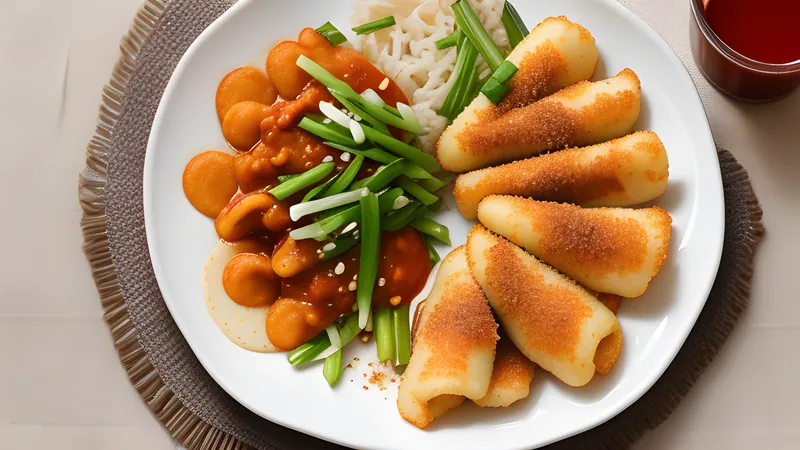
↓ Jump to recipeTteokbokki is Korea’s most recognisable street food, chewy rice cakes braised in a thick, red, fiercely spiced sauce, and most versions lean entirely on gochujang and sugar to get there. This one starts differently: the gochujang goes straight into brown butter, and that single change rounds off the sauce’s raw, slightly sharp edge without softening the heat itself. The chilli still hits; it just arrives on top of something nutty and rounded rather than something flat and purely sweet-hot. The tteok stay exactly as they should — soft outside, a genuine chew at the centre, sauce clinging to every ridge.
Tteokbokki with Gochujang and Brown Butter
Ingredients
- 500g tteok (Korean rice cakes), cylinder-shaped
- 600ml anchovy or kelp dashi stock (or water with 1 tsp dashi powder)
- 3 tbsp gochujang
- 1 tbsp gochugaru (Korean chilli flakes)
- 1.5 tbsp soy sauce
- 1.5 tbsp caster sugar
- 2 garlic cloves, finely grated
- 40g unsalted butter
- 150g fish cake sheets, cut into triangles
- 2 spring onions, cut into 4cm lengths, plus extra finely sliced to serve
- 1 hard-boiled egg, halved, to serve (optional)
- 1 tsp toasted sesame seeds, to serve
Method
- If the tteok are hard or refrigerated, soak them in warm water for 10 minutes to soften, then drain.
- Whisk the gochujang, gochugaru, soy sauce, sugar and grated garlic with 100ml of the dashi stock in a bowl until smooth.
- Melt the butter in a wide, heavy pan or shallow pot over medium heat. Swirl until it foams, turns golden-brown and smells nutty, about 3 minutes.
- Immediately pour the gochujang mixture into the brown butter, standing back as it will spatter, and stir to combine. Cook for 1 minute until fragrant and slightly darkened.
- Pour in the remaining dashi stock and bring to a simmer.
- Add the tteok and fish cake to the pan, spreading them in a single layer.
- Simmer, stirring gently and often, for 12 to 15 minutes, until the sauce has thickened to a glossy coating and the tteok are soft and chewy throughout.
- Add the spring onion lengths in the last 2 minutes of cooking.
- Taste and adjust with a little more soy sauce for savouriness or sugar for balance if the heat feels sharp.
- Spoon into bowls, top with the halved boiled egg if using, and scatter with sliced spring onion and sesame seeds. Serve immediately, while the sauce is still glossy and the tteok are hot.
From royal court dish to street cart icon
Tteokbokki’s oldest documented form has nothing to do with chilli at all. In the Joseon dynasty, court kitchens made a version called gungjung tteokbokki, rice cakes stir-fried with beef, vegetables and soy sauce in a savoury, non-spicy style closer to japchae than to the fire-red dish sold from street carts today. Gochujang did not become the dominant flavour until well into the twentieth century, and the specific origin story most often told credits a Seoul restaurant owner named Ma Bok-rim, who in 1953 began selling a gochujang-based version near Sindang-dong station, in the difficult years following the Korean War. That neighbourhood, Sindang-dong, still markets itself as tteokbokki’s spiritual home and hosts a dedicated tteokbokki alley to this day.
From there the dish spread through the pojangmacha — the orange plastic street tents that still dot Korean cities after dark — and became inseparable from Korean street food culture generally, sold alongside skewered fish cake and, often, a side of the cooking broth for dipping. It is now common enough to appear in convenience-store microwave form, but the good version is always made fresh, in a wide shallow pan, the sauce reducing and thickening as it goes rather than being poured on pre-made.
Tteokbokki’s popularity has kept mutating well past Ma Bok-rim’s original stall. Jeukseok tteokbokki, “instant-stone” tteokbokki, is cooked directly at the table over a portable burner and finished with instant ramen noodles and a slab of cheese, a format closely associated with the Sindang-dong alley and popularised further by Korean broadcast food shows in the 2010s. Cheese tteokbokki specifically — a handful of mozzarella melted over the top — took off internationally alongside the broader Korean food wave, showing up on menus from Seoul to London within a few years of going viral on Korean food broadcasts and mukbang channels. None of that changes the base sauce much; it’s still built on gochujang, sugar and stock, which is part of why the dish travels so well and adapts so readily to whatever’s added on top.
Why brown butter, and why now
Gochujang is a fermented chilli paste built on glutinous rice, soybean and chilli, and it carries a particular flavour signature: sweet at the front, deeply savoury in the middle from the fermentation, and sharply hot at the back, with a slightly raw, one-dimensional edge if it is only ever thinned with water or stock and heated through quickly. Most tteokbokki recipes never really deal with that raw edge — they balance it with sugar, which masks the sharpness by adding more sweetness rather than actually rounding the flavour out.
Brown butter works differently. Cooking butter past the foaming stage toasts its milk solids, producing compounds with a nutty, faintly caramel character similar to what happens when you toast nuts or grains directly — the same reaction, in miniature, behind why a dry-toasted spice blooms so much more than a raw one. Pouring the gochujang mixture directly into that hot, aromatic fat while it is still foaming means the chilli paste’s fermented notes bind with the browned butter’s nuttiness rather than sitting alongside plain, uncomplicated fat. The result is a sauce that tastes rounder and more savoury without needing more sugar to get there — the sweetness stays where it should, and the sharp edge gets absorbed into something richer instead of just being covered up.
Timing this matters: pour the gochujang mixture in the moment the butter turns golden-brown, not before (raw butter does not build the same flavour) and not after (butter scorches fast once truly browned, and burnt butter tastes bitter, not nutty). Standing back when it goes in is not a throwaway instruction — cold, wet paste hitting very hot fat spatters properly.
Getting the tteok right
Tteok, the cylindrical rice cakes central to this dish, are made from steamed and pounded glutinous rice, and their texture is the entire point of the dish. Cooked correctly they should be soft enough to bite through easily but chewy enough to have real resistance at the centre — under-cooked, they stay hard and starchy in the middle; overcooked, they turn mushy and start dissolving into the sauce, which thins it out and leaves you with less rice cake than you started with. Refrigerated or vacuum-packed tteok, which is what most people can buy outside Korea, needs a warm-water soak before it goes anywhere near the pan, because it firms up considerably in the fridge and will not soften evenly straight from cold.
Do not walk away from the pan during the 12 to 15 minute simmer. The sauce is reducing the whole time, and rice cakes release a small amount of their own starch as they cook, which thickens things further — stir gently but regularly to stop the tteok catching on the base of the pan, particularly once the sauce has thickened past the halfway point.
Use a wide, shallow pan rather than a deep saucepan if you have the choice. A wide surface area means more of the sauce is in direct contact with the heat at any one time, so it reduces evenly and quickly rather than staying thin in the centre while the edges over-reduce and start to catch. It also means the tteok can sit in a single layer, which is what lets every piece cook and sauce-coat at the same rate — stacked two or three deep in a narrow pot, the ones on the bottom will soften before the ones on top have taken on any colour or sauce at all.
Tips, substitutions and storage
If dashi stock is not to hand, plain water works, though the dish loses some depth — compensate with an extra half teaspoon of soy sauce. Fresh, unrefrigerated tteok, if you can find it, needs no soaking at all and can go straight into the sauce. Vegetarians can swap the anchovy dashi for a kelp-only stock or vegetable stock and drop the fish cake, adding sliced mushroom in its place for chew and savouriness.
On sourcing, most Korean grocers and a growing number of general Asian supermarkets stock tteok in the refrigerated or frozen section, usually as vacuum-sealed cylinders; frozen tteok needs a longer soak, closer to 20 minutes in warm water, and benefits from a change of water halfway through if it’s still stiff at the centre. Gochujang varies more between brands than most cooks expect — CJ’s Haechandle and Chung Jung One are both widely available and reliable, but heat levels differ enough between brands that it’s worth tasting your particular tub on its own before committing to the full 3 tablespoons, and dialling back slightly on a first attempt if you’re not sure how hot it runs. Fish cake, eomuk, also comes in several forms; the flat sheets used here are the standard tteokbokki cut, but skewered or rolled versions work just as well roughly chopped, and some Korean grocers sell an eomuk mix bag aimed specifically at this dish.
Tteokbokki is genuinely best eaten fresh, within minutes of coming off the heat, because the tteok firm back up considerably as the sauce cools. Leftovers keep in the fridge for a day, but reheating requires adding a splash of water or stock and stirring over low heat until loosened — the sauce will have set almost solid in the fridge, and a microwave alone will not bring the tteok back to a good texture.
Variations
Rabokki adds a nest of instant ramen noodles to the pan in the final 3 to 4 minutes of cooking, along with a splash more stock to keep the sauce loose enough to coat them — a genuinely popular Korean variation, not an invented shortcut. For a cheese-topped version, scatter a handful of shredded mozzarella over the finished dish and cover the pan for 2 minutes off the heat to melt it through. If you want more restraint on the heat, cut the gochugaru back to half a tablespoon and add an extra teaspoon of sugar to keep the sauce glossy rather than thin.
Tteokbokki’s fire pairs well against something cooling on the same table — japchae with charred vegetables and sesame is the classic counterpoint, and bibimbap with crisp rice crust and gochujang butter shares the same gochujang-and-butter instinct in a different form entirely. Once you have tasted gochujang rounded out by browned butter, plain sugar-balanced versions can taste a little unfinished by comparison.
Related Content