Treacle Tart with Ginger Breadcrumb
An old-school pud with a warming kick
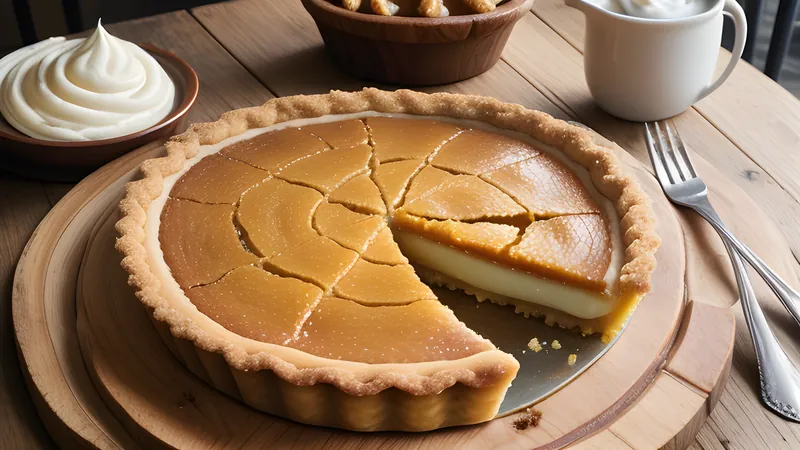
Treacle Tart with Ginger Breadcrumb
Ingredients
- 200g plain flour
- 100g cold unsalted butter, cubed
- 1 tbsp caster sugar
- 1 large egg yolk
- 2 to 3 tbsp ice-cold water
- 400g golden syrup
- 150g fresh white breadcrumbs
- 40g stem ginger, finely chopped, plus 2 tbsp of its syrup
- 2 tsp ground ginger
- zest and juice of 1 lemon
- 1 large egg, beaten
- pinch of fine salt
Method
- Rub the cold butter into the flour and sugar until the mixture resembles fine crumbs, then bind with the egg yolk and just enough cold water to form a dough.
- Wrap and chill the pastry for 30 minutes, then roll out and line a 23cm loose-bottomed tart tin, and chill again for 20 minutes.
- Blind bake the case at 180C fan with baking beans for 15 minutes, remove the beans, and bake a further 8 minutes until pale gold and dry.
- Warm the golden syrup gently until loose, then stir in the breadcrumbs, chopped stem ginger and its syrup, ground ginger, lemon zest and juice, and salt.
- Leave the mixture to stand for 10 minutes so the breadcrumbs swell, then beat in the egg.
- Pour the filling into the baked case and level the top.
- Bake at 170C fan for 30 to 35 minutes until set with a gentle wobble and deeply golden.
- Cool for at least 20 minutes before slicing, and serve warm with cold cream.
Treacle tart is one of those nursery puddings that sounds modest and tastes anything but. A short, biscuity case filled with what is essentially set golden syrup and breadcrumbs, baked until it is chewy at the edges and just-set in the middle, sweet enough to make your teeth sing. It is the pudding Harry Potter is famously fond of, the kind of thing wheeled out at school dinners and Sunday lunches for generations. My version keeps all of that comfort but threads warming ginger right through it, which cuts the sweetness and gives the whole thing a grown-up, gently spicy backbone.
1 Treacle, and Why There Isn’t Any
The first thing to clear up is the name, because treacle tart contains, traditionally, no treacle at all. The word treacle in Britain covers a spectrum of dark sugar syrups, but the classic treacle tart is made almost entirely from golden syrup, the pale, mild, butterscotch-scented refiner’s syrup that Abram Lyle began selling in the 1880s under that famous green tin with the lion on it. Black treacle, the dark and bitter end of the spectrum, is sometimes added in a small amount for depth, but golden syrup is the heart of the thing.
The tart itself is a Victorian invention, born more or less the moment cheap tinned golden syrup became a kitchen staple. It is thrift cookery at its finest: stale bread turned into crumbs, a tin of syrup, a squeeze of lemon to stop it cloying, all baked into a humble pastry case. That frugal origin is part of its charm. There is nothing fancy here, no rare ingredient, just clever use of what most kitchens already have.
2 The Ginger Twist
The classic recipe is wonderful but, if I am honest, relentlessly sweet. A treacle tart can sit on the palate like a sugar cube. The fix I have settled on, after years of nudging the recipe about, is a proper triple hit of ginger. Stem ginger in syrup, chopped fine, gives little soft, fiery pockets and a touch more moisture. Its bottling syrup goes in too, replacing some of the golden syrup so you lose nothing in volume. Then ground ginger laces the whole filling with a steady, warming heat.
The ginger does something clever beyond just tasting good. Its heat and slight bitterness push back against the sugar, so each forkful tastes balanced rather than simply sweet. The lemon, which is traditional, does similar work, and the two together turn a one-note pudding into something with proper length and warmth. It is still unapologetically a treacle tart. It just has opinions now.
3 Getting the Texture Right
Two things govern the texture of a treacle tart: the breadcrumbs and the bake. Use fresh white breadcrumbs, not dried, and not the sandy shop-bought kind. Soft fresh crumbs from a day-old loaf swell and soften into the syrup, giving that characteristic dense, chewy, sliceable set. Let the filling stand for ten minutes before it goes in the case so the crumbs can drink up the syrup; pour it in too soon and you risk a loose, weeping tart.
Blind baking the case is worth the extra step. Treacle filling is wet and will sog out a raw base, so a pre-baked, dried-out shell keeps the bottom crisp. Then bake the filled tart at a moderate temperature until it has a gentle wobble in the very centre, like a set custard. It firms further as it cools, so pulling it slightly early gives you that lovely yielding middle rather than a solid slab.
4 Serving and Keeping
Treacle tart wants something cold, plain and unsweetened alongside to balance it: a jug of cold double cream, a spoonful of crème fraîche, or a scoop of vanilla ice cream slowly melting into the warm filling. Custard works too, though I find it doubles down on the sweetness. The contrast of temperature, hot tart and cold cream, is half the pleasure.
It keeps well for three or four days in a tin, and is one of the rare puddings that is arguably nicer on the second day, once the flavours have settled and the ginger has bloomed. Warm a slice gently before serving to bring it back to life. It is honest, old-fashioned, faintly ridiculous in its sweetness, and with the ginger running through it, properly delicious.
Related Content