Tonkotsu Ramen with a 12-Hour Pork Broth
A rolling boil, a pot of pork bones, and a broth that turns milk-white and clings
Contents
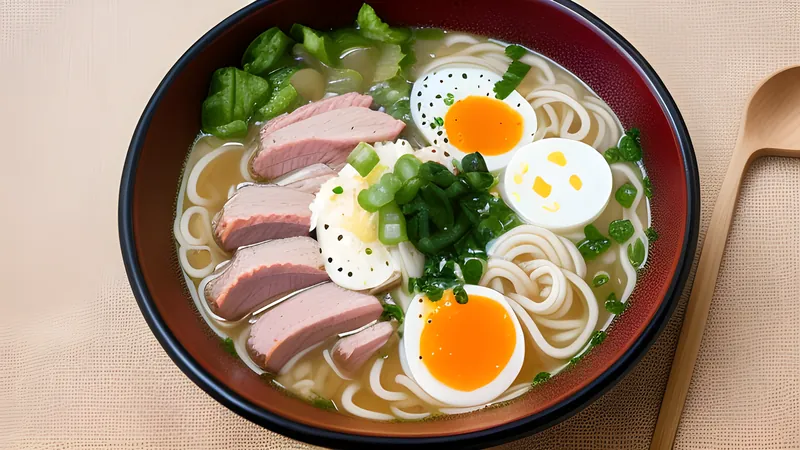
↓ Jump to recipeTonkotsu ramen is the bowl that converted a generation of people who thought they did not like soup. It is pork bones boiled so long and so hard that the broth turns the colour of milk and coats your lips like cream, poured over springy noodles and crowned with soft-yolked egg and torched belly. It is a genuine day-long project, and I won’t pretend otherwise. Almost all of that time, though, is the pot minding itself while you get on with your life. What you are buying with those twelve hours is a texture no shortcut can reach.
Tonkotsu Ramen with a 12-Hour Pork Broth
Ingredients
- 2kg pork trotters, split, plus 500g pork neck bones
- 500g pork back fat (optional, for extra richness)
- 1 whole garlic bulb, halved across
- 50g fresh ginger, sliced
- 1 onion, halved
- 600g pork belly, rolled and tied (for chashu)
- 100ml soy sauce plus 50ml mirin and 1 tbsp sugar (for the chashu braise and tare)
- 4 eggs, plus extra soy-mirin marinade
- 4 portions fresh ramen noodles (about 130g each)
- 2 tbsp light soy sauce and 2 tsp fine salt (for the tare)
- 2 tbsp mild vegetable oil
- To serve: sliced spring onions, nori, sesame, chilli oil
Method
- Cover the trotters and neck bones with cold water, bring to a hard boil for 10 minutes, then drain and rinse off all scum. Scrub the pot clean.
- Return the clean bones to the pot with the back fat. Cover with 4-5 litres water. Bring to a rolling, vigorous boil and keep it there, topping up with boiling water to keep the bones submerged.
- After 6 hours, add the halved garlic, ginger and onion. Continue the rolling boil for a further 6 hours, 12 hours total, until the broth is opaque and milky white.
- Meanwhile, braise the tied pork belly in the soy, mirin, sugar and water at a low simmer for 2 hours until tender. Cool in the liquid, then chill.
- Soft-boil the eggs for 6.5 minutes, peel, and marinate in the reserved soy-mirin liquid for at least 4 hours.
- Strain the finished broth through a colander, pressing to extract the fat and marrow. Season the pot: it should taste rich and porky.
- For each bowl, put 1 tbsp soy and 1/2 tsp salt tare in the base. Pour over 350ml very hot broth and whisk.
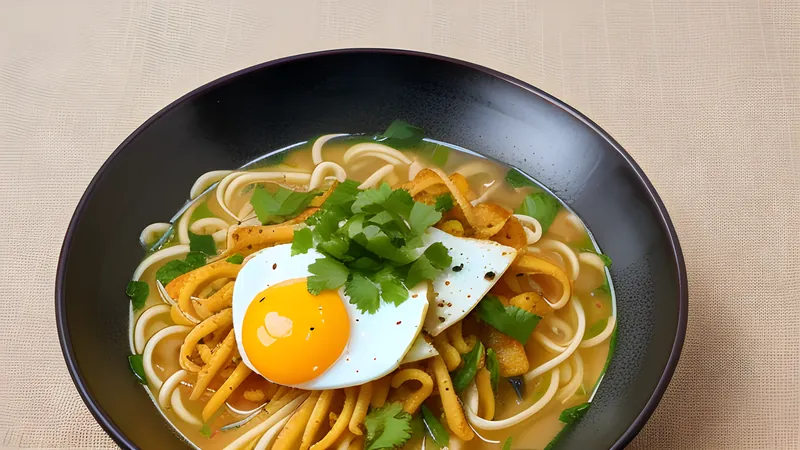
- Cook the noodles for the time on the packet, drain hard, and add to the bowls. Top with sliced torched chashu, a halved egg, spring onions, nori and chilli oil. Serve immediately.
From Kurume to the whole world
Tonkotsu means “pork bone”, and the broth belongs to Kyushu, the southern Japanese island where it was born in the town of Kurume in the 1930s. The origin has a pleasing accident to it: a stall owner is said to have left his pork-bone pot boiling too hard while he stepped away, and returned to find the broth had emulsified into an opaque, creamy white instead of the clear stock he intended. Rather than throw it out, he served it, and the cloudy style spread across Kyushu, becoming the signature of Fukuoka’s Hakata ramen with its thin, straight noodles.
Ramen itself is a Chinese-derived wheat noodle dish that Japan adopted and made entirely its own across the twentieth century, splintering into dozens of regional styles: the soy-based shoyu of Tokyo, the salt-based shio, the miso ramen of Hokkaido, and the pork-bone tonkotsu of the south. Each region argues fiercely for its own. Tonkotsu became the international ambassador partly because that rich, collagen-heavy broth travels so well and satisfies so completely.
Why the broth turns white
The milky colour is not an additive and it is not magic; it is physics. A vigorous, rolling boil, kept up for hours, batters the bones so hard that collagen, gelatin, fat and tiny particles of marrow break down and disperse into the water as an emulsion. Fat droplets and dissolved proteins suspend evenly through the liquid and scatter light, which reads to the eye as opaque white. A gentle simmer, the opposite of what you want here, keeps the fat sitting on top and the broth clear. So for tonkotsu you break the usual stock rule: you want a hard boil, not a quiet one, and you want to keep it boiling.
This is why you cannot rush it and cannot baby it. The heat has to stay high, the bones have to stay submerged, and time does the rest as the collagen slowly surrenders. Trotters are the key ingredient because they are dense with skin, cartilage and connective tissue, which is where all that body-giving gelatin lives. Neck bones and back fat add depth and richness.
The blanch that keeps the broth clean
Before the long boil, there is a step you must not skip: blanching the bones. Cover them with cold water, bring to a hard boil for about ten minutes, and you will see grey scum and blood rise to the surface. Drain the whole lot, rinse the bones under running water to scrub off every trace of that scum, and wash out the pot. Only then do you start the real broth in fresh water.
This blanch is the difference between a clean, sweet, porky broth and one with an off, muddy, livery edge. The impurities that rise in those first ten minutes are exactly what you do not want emulsified into your finished broth over the next twelve hours. Two minutes of scrubbing at the start saves the whole pot.
The long boil, hour by hour
Return the clean bones and back fat to the clean pot, cover with four to five litres of water, and bring to a rolling boil. Keep it at a genuine, vigorous, rolling boil, not a simmer, and keep a kettle going so you can top up with boiling water whenever the level drops below the bones. Bones that poke out of the liquid dry out and stop giving.
I add the aromatics late, at around the six-hour mark: a halved bulb of garlic, sliced ginger and a halved onion. Adding them at the start means twelve hours of boiling drives off their fragrance and can turn the garlic bitter; adding them halfway gives a rounded background without letting them dominate the pure pork character. After a full twelve hours the broth should be thick, opaque and off-white, and a spoonful should feel faintly sticky between your fingers from the gelatin. Strain it through a colander, pressing the softened bones and fat to push every scrap of richness through.
Chashu, eggs and the tare
While the broth boils, you build the toppings. Chashu is rolled, braised pork belly, and it is worth every minute. Tie a piece of belly into a tight roll and braise it gently in a mix of soy, mirin, sugar and water for a couple of hours until a knife slides in with no resistance. Cool it in its liquid, then chill it firm so it slices cleanly. Reserve that braising liquid, because it is doing double duty.
The eggs, ajitama, are soft-boiled for exactly six and a half minutes from a gentle simmer for a jammy, barely-set yolk, then peeled and steeped in the reserved soy-mirin liquid for at least four hours so they take on colour and seasoning. Time the boil with a timer and shock the eggs in iced water the second they are done; the line between jammy and hard is about a minute.
Here is the part people forget until their first bowl tastes of nothing: the tare. Tonkotsu broth on its own, however rich, is under-seasoned, because you never salt the boiling pot. The tare is a concentrated seasoning base of soy and salt that goes in the bottom of each bowl before the broth. It is the reason restaurant ramen tastes seasoned all the way through, and it is the lever you use to season each individual bowl to taste.
The torched-belly twist
My one small departure from the standard bowl is at the very end. Just before serving, I slice the cold chashu, lay it on a tray, brush it with a little of its braising glaze, and pass a kitchen blowtorch over the top until the fat blisters, bubbles and turns amber at the edges. The direct flame renders the surface fat, crisps it, and adds a charred, smoky-sweet note that plays beautifully against the clean richness of the white broth. If you have no torch, a minute under a fierce grill does much the same. It is a thirty-second flourish that makes the belly taste like it came off a yakitori grill.
Building the bowl
Ramen is served fast and eaten fast, so have everything ready before the noodles hit the water. Warm your bowls. Put the tare in the base of each. Bring the strained broth back to a near-boil, because a lukewarm bowl of ramen is a sad thing, and ladle it over the tare, whisking to combine.
Cook the fresh noodles for the time on the packet, no longer, then drain them hard, giving the sieve a firm shake, because water clinging to the noodles dilutes your carefully built broth. Nest the noodles into the broth, then arrange the toppings: two slices of torched chashu, a halved marinated egg with the yolk facing up, a scatter of finely sliced spring onion, a sheet of nori tucked against the rim, and a drizzle of chilli oil. Eat immediately, noodles first while they have bite.
Make-ahead, storage and variations
The broth is the make-ahead hero. It freezes superbly in portions and sets to a firm jelly in the fridge, which is a good sign of a collagen-rich stock. Make a big batch, freeze it flat in bags, and a proper bowl of ramen becomes a weeknight possibility. The chashu and eggs keep for a few days chilled.
If twelve hours is more than your schedule allows, a pressure cooker will get you a respectably creamy broth in around three to four hours under high pressure, though the colour and body are a touch lighter. You can also stretch a smaller quantity of bones by adding a couple of chicken carcasses, which lightens the flavour but keeps the richness.
Tonkotsu sits at the rich, restorative end of the noodle-soup world, in the same broad family as a bún bò Huế, the spicy lemongrass beef noodle soup, which builds its own deep pork-and-beef stock, and it shares its love of springy wheat noodles and a savoury pork broth with wonton soup with prawn-and-pork dumplings. Make the broth once, freeze half, and you will find yourself building bowls all winter.
Related Content