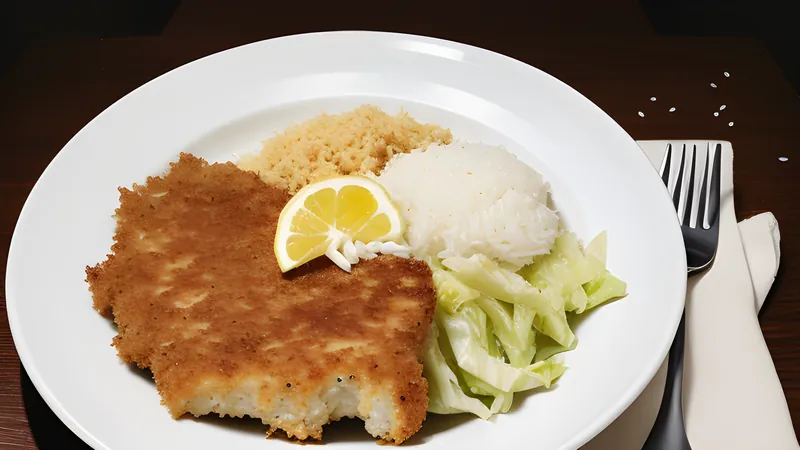
Tonkatsu with Shredded Cabbage and Bulldog Sauce
The crispest pork cutlet, a mountain of iced cabbage, and a homemade sauce with a spoon of miso
Contents
↓ Jump to recipeAsk a Japanese cook what makes a great tonkatsu and the answer will rarely be about the pork. It will be about the crust: how light it is, how it shatters, how it stays crisp under the sauce rather than turning to a soggy jacket. A tonkatsu is a study in fried texture, a deceptively simple cutlet elevated by fanatical attention to the coating, the oil temperature and the resting. Get those right and a cheap pork loin becomes a thing worth crossing town for.
There is a small, sanctioned twist in my version, and it lives in the sauce. Bottled tonkatsu sauce, of which the Bulldog brand is the famous benchmark, is a thick, fruity, Worcestershire-based condiment. I make my own and slip a teaspoon of white miso into it, which deepens the whole thing with a savoury, fermented undertone that store-bought bottles only hint at.
Tonkatsu with Shredded Cabbage and Bulldog Sauce
Ingredients
- 2 boneless pork loin steaks, about 180g each, 2cm thick
- Salt and white pepper
- 4 tbsp plain flour
- 2 eggs, beaten
- 120g panko breadcrumbs
- 800ml neutral oil, for deep-frying
- 1/4 white cabbage, very finely shredded
- 4 tbsp tomato ketchup
- 3 tbsp Worcestershire sauce
- 1 tbsp oyster sauce
- 1 tsp white miso paste
- 1 tbsp caster sugar
- 1 tsp Dijon mustard
- 1/2 apple, finely grated
- 1 tbsp toasted sesame seeds
- Cooked short-grain rice, to serve
- 1 lemon, in wedges
Method
- Snip the fat rim of each pork steak at 2cm intervals so it does not curl. Season with salt and white pepper.
- Coat each cutlet in flour, then beaten egg, then panko, pressing the crumbs on firmly. Rest coated for 10 minutes.
- Shred the cabbage as finely as you can and drop it into a bowl of iced water to crisp while you fry.
- For the sauce, whisk the ketchup, Worcestershire, oyster sauce, miso, sugar, mustard and grated apple until smooth.
- Heat the oil to 170C. Lower in the cutlets and fry for 3 to 4 minutes each side until deep golden and 63C inside.
- Lift onto a rack to drain and rest for 3 minutes so the crust stays crisp.
- Slice each cutlet across into 2cm strips. Drain the cabbage well and pile it high.
- Serve the sliced katsu with the cabbage, a mound of rice, the sauce, sesame seeds and a lemon wedge.
A cutlet that became an institution
Tonkatsu, literally “pork cutlet”, is one of the star dishes of yoshoku, the Japanese interpretation of Western food that took hold after the Meiji Restoration of 1868 opened the country to foreign influence. The direct ancestor is the European breaded veal cutlet, the cotoletta or schnitzel, which Japanese cooks adopted, swapped to pork, and transformed by deep-frying it in the manner of tempura rather than shallow-frying it in butter. A Tokyo restaurant called Rengatei is usually credited with serving an early version in the 1890s, and by the interwar years it had become a beloved specialist dish with its own dedicated restaurants.
Those tonkatsu-ya refined the format into what we know now: a thick cutlet fried in panko, sliced into strips so it can be eaten with chopsticks, served with a bottomless mound of raw shredded cabbage, a bowl of rice, miso soup, and the dark fruity sauce. Every element has a job. The cabbage is cold, crunchy and cleansing, cutting the richness of the fried pork; the sauce is sweet and tangy; the rice is the neutral ground. It is a complete, balanced meal disguised as a plate of fried pork, and it spawned a whole tribe of relatives including katsudon, the cutlet simmered with egg over rice, and katsu curry.
The pork and the coating
Use pork loin, roughly two centimetres thick, and do one small thing that most home cooks miss: snip through the rim of fat and silverskin at intervals along the edge. Pork loin has a band of connective tissue that contracts violently in hot oil and buckles the cutlet into a curled, unevenly cooked shape unless you sever it first. Season well with salt and white pepper.
The coating is the standard three-stage dredge, but the details matter. Flour first, patted to a thin even film so the egg has something to grip. Then beaten egg. Then panko, the coarse Japanese breadcrumb whose big open flakes are the entire secret to that glassy, jagged crust. Press the panko on firmly and, crucially, let the coated cutlets rest for ten minutes before frying so the coating hydrates slightly and adheres, rather than sloughing off in the oil.
Frying and resting
Deep-fry at 170C. This is hot enough to set and colour the crust and cook a two-centimetre cutlet to a safe 63C in the middle in about three to four minutes a side, without either scorching the panko or leaving the pork underdone. Keep a thermometer in the oil and do not crowd the pan, because two cold cutlets dropped into a small pot will send the temperature plummeting and give you a greasy, pale result.
When the cutlet is deep amber and floating higher in the oil, lift it onto a wire rack, never onto paper, and let it rest for three minutes. Resting on a rack lets steam escape from underneath so the base stays as crisp as the top, and the brief rest lets the pork’s juices redistribute so they do not gush out and steam the crust when you slice. Slice across into thick fingers with a sharp, non-serrated knife, pressing straight down so you do not drag and crush the coating.
Sauce, cabbage and the extras
- The cabbage must be cold and fine. Shred it as thinly as you possibly can, ideally on a mandoline, and soak it in iced water for ten minutes to crisp it up, then drain it thoroughly. Limp, thick, warm cabbage ruins the plate; iced, hair-fine cabbage makes it.
- The sauce. My homemade version leans on ketchup for body and sweetness, Worcestershire for its tamarind-and-spice tang, oyster sauce and miso for savoury depth, grated apple for fruity roundness, and a little mustard for lift. It keeps a fortnight in the fridge and improves after a day.
- Sesame ritual. Many tonkatsu shops give you whole toasted sesame seeds and a little mortar to grind them into the sauce yourself, which releases their oils and perfumes the whole thing. Do it if you have a mortar; it genuinely helps.
- Lemon. A squeeze of lemon over the hot crust just before you dip it is traditional and cuts the fat beautifully, brightening the whole plate in a way the sauce alone cannot.
- Make it a katsu sando. Cold leftover tonkatsu between two slices of soft white bread with sauce and a little cabbage is one of the great sandwiches on earth.
Reading the fry by sound and sight
Deep-frying at home makes people nervous, and the fear usually shows up as fiddling: poking the cutlet, flipping it too often, lifting it out to check. Trust the oil instead and learn to read it. When the cutlet first goes in it will sink and throw up a vigorous, rolling boil of bubbles as the moisture in the coating flashes to steam. That sizzle is loud and busy at first. As the crust sets and the water cooks off, the bubbling slows and quietens and the cutlet rises to float higher in the oil. That change, from a frantic sizzle to a calmer, lazier one, is your doneness cue as reliably as any thermometer.
Colour is the other signal. You want a deep, even amber, the shade of a good digestive biscuit. Pale gold means underdone and greasy; dark brown means the panko is on its way to bitter. Between batches, let the oil come back up to 170C before adding the next cutlet, and skim out any stray crumbs, which will otherwise burn and taint the oil.
Storing and reheating
Tonkatsu is at its absolute best within minutes of frying, but it reheats better than most fried food if you treat it right. Never microwave it; the steam turns the crust to a wet sock. Instead, reheat leftover cutlets on a rack in a 190C oven for eight to ten minutes, which drives off moisture and re-crisps the panko. The homemade sauce keeps for two weeks in a sealed jar and the flavours marry and mellow after the first day, so it is worth making a double batch. Raw shredded cabbage will hold a day in iced water in the fridge, drained and covered, ready for the next cutlet.
Master this crust and you have unlocked a whole family of dishes: divert a cutlet into a bowl for katsudon, or chase the same fried-to-a-shatter thrill in a plate of salt and pepper squid with chilli. Snip the fat, rest the coating, fry at a steady 170C, and drain on a rack. The pork was never the hard part. The crust is the whole art.
Related Content