Tomato soup
Roasted tomatoes, a balsamic edge and a basil drizzle
Contents
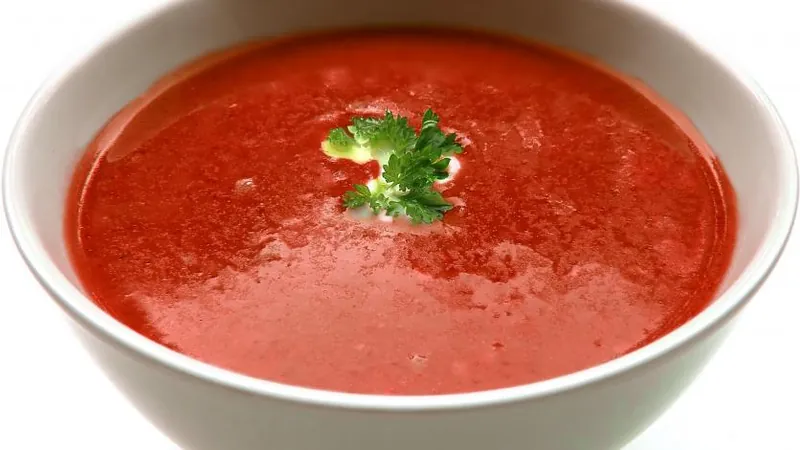
↓ Jump to recipe<p>There is a version of tomato soup that comes from a tin, and there is a version that tastes of actual tomatoes, and the gap between them is mostly an hour in a hot oven. This is the second kind. The one step I will not let you skip is roasting the tomatoes first: it drives off water, concentrates the sugars and gives you that jammy, faintly caramelised edge that no amount of tinned tomato and cream can fake. A splash of balsamic at the end and a swirl of raw basil oil over the top do the rest.</p>
<div class="recipe-card" id="recipe">
<div class="recipe-card-head"><p class="recipe-card-title">Tomato soup</p>
<div class="recipe-card-actions"><a class="recipe-pin" href="https://www.pinterest.com/pin/create/button/?description%3dTomato%2bsoup%26media%3dhttps%253A%252F%252Fmedia.vo.rs%252Ftomatosoup.jpg%26url%3dhttps%253A%252F%252Fvo.rs%252Fstory%252Ftomato-soup%252F" target="_blank" rel="nofollow noopener" aria-label="Save to Pinterest"><i class="fab fa-pinterest-p fa-fw"></i> Save</a><button type="button" class="recipe-print" onclick="window.print()" aria-label="Print recipe"><i class="fas fa-print fa-fw"></i> Print</button>
</div>
</div>
<div class="recipe-meta"><span class="recipe-meta-item"><span class="recipe-meta-label">Serves</span>6 servings</span><span class="recipe-meta-item"><span class="recipe-meta-label">Prep</span>20 min</span><span class="recipe-meta-item"><span class="recipe-meta-label">Cook</span>120 min</span><span class="recipe-meta-item"><span class="recipe-meta-label">Cuisine</span>British</span><span class="recipe-meta-item"><span class="recipe-meta-label">Course</span>Soup</span></div>
<div class="recipe-cols">
<div class="recipe-ingredients">
<h3>Ingredients</h3>
<ul><li>1 kg tomatoes, preferably cherry or vine, halved</li><li>4 tbsp olive oil, plus extra to finish</li><li>1 tbsp caster sugar</li><li>1 tsp dried oregano</li><li>0.25 tsp cayenne pepper, plus more to taste</li><li>2 large onions, roughly chopped</li><li>6 garlic cloves, finely chopped</li><li>2 celery sticks, roughly chopped</li><li>3 carrots, roughly chopped</li><li>1 large bunch fresh basil (leaves picked, stalks reserved)</li><li>40g plain flour</li><li>500ml chicken or vegetable stock</li><li>150ml double cream</li><li>1 tbsp balsamic vinegar</li><li>Juice of 0.5 lemon</li><li>Salt and freshly ground black pepper</li><li>Parmesan, to serve</li></ul>
</div>
<div class="recipe-method">
<h3>Method</h3>
<ol><li>Heat the oven to 200C/180C fan. Halve the tomatoes, spread cut-side up in a roasting tin, and toss with 2 tbsp olive oil, the sugar, oregano, cayenne, 1 tsp salt and a few basil leaves. Roast for 1 hour until slumped and caramelised at the edges.</li><li>Pick the remaining basil leaves and set aside; finely chop the stalks.</li><li>Warm the remaining 2 tbsp olive oil in a large pan over a medium heat and fry the onions, garlic and chopped basil stalks for 5 minutes until softened, then add a pinch each of cayenne and oregano.</li><li>Add the celery and carrots and cook for 5 minutes, then stir in the flour and cook for 1 minute before pouring in the stock.</li><li>Simmer for 20 minutes, then scrape in the roasted tomatoes and all their tin juices and simmer gently for a further 45 minutes to 1 hour.</li><li>Blend the soup until smooth, stir in the cream, and season with salt, pepper, cayenne and the balsamic vinegar.</li><li>Blend the reserved basil leaves with the lemon juice, a little olive oil and a pinch of salt to a loose drizzle.</li><li>Ladle into bowls, grate over Parmesan and spoon over the basil oil.</li></ol>
</div>
</div>
</div><h2 id="why-we-didnt-always-have-it">Why we didn’t always have it</h2><div class="ad-unit ad-in-article" aria-label="Advertisement">
<span class="ad-label">Advertisement</span>
<ins class="adsbygoogle" style="display:block;text-align:center"
data-ad-client="ca-pub-3726833845844946"
data-ad-slot="3291553914"
data-ad-format="auto"
data-full-width-responsive="true"></ins>
<script>(adsbygoogle = window.adsbygoogle || []).push({});</script>
</div>
<p>Tomatoes are a New World fruit, native to the western coast of South America and first domesticated in Mexico. They reached Europe with returning Spanish ships in the sixteenth century, and for a long time northern Europeans treated them with deep suspicion. The plant is a relative of deadly nightshade, and the fashion for pewter and lead-glazed tableware meant the fruit’s acidity leached lead into the food, so tomatoes genuinely did make wealthy diners ill. That is a large part of why they were grown as ornamental curiosities for well over a century before anyone trusted them in a pot.</p>
<p>Tomato soup as we know it is far more recent. The turning point was the American food chemist John T. Dorrance, who in 1897 worked out how to condense soup by removing most of the water, cutting the weight and cost of shipping a tin. His condensed tomato soup, made for the company that became Campbell’s, turned the dish into a household staple on both sides of the Atlantic, and Andy Warhol later turned the tin itself into a piece of art. The homemade version predates the tin, of course, but it was that bright red can that fixed tomato soup in the collective memory as the thing you eat with a toasted cheese sandwich on a cold day.</p>
<h2 id="the-method-step-by-step">The method, step by step</h2>
<p>The recipe splits into two streams that meet at the end. On one side, the tomatoes roast slowly and untended for an hour, needing nothing from you but the occasional glance. On the other, you build a savoury vegetable base on the hob while they cook, so the two are ready at roughly the same time. It reads long, but the active work is barely twenty minutes; the rest is the oven and the pan doing the flavour-building for you.</p>
<p>Start the tomatoes first, because the oven takes the longest. While they roast, get the base going, and by the time the base has simmered for its twenty minutes the tomatoes will be slumped and ready to scrape in. Then it is a long, gentle simmer to marry everything, a quick blend, and the finishing touches. Do not be tempted to skip the second simmer once the roasted tomatoes go in; that final stretch is where the roasted sweetness spreads through the whole pot rather than sitting on top of a thin vegetable broth.</p>
<h2 id="the-soffritto-and-why-it-matters">The soffritto, and why it matters</h2><div class="ad-unit ad-in-article" aria-label="Advertisement">
<span class="ad-label">Advertisement</span>
<ins class="adsbygoogle" style="display:block;text-align:center"
data-ad-client="ca-pub-3726833845844946"
data-ad-slot="3291553914"
data-ad-format="auto"
data-full-width-responsive="true"></ins>
<script>(adsbygoogle = window.adsbygoogle || []).push({});</script>
</div>
<p>Underneath the roasted tomatoes sits a proper base of onion, garlic, celery and carrot, softened slowly in oil. This is a soffritto, the same aromatic foundation that begins so many Italian sauces, and it does two jobs. The onions and carrot bring a background sweetness that balances the tomatoes’ acidity, and the slow cooking develops savoury depth before a drop of stock goes in. Rushing this stage, or worse skipping it, is the difference between a soup that tastes rounded and one that tastes sharp and thin. Give it a genuine five minutes over a medium heat and let the vegetables soften and turn glossy before anything else joins the pan.</p>
<p>The small spoon of flour, cooked out for a minute before the stock, is not there to make a thick, gluey soup. It gives just enough body so the finished purée hangs together rather than separating into watery liquid and floating pulp. If you would rather keep it gluten-free, leave the flour out and instead blend in a handful of the roasted tomatoes’ skins, or a boiled potato, for body.</p>
<h2 id="getting-the-balance-right">Getting the balance right</h2>
<p>Ripe tomatoes swing between sweet and sharp depending on the season and the variety, so the seasoning at the end matters as much as the roasting at the start. Cherry and vine tomatoes are reliably sweeter and are the ones I reach for; large watery salad tomatoes give a thinner, more acidic result. Taste before you serve. If it is too sharp, the sugar you added during roasting and a little more cream will round it out. If it tastes flat and dull, the balsamic vinegar is your friend: a single tablespoon lifts the whole pot, sharpening the tomato flavour without announcing itself as vinegar.</p>
<p>The cayenne is there for warmth rather than heat. A quarter teaspoon simmered through the whole batch gives a barely perceptible background prickle that stops the soup being one-dimensionally sweet. Add it cautiously, taste, and add more if you like; you can always add heat but you cannot take it out.</p>
<h2 id="choosing-and-handling-the-tomatoes">Choosing and handling the tomatoes</h2>
<p>The single biggest variable in this soup is the tomato itself. Out of season, most supermarket tomatoes are picked green and gassed with ethylene to redden them, which turns them red without ever developing the sugars and acids that make a tomato taste like a tomato. This is precisely where roasting rescues you: driving off the excess water and concentrating what little flavour a pale winter tomato has left. In high summer, when local vine or plum tomatoes are properly ripe, you can roast for a little less time and the soup will taste twice as good for it.</p>
<p>Do not bother peeling the tomatoes before roasting. The skins soften in the oven, then blend into the soup and disappear, taking their fibre and colour with them. If you want a truly velvet-smooth result, pass the blended soup through a fine sieve at the end to catch any stray skin and seed, though I rarely think it worth the extra washing-up. Keep every drop of the sticky juice and caramelised bits from the roasting tin, too; scrape them in with a spatula, because that is where a good third of the flavour has collected.</p>
<h2 id="the-basil-drizzle">The basil drizzle</h2>
<p>A quick basil oil, blitzed from the leaves you set aside with lemon juice and olive oil, is what turns a nice soup into a good-looking one. Blend it just before serving so it stays vivid green; basil oxidises and darkens if it sits, so it is not something to make hours ahead. Spooned over the top with a little grated Parmesan, it gives a fresh, peppery hit against the deep roasted sweetness underneath.</p>
<p>If your blender struggles to get the oil truly smooth, a pinch of salt acts as an abrasive and helps break the leaves down, and blanching the basil for a couple of seconds in boiling water then plunging it into iced water sets the colour so the oil stays a vivid emerald even after a few hours. It is a small flourish, but it is the difference between a bowl that looks homemade in the good sense and one that looks like it came from a tin.</p>
<h2 id="to-cream-or-not-to-cream">To cream or not to cream</h2>
<p>The double cream at the end is a British instinct, softening the acidity and giving the soup a plush, velvety finish. It is optional, and worth understanding rather than pouring in on autopilot. Cream rounds the tomato and mutes its brightness, which is exactly what you want on a bleak winter day but can dull a soup made from good summer tomatoes whose whole appeal is their vivid sharpness. Add it gradually and taste as you go; you can always add more, and a soup that tastes flat and dull has usually had too much. Stir it in off the heat or over a low flame, because boiling cream hard can cause it to split.</p>
<p>If you would rather keep the soup dairy-free but still want that silky body, a swirl of good olive oil at the table does much of the same work, coating the tongue and mellowing the acid, without the heaviness. A spoonful of red lentils cooked in with the stock is another route to creaminess: they dissolve completely, thickening the soup and adding a gentle sweetness that flatters the tomato.</p>
<h2 id="serving-storing-and-variations">Serving, storing and variations</h2>
<p>Serve with toasted sourdough or the classic grilled cheese sandwich for dipping. The soup keeps for up to four days in the fridge and freezes beautifully for up to three months, so it is worth making the full batch; freeze it before adding the cream and stir that in fresh when you reheat, as dairy can split and turn grainy on freezing.</p>
<p>For a vegan version, use vegetable stock, leave out the cream and blend in a boiled potato or a handful of cashews for richness. For a smokier bowl, add a roasted red pepper alongside the tomatoes, or a pinch of smoked paprika with the cayenne. And if you want to lean into the roasting, char the tomatoes a shade harder until the edges blacken here and there, which gives a deeper, almost grilled note.</p>
<p>If you like this kind of blended vegetable bowl, the same roast-then-blend logic works beautifully for a <a href="/story/spiced-carrot-ginger-soup/">spiced carrot and ginger soup</a> or a <a href="/story/butternut-squash-soup/">butternut squash soup</a>, while a <a href="/story/tuscan-white-bean-and-cavolo-nero-soup/">Tuscan white bean and cavolo nero soup</a> shows what happens when you thicken with bread and beans instead of a purée. All start from the same patient soffritto.</p>
Advertisement
Related Content
Advertisement
