The Full English, Timed So Nothing Goes Cold
A reverse-order timeline that gets everything onto warm plates together
Contents
↓ Jump to recipeEverything on a full English cooks at a different speed, and the usual way people go wrong is starting the eggs too early and eating them lukewarm while the sausages catch up. The fix isn’t a bigger pan or a faster hob — it’s working backwards from the eggs, which cook in under three minutes, and starting whatever takes eighteen minutes first.
The Full English, Timed So Nothing Goes Cold
Ingredients
- 4 good pork sausages (Cumberland or Lincolnshire)
- 6 rashers smoked back bacon
- 4 slices black pudding, about 1cm thick
- 4 plum tomatoes, halved
- 200g chestnut mushrooms, halved
- 400g tin baked beans
- 1 tsp black treacle
- 1 tsp Worcestershire sauce, plus more to taste
- 4 large eggs
- 4 slices good white bloomer bread
- 25g butter
- 2 tbsp neutral oil
- Salt and black pepper
Method
- Heat the oven to 100°C fan and put two plates and a baking tray inside to warm.
- Put the sausages in a cold, dry frying pan over medium heat; they take longest, so start them first and turn every few minutes for 18-20 minutes until browned all over and cooked through.
- Once the sausages have rendered some fat, about 8 minutes in, add the bacon to the same pan or a second pan and fry 3-4 minutes per side until crisp; transfer sausages and bacon to the warm tray as each finishes.
- At the same point, warm the baked beans in a small pan with the treacle and Worcestershire sauce over low heat, stirring occasionally.
- Fry the black pudding slices in a dry pan for 2 minutes per side until crisp-edged, then move to the warm tray.
- With about 10 minutes left, put the tomatoes cut side down and the mushrooms into the fat left in the sausage/bacon pan; cook 5-6 minutes until the tomatoes are charred and the mushrooms tender, then move to the tray.
- Fry the bread in a little more of the rendered fat plus a splash of oil for 2 minutes per side until golden and crisp; move to the tray.
- Last of all, melt the butter with any remaining fat in the pan and fry the eggs for 2-3 minutes for a soft, just-set yolk, seasoning with salt and pepper.
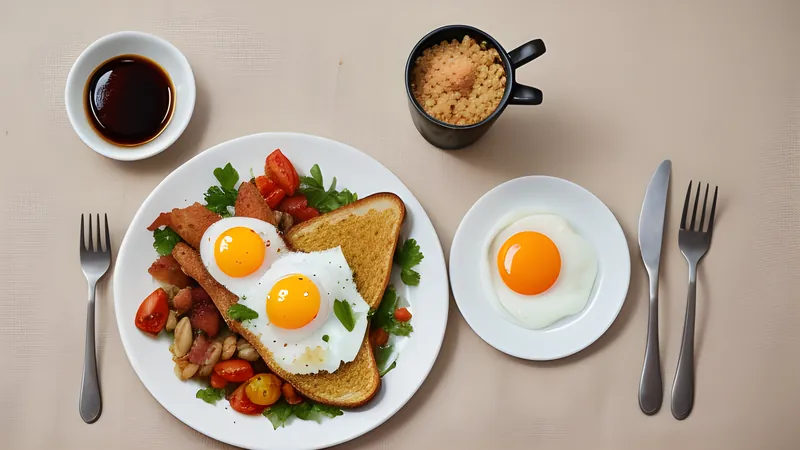
- Plate everything else on the warmed plates first, then slide an egg onto each plate the moment it's ready, so the eggs are the only element that hasn't been sitting.
A meal built to run on someone else’s day
The fried breakfast as most of Britain knows it — sausage, bacon, egg, tomato, mushroom, beans, toast or fried bread — took its current shape in the 19th century, but its two ancestors pulled in opposite directions. Grand country houses served elaborate hot breakfast spreads for guests with nothing better to do than shoot game all morning; laid out on a sideboard under silver domes, this was leisure food, meant to be picked at slowly. The same fried combination also fed a very different appetite: industrial workers heading into factories and mines needed calories that would last a long shift, and a plate of fried protein and starch, eaten fast before a 6am start, did that job cheaply. The full English survived because both versions kept cooking it long after the country houses and the coal pits that made it useful had mostly gone, and it settled into its role as weekend food — the one meal of the week people have time to actually sit down and finish while it’s hot.
Regional variants tell you where you are without a map. Scotland adds a tattie scone and Lorne sausage, square-cut and griddled rather than stuffed into a casing; Ulster fries in soda bread and potato bread instead of toast; the full Irish adds white pudding alongside the black. Each is a full expression of the same idea, fed by whatever a region’s mills and farms happened to produce.
Why the order matters more than the ingredients
The problem with a full English isn’t the cooking, it’s the choreography. Seven or eight components finish at wildly different rates, one hob, one grill, one oven, and a kitchen that wants everyone eating within the same two minutes. The fix is to think in reverse: identify the item that takes longest — sausages, at eighteen to twenty minutes — and put it on first, in a cold pan, so the fat renders slowly rather than the outside catching before the inside cooks through. Everything after that gets timed backward from the eggs, which are the fastest thing on the plate and the one thing that genuinely suffers from sitting even five minutes under foil.
A low oven, barely above blood heat at 100°C, is doing quiet but essential work here. It’s not cooking anything further; it’s simply holding cooked food at a temperature that stops it cooling down while the rest of the pan catches up, the same principle a restaurant kitchen relies on with a pass under a heat lamp. Warm the plates in there too — a hot plate under a fried egg buys you another two or three minutes of proper heat at the table, which sounds trivial until you’ve eaten a full English off a cold plate and felt the sausage go clammy halfway through.
Reading the fat instead of the clock
Sausages and bacon share a pan for a reason beyond convenience: the fat that renders out of the sausages by the eight-minute mark is exactly what the bacon wants to crisp in, and by the time both are done, that same pan holds enough rendered fat to fry the tomatoes, mushrooms and bread in sequence without adding fresh oil each time. Cut side down, tomatoes want real contact with a hot, faintly smoky pan rather than a gentle simmer — a few minutes of real char is what turns a bland tinned-tasting tomato into something worth eating. Mushrooms take the same heat happily alongside them. This is also where a full English earns its place among dishes built on rendered animal fat rather than a splash of fresh oil measured out of a bottle — the flavour genuinely comes from what came before it in the pan, not from a separate ingredient added for the purpose.
The one deliberate twist: treacle in the beans
Tinned baked beans are already sweet-savoury by design, built on tomato sauce with sugar and a little vinegar, but a teaspoon of black treacle and a dash of Worcestershire sauce stirred through while they warm pushes them somewhere closer to a proper baked-bean-from-scratch flavour — a faint bitterness and a deep, almost smoky sweetness that plain tinned beans don’t have on their own. It costs nothing extra in time, since the beans are warming in their own small pan anyway while the sausages and bacon do the real work, and it’s the one place in this whole plate where five seconds of stirring buys a genuinely different result rather than just a faster one.
Eggs go last, always
Fry the eggs in the same pan, in the butter and whatever fat is left, after everything else is already plated. A soft, barely-set yolk takes two to three minutes and cannot be rushed onto the tray to keep warm the way sausages or toast can — a held fried egg keeps cooking under residual heat and turns rubbery by the time it reaches the table. Everything else on the plate should already be arranged, warmed plates and all, before the eggs go anywhere near the pan; the egg is plated the second it leaves the heat, which is the entire point of working backwards from it in the first place.
What goes wrong, and why
The most common failure isn’t the eggs at all, it’s the sausages: cooked over too high a heat, they brown and split on the outside within five minutes while the centre stays pink and underdone, because a cold pan on medium heat needs the full eighteen minutes to let fat render and heat travel to the middle without the casing bursting first. Starting sausages in a hot pan to save time is the single change most likely to wreck the whole plate, since a split sausage also dumps its fat and juices early, leaving less rendered fat for everything that’s meant to fry in it later.
Watery beans are the second most common complaint, and it’s almost always a pan left uncovered on too high a heat for too long, reducing the sauce past the point where the treacle and Worcestershire sauce can round it out again. A gentle simmer with an occasional stir, rather than a rolling boil, keeps the sauce glossy rather than split and gluey.
Grey, tough mushrooms usually mean the pan was too crowded when they went in. Mushrooms release a surprising amount of water as they cook, and if that water can’t evaporate fast enough because the pan is packed with tomatoes and mushrooms both, everything steams rather than fries, and steam doesn’t brown. Give them the space they need, even if that means frying the tomatoes and mushrooms in two batches rather than one crowded pan — it costs two minutes and the difference in colour and texture is obvious on the plate.
Substitutions and regional swaps
Any good butcher’s sausage works here, but a coarser, fattier Cumberland or a herb-flecked Lincolnshire renders more usable fat for the rest of the pan than a lean supermarket own-brand banger, which matters more in this recipe than in most, since that fat is doing double duty as the cooking medium for everything that follows. Streaky bacon can stand in for back bacon and crisps up faster, so start it a few minutes later than the instructions above suggest. Vegetarians can swap sausages and bacon for a good plant-based sausage and a thick slice of halloumi fried in the same low-oven-and-last-minute logic — halloumi behaves almost exactly like an egg here, browning fast and turning rubbery if it sits, so fry it in the same slot the eggs would otherwise take.
Black pudding divides opinion sharply enough that it’s worth treating as fully optional; leave it out and add an extra rasher of bacon or a second egg to fill the gap on the plate rather than trying to substitute something milder, since nothing quite replicates its iron-rich, oatmeal-thickened character. Fried bread is the traditionalist’s choice and toast the practical one for anyone trying to keep the fat content of the whole plate under control; either way, frying or toasting is the very last non-egg step, timed to land warm rather than sit cooling on the tray with everything else.
Getting ahead, and what travels
A full English doesn’t reheat kindly as a whole plate — the eggs in particular go rubbery and the toast goes soft — but individual elements survive well enough for a slightly staggered version on a busy weekend. Sausages and bacon can be cooked ahead and held in a low oven for up to twenty minutes without real loss; beans reheat fine from the fridge; eggs should always be the very last thing fried, no exceptions. If a full English feels like too much plate for a weekday, the same timing logic — longest-cooking item first, egg fried last, into a warmed pan — carries over neatly to smaller weekday breakfasts like eggs benedict on sourdough muffins, where the hollandaise and muffin toasting both need to be timed around the poached egg rather than the other way round. And if you’re building out a proper weekend spread, warm crumpets from scratch alongside make a good bridge between the fry-up and the toast rack, for anyone who wants both.
Related Content