Thai Steamed Fish with Lime, Chilli and Garlic
Pla nueng manao, sharp and clean
Contents
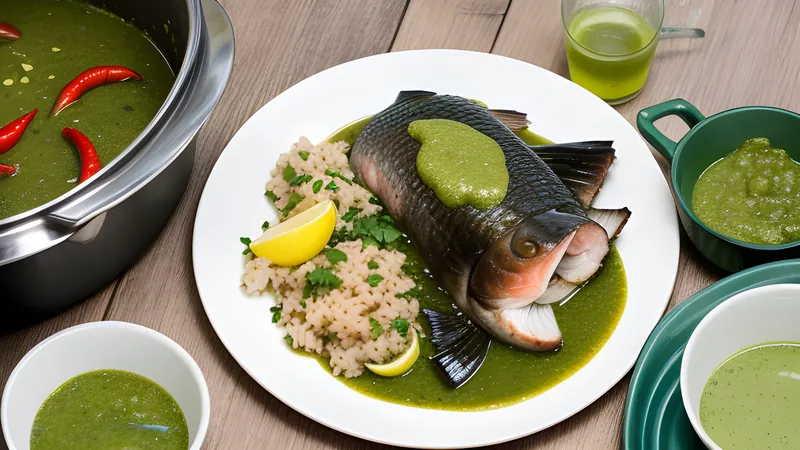
↓ Jump to recipeThere is a version of fish cookery that is all about butter and browning and long, patient heat, and then there is this: a whole fish steamed until it barely holds together, drowned in a sauce so sour and sharp it makes your jaw ache in the best way. Pla nueng manao — steamed fish with lime — is one of the great restaurant dishes of Thailand, and it is genuinely fifteen minutes of work at home. The clever move, and it is a Thai move rather than mine, is that the sauce is never cooked. You pound raw garlic and chilli into fresh lime juice and fish sauce, and that raw, electric mixture hits the hot fish and half-cooks in the heat coming off it, keeping every edge bright.
Thai Steamed Fish with Lime, Chilli and Garlic
Ingredients
- 1 whole sea bass, about 500g, scaled and gutted
- 1 stalk lemongrass, bruised and halved
- 4 slices fresh galangal or ginger
- 3 coriander roots or a small bunch of coriander stalks
- 6 garlic cloves, finely chopped
- 3–5 Thai bird's eye chillies, finely chopped
- 4 tbsp fresh lime juice (about 3 limes)
- 2 tbsp fish sauce
- 1 tsp caster sugar
- 2 tbsp hot chicken or vegetable stock
- 1 small handful coriander leaves, to serve
Method
- Pat the fish dry and slash the skin three times on each side. Lay it on a heatproof plate that fits inside your steamer.
- Tuck the bruised lemongrass, galangal and coriander roots into the cavity and under the fish.
- Bring water in the steamer to a rolling boil. Set the plate inside, cover and steam over high heat for 10–12 minutes, until the flesh at the backbone is opaque and flakes.
- While it steams, pound or stir together the garlic, chillies, lime juice, fish sauce and sugar until the sugar dissolves. Loosen with the hot stock and taste — it should be fiercely sour, salty and hot.
- Carefully lift the plate out. Discard the aromatics from the cavity if you like, and tip away any excess watery liquid from the plate.
- Spoon the lime-chilli-garlic sauce all over the hot fish so it pools around it. Scatter with coriander leaves and serve at once with steamed rice.
What steaming does that nothing else can
Steaming is the gentlest way to cook fish, and for a delicate white fish that is exactly the point. There is no fierce direct heat to seize the proteins and squeeze out moisture, no oil, no browning — just moist heat at 100°C that cooks the flesh slowly and evenly until it turns from glassy to opaque and slips off the bone in soft flakes. The fish tastes purely of itself, which is why it needs a sauce with this much personality to sit beside it.
It is also why freshness matters more here than in almost any other recipe. There is nowhere to hide. A frying pan and a hot sauce can flatter a fish that is a day past its best; a steamer will show you exactly what you bought. Look for clear, bright eyes, red gills and a smell of clean seawater and nothing else. Sea bass is my default because it steams beautifully and the bones lift cleanly, but bream, grey mullet, or a whole tilapia — the classic choice in Thailand — all work. Whatever you choose, weigh it: a 500g fish wants ten to twelve minutes over a hard boil, and every hundred grams either side moves that by a couple of minutes.
The dish and its balance
Pla nueng manao belongs to the sharp, herbal end of central and southern Thai cooking, the same family of flavours you find in a tom yum or a good som tam. The Thai kitchen is built on the constant balancing of four tastes — sour, salty, sweet and hot — and this dish leans hard into the first, second and fourth, with just enough sugar to round the edges. It is a favourite at the open-air seafood restaurants along the coast, where the fish is often steamed whole in the dining room and brought to the table still bubbling in its pool of sauce, and it is exactly the kind of thing Thai families cook at home because it is fast, light and forgiving.
The aromatics that go into the fish as it steams — lemongrass, galangal, coriander root — don’t end up in the sauce, yet they perfume the flesh from inside and underneath. Coriander root is the unsung hero of the Thai storecupboard, earthier and more intense than the leaf; if you can find coriander with the roots still attached, scrub them and use them here, and freeze any spare. If not, the thick lower stalks do a decent stand-in.
Building the sauce
Everything in the sauce is raw and the whole thing comes together in a bowl while the fish steams. Traditionally you pound the garlic and chilli in a mortar first, which bruises them and releases far more flavour than chopping alone — the crushing breaks the cells and lets the oils out. If you have a pestle and mortar, use it; if not, chop as finely as you can and press the mixture against the bowl with the back of your spoon.
Then it is a matter of balance, and you must taste. Start with the quantities here, then adjust: the sauce should be aggressively sour from the lime, well salted by the fish sauce, and hot enough to make you sit up, with the sugar felt rather than tasted. Use fresh lime juice only — bottled has a flat, bitter note that ruins the whole thing. The splash of hot stock loosens the sauce so it pools around the fish rather than sitting in a claggy heap, and warms it just enough to take the raw edge off the garlic.
A word on the chillies: Thai bird’s eye chillies are small and ferocious, and three to five is a genuine range depending on how hot you want it and how hot they happen to be. Their heat sits in the seeds and the pale membrane, so leave those in for full force or scrape some out to temper it. Taste a tiny scrap before you commit — chilli heat varies wildly from batch to batch.
Timing, doneness and the rescue
Get the fish onto a heatproof plate that leaves a little gap around it inside your steamer, so the steam can circulate. No steamer basket? A wire rack or even a couple of upturned ramekins in a wide, deep pan with a tight lid will do the job — you just need the plate held above rapidly boiling water with room for steam to move. Keep the heat high and the lid on; every time you lift it to peek you lose the heat and add to the time.
The fish is done when the flesh at the thickest point, along the backbone behind the head, has turned from translucent to opaque and flakes when you press it with a fork. If you catch it a touch early it will carry on cooking in its own heat under the sauce, so err towards under rather than over — overcooked steamed fish goes cottony and there is no coming back from it. One thing to watch: steaming throws off a fair amount of watery liquid onto the plate, which will dilute your carefully balanced sauce. Tip most of it away before you spoon the sauce over.
Serving, storage and variations
This is a dish to eat the moment it is made, with plenty of plain steamed jasmine rice to soak up the sauce and something green and simple alongside — stir-fried morning glory or pak choi is the traditional partner. It does not keep or reheat; the whole appeal is the contrast of hot fish and fresh, raw sauce, and both are gone by the next day.
If you are serving more than two, resist the urge to cram a bigger fish into a small steamer. Steam two smaller fish on separate plates in batches, or scale up to a wider pan, because a fish crowded against the sides steams unevenly and the thick shoulder stays raw while the tail overcooks. Keep the finished fish loosely covered with foil while you steam the second — it holds its heat well enough for a few minutes, and the sauce goes on at the very last moment either way.
The sauce, though, is a keeper of an idea. It is essentially a Thai nam jim, and the same lime-chilli-garlic-fish-sauce formula is spooned over grilled prawns, poured onto oysters, or used as a dip for plain steamed chicken. Once you have the balance in your hands you will find a dozen uses for it. For a richer, coconut-led take on Thai seafood, my Goan fish curry with kokum and coconut sits at the opposite end of the same coastline of ideas, and if you like the clean-steamed approach but want something with a Japanese slant, the sweet lacquered miso black cod (Saikyō-yaki) is the dish I reach for next. This one, though, is the one I cook when I want dinner on the table before I have quite finished wanting it.
Related Content