Tagliatelle al Ragù Bolognese, the Slow Way
The real Bologna ragù, milk and all, with a handful of chicken livers
Contents
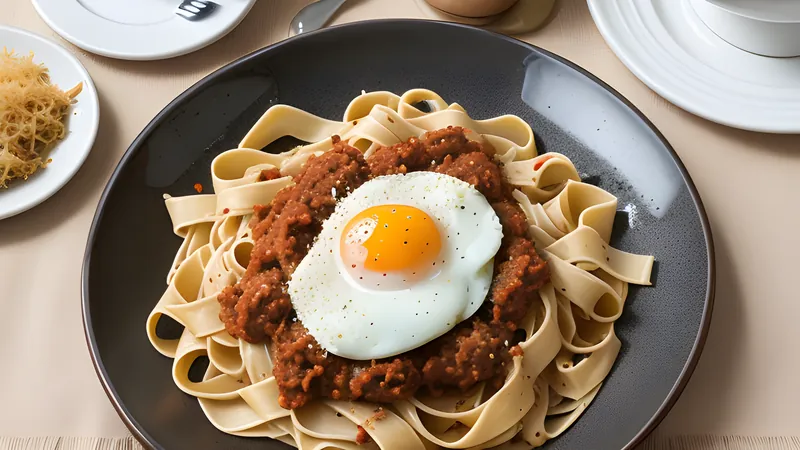
↓ Jump to recipeLet us clear the ground first. There is no such thing, in Bologna, as “spaghetti bolognese.” The dish the world knows by that name is a well-loved invention of elsewhere, and the Bolognese find it baffling. In Bologna the ragù is served with fresh egg tagliatelle, whose broad porous ribbons hold the sauce where round spaghetti lets it slide off, or it is layered into lasagne. The city takes this seriously enough that in 1982 the Bologna chapter of the Accademia Italiana della Cucina lodged an official recipe with the local chamber of commerce, a legal document for a plate of pasta. That tells you something about how much a ragù matters here.
What it also tells you is that a real Bolognese is a long way from the tomato-heavy, garlic-heavy, herb-heavy mince most of us grew up on. There is no garlic in it. There is no oregano, no basil, no bay. There is very little tomato — a ragù is a meat sauce with tomato in it, rather than a tomato sauce with meat. And there is milk, which surprises people every time. What you are building over three or four unhurried hours is something deep, savoury and almost sweet, the colour of dark terracotta, meltingly tender. It is a Sunday sauce, and it repays every minute you give it.
Tagliatelle al Ragù Bolognese, the Slow Way
Ingredients
- 500g coarsely minced beef (chuck or shin)
- 250g coarsely minced pork
- 100g pancetta, finely diced
- 100g chicken livers, trimmed and finely chopped
- 1 onion, finely diced
- 1 carrot, finely diced
- 1 celery stick, finely diced
- 3 tbsp olive oil
- 30g butter
- 200ml dry white wine
- 300ml whole milk
- 400g tinned whole tomatoes, crushed, plus 2 tbsp tomato purée
- 500ml beef or chicken stock, warm
- 1/4 tsp freshly grated nutmeg
- 600g fresh egg tagliatelle
- Parmesan, grated, to serve
- Sea salt and black pepper
Method
- Sweat the finely diced onion, carrot and celery with the pancetta in oil and butter over low heat until soft and sweet, about 15 minutes.
- Turn up the heat and brown the minced beef, pork and chopped chicken livers hard, in batches, until well coloured and any liquid has cooked off.
- Pour in the white wine and let it bubble away almost completely, scraping up the fond.
- Add the milk and simmer until nearly evaporated, then stir in the crushed tomatoes, tomato puree and nutmeg.
- Add enough warm stock to just cover, bring to the barest simmer, and cook partly covered for 3 hours, topping up with stock as needed. Season well.
- Boil the tagliatelle in well-salted water for 2-3 minutes until al dente. Reserve a little water and drain.
- Toss the pasta through the ragu with a knob of butter and a splash of pasta water until glossy. Serve with grated Parmesan.
The soffritto, where it all begins
Everything starts with the soffritto: onion, carrot and celery, finely and evenly diced, sweated slowly in oil and butter until soft and sweet. Do not rush this. Fifteen minutes of gentle cooking coaxes out sweetness that becomes the foundation the whole sauce is built on; hurry it and you get a raw, sharp edge that never quite leaves. The pancetta goes in early too, rendering its fat into the pan and seasoning the vegetables. This is the same patient base that underpins Pappardelle with Beef-Shin Ragù and Rigatoni alla Genovese, the onion ragù of Naples, and it is worth doing properly every time.
Browning the meat
Use coarsely minced beef — chuck or shin, cuts with connective tissue that turns silky over long cooking — and a proportion of pork for richness and give. Fine mince turns pasty; ask your butcher for a coarse grind if you can. Brown the meat hard, in batches if your pan is small, so it colours rather than steams. This is where a huge amount of the flavour is made, in the browned crust on the meat and the fond stuck to the pan. Grey, boiled mince makes grey, boiled ragù.
Here is my twist, and it is a traditional one hiding in plain sight: a handful of chicken livers, trimmed and very finely chopped, browned along with the meat. The old Bolognese recipes often included them, and they do something no amount of stock can. They melt into the sauce and leave behind a deep, mineral, almost mushroomy savour — a background richness that makes people ask what your secret is. Chopped small they disappear entirely; there is no liver flavour to speak of, only depth. If you are squeamish about them, leave them out and the ragù is still very good. Put them in and it is extraordinary.
Wine, milk and the long simmer
Once the meat is browned, pour in the white wine and let it bubble hard, scraping up the fond, until it has almost cooked away. Bologna reaches for white wine here, never red; it keeps the sauce brighter and less aggressive. Then the milk — and yes, whole milk, poured over browned meat. It sounds wrong and it is exactly right. The milk tenderises the meat, rounds off any harshness, and adds a faint sweetness and silkiness that is the quiet signature of a real ragù. Let it too reduce until nearly gone before the tomato goes near the pan; add the tomato first and its acidity will curdle the milk.
Then the crushed tomatoes, the tomato purée and a grating of nutmeg go in, followed by enough warm stock to just cover. Bring it to the barest simmer — a bubble breaking the surface every second or two, no more — and leave it, partly covered, for three hours, topping up with stock or water if it looks dry. A hard boil tightens and toughens the meat; a slow, lazy simmer melts it. By the end the fat should have risen and the sauce should look glossy and dark, the meat collapsed into the sauce rather than sitting in it. Taste and season generously; a long-cooked ragù drinks salt.
The pasta, and the marriage
Fresh egg tagliatelle is the right partner, and it is worth buying good fresh pasta or making your own. The broad ribbons, faintly rough from being cut by hand, grab the sauce along their whole length. Boil it in well-salted water for just two or three minutes, then drain and fold it through the ragù in the pan with a little pasta water and a knob of butter, tossing so the sauce coats every strand. In Bologna the plate arrives already dressed and glossy, never a naked mound of pasta with a scoop of sauce dropped on top like a hat. Finish with grated Parmesan at the table, and no more.
A note on the ribbon
Bologna is precise even about the pasta. The city keeps a golden replica of a strand of tagliatelle in the Chamber of Commerce, and by that standard a cooked ribbon should measure eight millimetres wide — roughly the width of a pencil. You need not reach for a ruler; the point behind the pedantry is sound: the ribbon has to be broad enough to carry a heavy, chunky sauce without snapping or sliding. Too narrow and the ragu overwhelms it; too wide and it flops. If you are buying dried egg pasta rather than fresh, choose a good bronze-die brand and give it the full cooking time, then finish it in the sauce.
And give a thought to what you drink with it. A ragu this rich wants a wine with acidity and a little grip to cut through, which is why Bologna reaches for a chilled, faintly fizzy Lambrusco — the region’s own red, far better than its cheap reputation suggests. A sturdy Sangiovese works just as well. Either way, keep the meal simple around it: the ragu is the event, and a bitter leaf salad afterwards is all the company it needs.
What can go wrong
Tough, dry meat. You boiled it instead of simmering it, or did not give it long enough. Keep the heat barely there and be patient; ragù cannot be hurried.
A sauce that tastes flat. Under-browned meat and under-seasoned throughout. Brown hard at the start and season in stages, tasting near the end.
Curdled, grainy milk. The tomato went in before the milk reduced. Order matters: wine, then milk, then tomato, each reduced before the next.
Greasy pool on top. A little rendered fat is correct and delicious, but if it looks excessive, spoon some off before dressing the pasta, or chill the sauce and lift the set fat from the surface.
Make-ahead and storage
Ragù is one of the great make-ahead sauces, and it genuinely improves overnight as the flavours settle. Cook it a day before you need it, cool it, and keep it in the fridge for up to four days; it freezes beautifully for three months. Reheat it gently with a splash of stock to loosen. Any leftover ragù layered with béchamel and pasta sheets becomes lasagne, or spooned onto soft polenta makes a second dinner that feels like no effort at all.
Make a big batch. A ragù this slow deserves more than one meal, and a tub of it in the freezer is the best insurance a cook can own.
Related Content