Tabbouleh, Parsley-Forward, the Levantine Way
A green herb salad barely flecked with bulgur
Contents
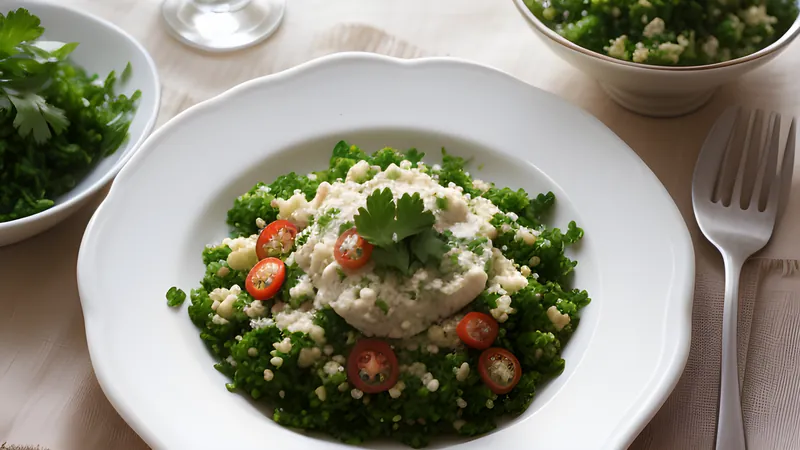
↓ Jump to recipeThe first time I ate proper tabbouleh in a Lebanese home I barely recognised it. What arrived was a vivid green heap, glossy and sharp, with the bulgur showing up as the occasional amber fleck rather than the main event. It was a world away from the beige, grain-heavy stuff sold in tubs at the supermarket deli counter, where a few sad specks of parsley are stirred through a mountain of couscous. That green bowl reset my whole idea of the dish.
Tabbouleh is a parsley salad first and a grain salad a distant second. Get that ratio right and everything else follows. It is one of the cheapest, most reviving things you can make in high summer, when parsley is abundant and tomatoes actually taste of something, and it takes nothing more than a sharp knife and a bit of patience.
Tabbouleh, Parsley-Forward, the Levantine Way
Ingredients
- 40g fine bulgur wheat (#1 grade)
- 3 large bunches flat-leaf parsley (about 200g leaves and fine stalks)
- 1 small bunch mint (about 20g leaves)
- 4 ripe tomatoes (about 400g), finely diced
- 4 spring onions, finely sliced
- 60ml extra-virgin olive oil
- 50ml lemon juice (about 2 lemons)
- 0.5 tsp ground allspice
- 0.75 tsp fine sea salt, plus more to taste
- Black pepper, to taste
Method
- Dice the tomatoes finely over a bowl, catching all the juice. Stir in the lemon juice, salt and allspice, then tip in the dry bulgur and leave to soak for 20-30 minutes while you prepare the herbs.
- Wash and thoroughly dry the parsley and mint. Gather the parsley into a tight bundle and slice as finely as you can with a very sharp knife; chop the mint separately. Do not use a food processor.
- Slice the spring onions finely, including most of the green.
- Add the parsley, mint and spring onions to the soaked bulgur and tomatoes. Pour in the olive oil and toss thoroughly with your hands or two forks.
- Taste and adjust with more salt, lemon or pepper. The salad should taste bright and sharp.
- Rest 10 minutes for the flavours to settle, then serve within the hour, with crisp lettuce or cabbage leaves for scooping.
Where tabbouleh comes from, and what the deli got wrong
Tabbouleh belongs to the mountains of Lebanon and Syria, where it grew out of the wider family of Levantine table salads. The name comes from the Arabic taabil, meaning to season or spice, which tells you where the emphasis lies. In its homeland it is a showcase for herbs, and Lebanon takes it seriously enough to have declared a national Tabbouleh Day. Enormous versions are made at festivals, and there is a long-standing pride in cutting the parsley so fine it looks almost like a chiffonade.
The Western supermarket version inverted the whole thing, most likely because grain is cheap, stores well and bulks out a tub, while herbs wilt and cost more. Somewhere along the way bulgur became the base and parsley the garnish, and a bright, sharp herb salad turned into a stodgy grain mush. Restoring the balance is the single most important thing you can do. A serious bunch of parsley, three big supermarket bunches or one enormous bundle from a Middle Eastern grocer, looks like far too much until it collapses under the knife into the right amount. If you enjoy this style of grain-flecked salad, my Kısır, the Turkish bulgur salad with pomegranate molasses sits at the other end of the spectrum, grain-forward and tangy, and makes a fascinating comparison.
The twist: soak the bulgur in the juices, not water
Most recipes have you soak the bulgur in water, drain it and squeeze it dry. I stopped doing that years ago. Instead I dice the tomatoes over a bowl to catch every drop of juice, add the lemon and salt, and tip the dry bulgur straight into that flavoured liquid to plump up.
The grain drinks in tomato water, lemon and salt as it softens, so each little fleck arrives already seasoned from the inside. Fine bulgur, the number-one grade, is parboiled and cracked at the mill, which means it needs no cooking and swells to tenderness in twenty to thirty minutes at room temperature. Because you are not draining anything away, none of that tomato-lemon flavour is lost down the sink, and the salad tastes more of itself. Use fine bulgur only; coarse bulgur stays gritty and stubborn without proper cooking and will ruin the texture.
Cutting the herbs, and why the knife matters
The parsley must be cut with a very sharp knife, never a food processor. A processor bruises the leaves, presses out their juice and turns the pile into a wet green paste that oxidises to brown within the hour. A clean cut from a sharp blade keeps the parsley dry, distinct and vivid, and the salad stays fresh-looking for far longer.
Wash the herbs well and dry them completely, in a salad spinner and then between tea towels, because water clinging to the leaves dilutes the dressing and speeds up wilting. Flat-leaf parsley is essential; curly parsley is tougher and blander. Gather the dried leaves and their fine upper stalks into a tight, firm bundle, roll it, and slice across as finely as your knife allows, working through the pile a few times. The fine stalks carry a lot of flavour and give a pleasant crunch, so only the thick, woody lower stems get discarded.
Mint goes in too, though in a supporting role, perhaps a tenth of the volume of the parsley. Chop it separately at the last minute, since mint bruises and blackens faster than anything. Spring onions bring a gentle allium bite; slice them fine, greens and all.
Seasoning and assembly
Allspice is my quiet secret in the dressing, a single warm note that Lebanese cooks often add and that most Western recipes leave out. Half a teaspoon is enough to give a subtle backbone without announcing itself. The rest of the seasoning is simply good olive oil, plenty of lemon and enough salt to make the whole thing sing.
Bring it together only when you are ready to eat. Tip the herbs and spring onions onto the soaked bulgur and tomatoes, pour over the olive oil, and toss thoroughly with your hands so every strand is coated. Taste, and be generous with the lemon and salt; tabbouleh should be properly sharp, almost bracing, since it is meant to cut through rich, grilled and fried food. Let it rest ten minutes so the flavours settle, then serve. Traditionally you scoop it up in crisp little gem or cabbage leaves rather than eating it with a fork, which is far more fun and keeps the salad the star.
What goes wrong, and how to fix it
A watery, pooling tabbouleh is the most common failure, and it nearly always comes down to wet herbs or watery tomatoes. Dry the parsley obsessively, and if your tomatoes are very juicy, scoop out the seedy centres before dicing, keeping only the firm outer flesh. The juice you catch in the bowl is plenty to plump the bulgur without flooding the salad.
Bitterness usually means the parsley was bruised, either by a blunt knife or by sitting chopped and dressed for too long. Sharpen your knife, cut just before assembling, and dress at the last minute. A dull, brownish colour is the same problem seen from the other side, oxidation setting in, so pace yourself and do the parsley last of all.
If the finished salad tastes flat despite looking perfect, it is almost always short of salt or lemon rather than anything more exotic. Add both a little at a time and keep tasting; the moment it turns bright and makes your mouth water, you have arrived. And if the bulgur stays hard and gritty after half an hour, you were sold coarse bulgur by mistake; give it a few tablespoons of warm water and another twenty minutes, and next time hunt down the fine number-one grade.
Storage, timing and variations
Tabbouleh is at its best within an hour of dressing, while the parsley is bright and the tomatoes fresh. It does not keep well, since the salt slowly draws water from the herbs and tomatoes and the whole thing weeps and slumps. You can, though, prepare every component separately, chop the herbs and soak the bulgur a couple of hours ahead, and combine at the last moment.
For variations, a scatter of pomegranate seeds adds jewelled sweetness and a festive look, and a little finely diced cucumber lightens it further on the hottest days. Some cooks add a pinch of cinnamon alongside the allspice. Serve it as part of a mezze spread with warm flatbread; it is glorious next to the za’atar-slicked man’oushe with za’atar and olive oil, and it works just as well as the sharp green foil to grilled lamb, halloumi or a rich, oily fish. Made this way, parsley-first and grain-second, it tastes the way tabbouleh is meant to: green, sharp and alive.
Related Content