Sweet and Sour Pork, Done Properly
Crisp, lacquered, and nothing like the takeaway sludge
Contents
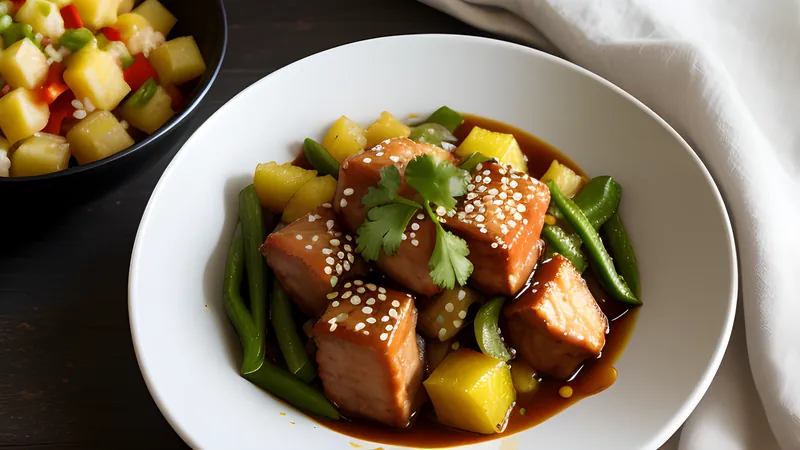
↓ Jump to recipeThere is a version of sweet and sour pork that arrives in a foil tray, the pork entombed in a fluorescent orange gel that tastes mostly of sugar and regret. And there is the other version, the one served in Cantonese restaurants across Guangzhou and Hong Kong, where the pork shatters when you bite it, the sauce clings in a thin lacquer, and the sharpness slaps you awake. The gap between the two is not skill. It is a handful of decisions, made deliberately, that I want to walk you through.
The dish is called gu lou yuk in Cantonese, and its reputation abroad has been dragged through the mud by decades of shortcuts. My twist here is a spoonful of Chinkiang black vinegar stirred into the sauce alongside the usual rice vinegar. Black vinegar is aged, malty, faintly smoky, and it drags the whole thing back from candy-shop territory into something with a savoury backbone. It is the single change that made my home version taste like the real thing.
Sweet and Sour Pork, Done Properly
Ingredients
- 600g pork shoulder, cut into 3cm cubes
- 1 tbsp Shaoxing wine
- 1 tbsp light soy sauce
- 1 egg, beaten
- 80g cornflour
- 40g plain flour
- 1/2 tsp fine salt
- 1 litre neutral oil, for deep-frying
- 1 red pepper, cut into 3cm pieces
- 1 green pepper, cut into 3cm pieces
- 1/2 onion, cut into wedges
- 200g fresh pineapple, in 3cm chunks
- 3 tbsp tomato ketchup
- 3 tbsp rice vinegar
- 1 tbsp Chinkiang black vinegar
- 3 tbsp caster sugar
- 1 tbsp light soy sauce
- 120ml water
- 2 tsp cornflour mixed with 1 tbsp water
- 2 garlic cloves, finely chopped
Method
- Toss the pork cubes with Shaoxing wine, 1 tbsp soy sauce and a pinch of salt. Leave 20 minutes.
- Whisk the egg into the pork, then add cornflour, plain flour and 1/2 tsp salt to make a thick, clinging batter.
- Heat the oil to 170C. Fry the pork in batches for 4 minutes until pale gold. Drain.
- Raise the oil to 190C and fry the pork again for 90 seconds until deep gold and crisp. Drain on a rack.
- Mix ketchup, rice vinegar, black vinegar, sugar, 1 tbsp soy and water for the sauce.
- In a dry wok with 1 tbsp oil, stir-fry garlic, onion and peppers over high heat for 2 minutes.
- Add pineapple, pour in the sauce, and bring to a hard boil. Stir in the cornflour slurry until glossy.
- Tip in the pork, toss for 30 seconds to coat, and serve immediately.
Where the dish comes from
Sweet and sour cooking in Chinese cuisine is old, and it split into regional dialects long ago. The Cantonese gu lou yuk leans on a tomato-and-vinegar sauce with fruit, which is itself partly a product of the 19th-century port trade through Guangzhou, when tomatoes and Western sugar arrived and cooks folded them into an existing love of tart-sweet balance. Further north, in Zhejiang, you find sweet and sour spare ribs built on Chinkiang vinegar and rock sugar, darker and more brooding, no tomato at all.
The Western takeaway version descends from the Cantonese branch, carried by Guangdong emigrants who opened restaurants in San Francisco, Liverpool and Sydney and adapted to local palates and local wallets. Batter got thicker, sauce got sweeter, pineapple came out of a tin. None of that is a moral failing; it is what happens when a dish has to feed a Friday-night queue cheaply. But at home, with twenty minutes to spare, you can aim higher.
The pork, and why shoulder wins
Most takeaways use pork loin because it is cheap and cuts into neat cubes. Loin is also lean, which means it dries into little chalky nuggets the moment it sits in hot sauce. I use pork shoulder, cut into generous 3cm cubes. Shoulder carries enough intramuscular fat to stay juicy through two rounds of frying and a toss in boiling sauce, and it has real porky flavour that loin lacks.
Cut the cubes a touch bigger than feels right. They shrink in the fryer, and you want a proper mouthful of meat under that crust, not a crouton with a whisper of pork inside. Marinate them briefly in Shaoxing wine and soy: twenty minutes is plenty, long enough to season the surface and start tenderising, short enough that the meat does not turn mushy.
The batter, and the double fry
The crust is where home cooks lose the plot, so let me be precise. You want a batter heavy on cornflour, with a little plain flour for structure and a beaten egg to bind. It should be thick enough to cling in a sheet, not drip off. Whisk the egg into the marinated pork first, then work in the dry flours until every cube wears a heavy coat.
Now the part that matters most: fry twice. The first fry, at 170C for about four minutes, cooks the pork through and sets a pale, sturdy crust. Drain it, let the oil climb to 190C, and fry again for ninety seconds. The second, hotter fry drives off surface moisture and turns that pale crust deep gold and genuinely crisp. Single-fried pork goes soggy within a minute of meeting the sauce. Double-fried pork holds its crunch on the plate. This is the same principle behind good chips and behind tonkatsu with shredded cabbage and Bulldog sauce, where a dry, well-set crust is the whole point.
A note on oil temperature: if you have not got a thermometer, drop a cube of batter in. At 170C it sinks halfway then rises, bubbling steadily. At 190C it bobs straight back up in a vigorous fizz. Keep the batches small so the oil temperature does not crash; four or five cubes at a time in a domestic wok.
The sauce that does not glow in the dark
Here is the ratio I have settled on after a lot of testing: three parts ketchup, three parts rice vinegar, three parts caster sugar, one part black vinegar, one part soy, and water to loosen. Ketchup does the heavy lifting for colour and a rounded tomato sweetness, and it is exactly what Hong Kong cooks actually reach for, so use it without guilt. The rice vinegar brings the bright acidity. The black vinegar is my addition and it brings depth, that aged-barrel savouriness that stops the sauce reading as pure sugar.
Mix the sauce in a bowl before you start stir-frying, because once the wok is hot you have no time to measure. Fry the aromatics and vegetables fast over the highest heat you can manage: garlic first for a few seconds, then onion and peppers for two minutes so they blister at the edges but stay crunch. Add the pineapple, pour the sauce down the side of the wok, and let it come to a proper rolling boil before you thicken it.
The thickening is a cornflour slurry, and you want just enough to take the sauce from watery to lightly glossy, coating a spoon in a thin film. Overdo it and you are back in gloop country. The sauce should slide off the pork, not cement it.
Bringing it together
Timing is everything at the end. Have the fried pork resting on a rack, the vegetables and sauce ready in the wok. Tip the pork in, toss for no more than thirty seconds so every piece gets a coat while the crust is still crackling, and get it onto the plate. Every extra second in the sauce is crunch lost. Serve with plain steamed rice, or alongside a plate of Yangzhou fried rice with char siu and prawn if you are feeding a crowd and want the table to feel generous.
Fresh pineapple, and other opinions
Use fresh pineapple. Tinned pineapple is packed in syrup, which tips the sauce too sweet and gives you that flat, tinny note that haunts the takeaway version. Fresh pineapple has acidity of its own and holds a firmer bite. Cut it the same size as the peppers so everything cooks evenly and nothing turns to mush.
On vegetables, I keep it to peppers, onion and pineapple. Some recipes throw in carrot and cucumber and lychee; do as you like, but I find a restrained hand keeps the sauce clean and the pork the clear hero. And a word on garlic, since I have strong feelings: chop it fresh and add it at the start of the stir-fry so it perfumes the oil. Garlic powder in the sauce is a false economy.
Tips, storage and variations
The pork can be first-fried an hour ahead and left on a rack, then given its second, hot fry just before serving; this is how restaurants keep up with orders. What you cannot do is fry it, sauce it, and reheat it later. Leftover sweet and sour pork is a sad, soft thing, though it is still tasty tossed through egg-fried rice the next day, crunch be damned.
If you want the Zhejiang character instead, drop the ketchup and pineapple, lean on Chinkiang vinegar and rock sugar, and cook it down darker and stickier; it becomes a different, more grown-up dish. For a lighter supper, the same batter and double-fry technique works on chicken thigh, and the technique of crisp meat meeting a sharp braise runs through plenty of Chinese home cooking, including twice-cooked pork with leek and doubanjiang.
The whole thing takes under an hour and rewards precision at three points: the double fry, the sauce ratio, and the speed of the final toss. Get those right and you will never look at a foil tray the same way again.
Related Content