Suya with a Peanut-Spice Crust
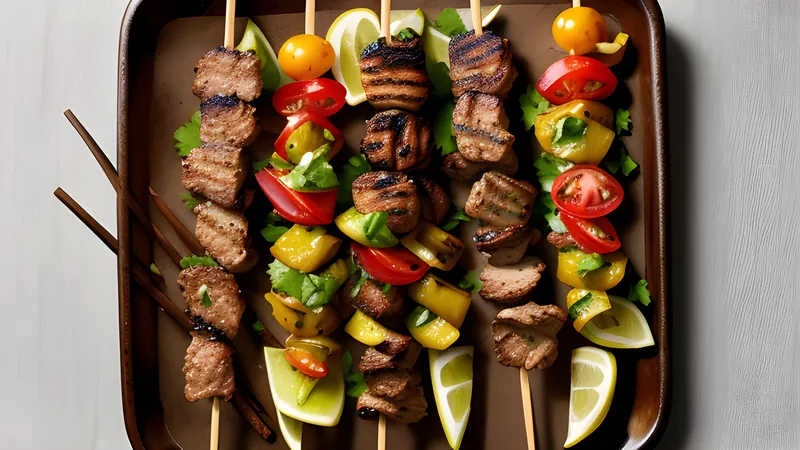
Char-grilled beef skewers packed in a dry peanut yaji crust, Northern Nigerian street food at home
Contents
↓ Jump to recipeSuya is Nigeria’s most famous street food, and it earns that reputation on smell alone: beef sliced paper-thin, coated in a dry, rust-red peanut spice mix and grilled fast over open coals until the crust turns dark and faintly bitter at the edges in exactly the right way. The twist this version leans into is the crust itself, built as a genuine double layer rather than a single dusting, so it forms an almost lacquered, savoury-hot shell that stays put on the meat instead of falling away on the first bite. It takes half an hour, most of it resting time, and turns a packet of sliced beef into something that tastes like it came off a roadside grill in Kaduna.
Suya with a Peanut-Spice Crust
Ingredients
- 800g beef sirloin or rump, thinly sliced against the grain
- 3 tbsp groundnut or vegetable oil, plus extra for brushing
- 150g roasted unsalted peanuts
- 2 tbsp ground ginger
- 1 tbsp garlic powder
- 1 tbsp cayenne pepper, or to taste
- 1 tbsp smoked paprika
- 2 tsp ground cloves
- 1 tsp ground crayfish or fish sauce powder (optional but traditional)
- 2 tsp stock cube powder, crumbled
- 1 tsp salt
- 1 small onion, thinly sliced, to serve
- 2 tomatoes, sliced, to serve
- 1 cucumber, sliced, to serve
- Lime wedges, to serve
Method
- Toast the peanuts in a dry frying pan over a medium heat for 4 to 5 minutes, shaking often, until deep golden and smelling roasted.
- Blitz the toasted peanuts in a food processor to a coarse, sandy powder, stopping before it turns to paste.
- Mix the peanut powder with the ground ginger, garlic powder, cayenne, smoked paprika, cloves, crayfish powder, stock cube powder and salt: this is the yaji.
- Thread the sliced beef onto skewers in ribbons, leaving the meat fairly flat and thin so the crust coats every surface.
- Brush each skewer lightly with oil, then press the yaji firmly onto both sides of the meat until fully coated.
- Rest the coated skewers for at least 20 minutes at room temperature, or up to 4 hours in the fridge, so the spice mix adheres and starts to season the meat.
- Heat a griddle pan or barbecue until very hot and lightly oil the bars.
- Grill the skewers for 2 to 3 minutes per side, turning once, until charred at the edges and cooked to your liking.
- Brush with a little extra oil halfway through cooking to help a second, darker layer of the crust catch without burning.
- Rest for 2 minutes, then serve hot with sliced onion, tomato, cucumber and lime wedges, and extra yaji on the side for dipping.
The suya belt
Suya belongs to the Hausa people of Northern Nigeria, and it travelled south and out into the rest of West Africa along the same trade and migration routes that carried Hausa cattle traders across the region for generations. The word yaji refers specifically to the dry spice mix that defines the dish, a blend built on ground roasted peanuts, ground ginger, cayenne and a handful of other warm spices, and it is this mix, more than the beef itself, that people are really buying when they queue at a suya spot after dark. In Nigerian cities the classic suya stand, or mai suya, is a nighttime institution: a metal grill lit with coals, cuts of beef, kidney, liver or chicken sliced thin and skewered, dusted generously in yaji, and fanned over the fire by hand until the fat renders and the spice crust darkens. It is closing-time food, eaten standing up off a sheet of newspaper, wrapped around sliced onion and tomato, with more yaji sprinkled on for anyone brave enough.
The peanut in yaji is not incidental seasoning; it is the backbone of the whole mix, giving it body, a faint sweetness and enough natural oil to help the powder cling to the meat rather than falling straight off onto the coals. Ground kuli-kuli, a dense West African peanut cake made by pressing roasted peanuts to extract much of their oil before grinding, is the traditional base in Nigeria, but plain roasted peanuts blitzed to a coarse powder get remarkably close and are far easier to find in a British supermarket. The dried ground crayfish that traditional recipes include gives a savoury, faintly fishy depth that is genuinely worth sourcing from a West African or Asian grocer if you can, though a splash of fish sauce or a pinch of fish sauce powder does a fair stand-in job for anyone without access to it.
Why the crust needs two passes
Most home versions of suya make the mistake of treating the yaji as a single seasoning, sprinkled once before the meat hits the grill. The problem is that a dry powder rub applied once tends to scorch and drop off within the first minute of high heat, leaving you with plain grilled beef and a scatter of burnt spice on the pan rather than the thick, cohesive crust the dish is known for. This recipe builds it in two stages instead. The first coating goes on before grilling and is pressed firmly into an oiled surface, which gives the powder something to bind to rather than sitting loose on dry meat; the oil acts as the glue, and a proper rest of at least twenty minutes lets that bond set before any heat is involved. The second application happens mid-cook, brushing on a touch more oil once the first side has caught, which gives a fresh coat of exposed peanut solids something to cling to and caramelise in the last couple of minutes rather than just charring on contact with the pan from the start.
The chemistry behind that char matters too. Ground peanuts are rich in both protein and natural oil, and when that combination hits a very hot pan it undergoes the Maillard reaction fast, browning and turning nutty and faintly bitter within seconds rather than minutes. That fast, deep browning is exactly what separates good suya from bland grilled beef with spice on it: you want the surface to genuinely darken, almost to the point where it looks slightly singed at the edges of each skewer, because that colour is where most of the dish’s flavour lives. The trick is controlling how far that char goes, since peanut proteins burn to genuine bitterness quickly once past that point, which is why suya is always cooked fast over very high heat for a short time rather than slowly. A cool or lukewarm pan gives you grey, dry meat and pale, unset spice; a screaming hot one gives you the dark, faintly smoky crust that defines the dish.
The method
Start with the peanuts. Toast them dry in a frying pan over a medium heat for four to five minutes, shaking the pan often, until they turn a deep golden brown and smell properly roasted rather than raw; this toasting step matters even if your peanuts are already labelled roasted, since supermarket roasting is often lighter than what the dish wants. Once cooled slightly, blitz them in a food processor to a coarse, sandy powder, stopping before the natural oils start to turn it into a paste, which happens fast if you over-process. Mix that peanut powder with the ground ginger, garlic powder, cayenne, smoked paprika, cloves, crayfish powder if using, crumbled stock cube and salt: this dry mix is your yaji, and it keeps for weeks in an airtight jar if you want to make a double batch.
Slice the beef thinly against the grain, aiming for pieces no more than half a centimetre thick, since thinner meat cooks fast enough to char properly before the centre overcooks and toughens. Thread the slices onto skewers in flat ribbons rather than folding them into thick clumps, which maximises the surface area the crust can cling to. Brush each skewer lightly with oil, then press handfuls of the yaji firmly onto both sides until the meat is fully and evenly coated; do not be shy here, a thin dusting will not deliver the crust the dish is built on. Let the coated skewers rest for at least twenty minutes at room temperature, or up to four hours covered in the fridge if you want to prepare ahead, since that rest is what allows the spice to properly adhere and begin seasoning the meat rather than just sitting on the surface.
Get a griddle pan or barbecue properly hot before the meat goes anywhere near it; you want a visible haze of heat and a sizzle the instant the beef touches the surface. Grill for two to three minutes a side, turning once, and brush a little extra oil over the meat partway through to help the second layer of exposed spice catch and darken without scorching outright. The beef is done when the edges are visibly charred and the surface has turned a deep, rusty brown; rest it for two minutes off the heat before serving so the juices settle.
No barbecue, no problem
Most suya sold on the street is cooked over glowing charcoal, and that live-fire smoke is part of the flavour, but a domestic griddle pan gets remarkably close if you push it hard enough. The key is heat retention rather than raw temperature: cast iron holds its heat through the shock of cold meat hitting the surface far better than a thin non-stick pan does, so if you own a cast-iron griddle, use it here over anything lighter. If you are working on an electric hob rather than gas, preheat the empty pan for a full five minutes before the first skewer goes anywhere near it, since electric elements are slower to recover their heat once the pan is loaded, and a pan that has cooled even slightly will steam the meat instead of charring it. A short blast under a very hot grill, skewers turned once, works as a fallback if you have neither a griddle nor an outdoor barbecue, though watch it closely, since overhead grills often run hotter in patches than they appear.
Variations on the yaji theme
Suya made with chicken, sometimes called tsire when made with offal or specifically chicken in some regions, takes the same yaji beautifully and cooks a touch faster than beef, generally needing only two minutes a side once the pan is properly hot; use thigh meat rather than breast, since it stays juicier under the fierce heat this dish wants. Kidney and liver are traditional variations too, cooked exactly the same way, and worth trying if you already like offal, since the yaji’s warmth and the mineral richness of the meat suit each other well. A vegetarian version built on firm tofu, pressed well and cut into thick slabs rather than thin ribbons, or on thick slices of halloumi, takes the crust reasonably well, though neither has the fat content that helps the spice caramelise the way beef fat does, so expect a drier, more purely spiced result rather than a true substitute.
If you want to push the smokiness further, a small pinch of ground alligator pepper, a West African spice related to cardamom with a peppery, faintly citrus bite, is a traditional addition to yaji in some households and worth seeking out from a specialist grocer if you want to go deeper into the authentic mix. Kilishi, a related but distinct Nigerian snack, takes similar spicing but presses the meat thin and dries it fully rather than grilling it fresh, producing something closer to a chewy, shelf-stable jerky; it is a different project entirely, but knowing it exists explains why some yaji blends you find online lean drier and more concentrated than the version here, which is built specifically for fresh, juicy, fast-grilled meat.
Serving, tips and swaps
Suya is always served with raw sliced onion and tomato, and often cucumber too, because the sharp, cold crunch cuts straight through the richness and heat of the crust, and a squeeze of lime does similar work at the acid end. Serve extra yaji on the side in a small bowl for dipping; suya stalls always do, and it lets anyone who wants more heat help themselves without overwhelming everyone else at the table. If you want a starchy side to round the plate out, this pairs naturally with a smoky pot of jollof rice with a smoky party bottom, and if you are cooking a full West African spread, a bowl of egusi soup with ground melon seed and greens makes for genuine variety on the same table. Suya’s other close cousin on this site, in spirit if not in geography, is chicken satay, which shares the peanut-and-char instinct even though the spicing runs in a different direction entirely.
For anyone with a peanut allergy in the house, this particular dish is not easily adapted, since the peanut is structural rather than decorative; a sunflower seed powder gets you part of the way to the texture but loses the flavour that makes suya suya. Chicken thigh, kidney or liver all take the yaji well if you want to vary the protein, though beef remains the classic and cooks most reliably for a first attempt. The dry yaji mix itself keeps for a month in an airtight container away from light, so it is worth making a larger batch; the peanut oils do eventually turn, so smell it before using if it has been sitting a while, and if it smells at all rancid rather than nutty, start again. Leftover cooked suya keeps for two days in the fridge and is very good cold, sliced into a wrap, though the crust never quite recaptures its just-off-the-grill crackle once it has been chilled.
Related Content