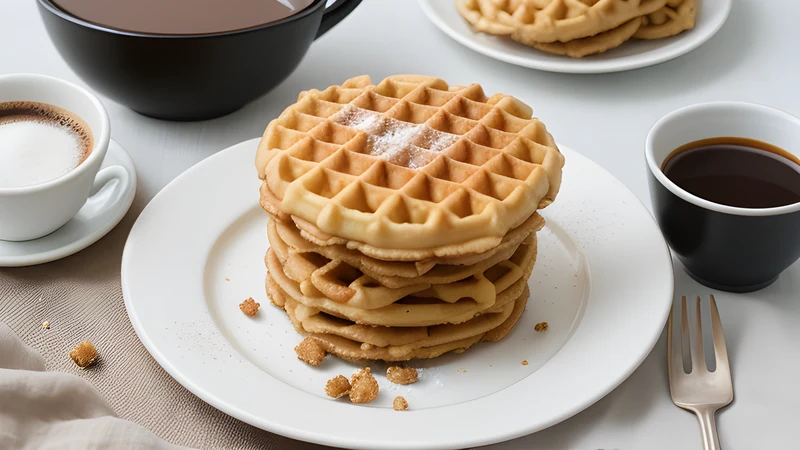
Stroopwafels with Caramel Syrup
Thin waffle discs split and glued with a treacly muscovado caramel
Contents
↓ Jump to recipeA stroopwafel is two wafer-thin cinnamon waffles glued together with a layer of warm caramel syrup, and it is the single most recognisable thing to come out of a Dutch market stall. The proper ones are made in front of you: a ball of yeasted dough pressed flat in a hot iron, sliced through its middle while still soft, filled with syrup and pressed back together, then handed over warm enough to sag. My version keeps that method exactly and only changes the filling, swapping some of the usual pale sugar for dark muscovado so the caramel tastes of treacle and molasses, with a pinch of flaky salt to stop it turning sickly.
Stroopwafels with Caramel Syrup
Ingredients
- 250g plain flour
- 7g fast-action dried yeast
- 50g caster sugar
- 1/2 tsp fine salt
- 1 tsp ground cinnamon
- 125g unsalted butter, melted and cooled
- 1 large egg, beaten
- 60ml warm whole milk
- 200g dark muscovado sugar
- 150g golden syrup
- 75g unsalted butter
- 1 tsp ground cinnamon
- 1/2 tsp flaky sea salt, plus extra to finish
Method
- Whisk the flour, yeast, caster sugar, fine salt and 1 tsp cinnamon in a large bowl.
- Stir in the melted butter, beaten egg and warm milk to form a soft, slightly sticky dough, then knead briefly until smooth. Cover and leave in a warm spot for 45 minutes.
- Make the filling: melt the muscovado, golden syrup and butter in a pan, then boil gently to 110C, stirring, before beating in the cinnamon and flaky salt. Keep warm and pourable.
- Heat a stroopwafel or pizzelle iron. Roll the dough into walnut-sized balls, about 30g each.
- Press one ball in the hot iron and cook for 45 to 60 seconds until golden and set.
- Working fast, lift the waffle out and slice it horizontally through the middle with a bread knife to make two thin discs.
- Spread a spoonful of warm caramel over one cut face and sandwich the second disc back on top, pressing gently.
- Trim any ragged edges with kitchen scissors while warm, finish with a pinch of flaky salt, and repeat with the rest.
A waffle born from leftovers in Gouda
The stroopwafel traces back to the town of Gouda in the late eighteenth or early nineteenth century, where a baker is credited with sweeping together the crumbs, offcuts and leftovers of the day’s baking, binding them with syrup, and turning the result into a cheap treat for people who could not afford finer pastries. The Dutch word gives the game away: stroop means syrup, wafel means waffle, and the earliest versions were frankly humble things sold to working households. By the middle of the nineteenth century Gouda had dozens of stroopwafel bakers, and the town still guards its association with the biscuit the way other places guard a cheese or a beer.
What lifted the stroopwafel from local speciality to national habit is the ritual that grew around it. The classic instruction is to rest a whole stroopwafel over the rim of a hot cup of coffee or tea for a minute or two before eating, so the steam softens the waffle and loosens the caramel inside until the whole thing turns pliable and warm. That small ceremony is now so ingrained that Dutch supermarkets sell the biscuits by the hundredweight, and you will find a tin of them in more or less every Dutch kitchen. The market-stall version, made fresh and eaten hot, is a different and better animal than the packaged one, which is exactly why they are worth making at home.
There is a strong regional pride at work here too. Gouda holds its stroopwafel heritage seriously enough that the biscuits appear at markets across the country under the banner of the town, and the freshly made stall version has become a fixture at Dutch markets far beyond South Holland. For a biscuit that began as a way of using up crumbs, it has travelled a remarkable distance, and it sits comfortably alongside other thin, iron-pressed sweets across Europe, from Italian pizzelle to the crisp lace of my florentines with dark chocolate. The equipment overlaps, which is one reason a pizzelle iron is the usual home-kitchen substitute for the specialist stroopwafel iron.
Why the dough is yeasted, and why that matters
The single detail that surprises people making stroopwafels for the first time is that the dough is leavened with yeast, which feels odd for something so thin and biscuit-like. The yeast is not there to make the waffle rise in any dramatic way, since it gets flattened to a couple of millimetres in a screaming-hot iron before it can. What it does is develop a little flavour and, more importantly, give the dough enough elasticity and structure to be sliced cleanly through the middle while hot, which is the hardest and most important step in the whole process. A plain, unleavened batter cooks up brittle and shatters under the knife; the yeasted dough holds together long enough to be split into two thin discs.
That resting time of around 45 minutes does most of the work. The dough should come together soft and slightly tacky, a little richer and stiffer than a bread dough because of all the melted butter and egg carrying it. Melt the butter and let it cool before adding, so it enriches the dough without cooking the egg or killing the yeast, and use milk warmed to blood temperature rather than hot. After resting it will have relaxed and puffed slightly, and you portion it into balls of about 30g, roughly the size of a walnut, which spread to the right diameter for a standard iron.
The iron itself needs to be properly hot before the first waffle goes in, and the first one is nearly always a throwaway while the plates come up to temperature, so do not judge the batch by it. Each ball cooks in 45 to 60 seconds, and you are looking for an even golden brown; too pale and the waffle stays soft and doughy, too dark and it turns bitter and brittle. The moment it comes out is the moment everything happens, because you have only a few seconds of residual warmth to slice it before it firms up and cracks.
The caramel, and why muscovado changes it
Traditional stroopwafel filling is a syrup of sugar, butter and often golden or dark syrup, cooked to a soft, spreadable consistency and spiced with cinnamon. My change is to build a good part of the sweetness from dark muscovado sugar, which is unrefined and heavy with natural molasses, giving the caramel a deep, treacly, almost liquorice-edged flavour that the standard pale version never reaches. The molasses also brings a faint acidity and bitterness that keeps the filling from reading as pure sugar, and a half-teaspoon of flaky salt beaten in at the end pushes it further still.
Getting the caramel to the right texture is a matter of temperature and nothing else. Melt the muscovado, golden syrup and butter together and bring the mixture to a gentle boil, taking it to around 110C on a sugar thermometer, which gives a filling that is soft and spreadable when warm and sets to a chewy, sticky layer once cooled. Boil it too hard or too far past that point and the caramel sets rock-hard and cracks when you bite it; stop too early and it stays runny and leaks out of the sides. If you have no thermometer, look for a filling that coats the back of a spoon in a thick, slow-dripping ribbon and holds a soft-ball consistency when a drop is dripped into cold water.
Keep the caramel warm and pourable while you cook and fill the waffles, because it thickens fast as it cools and becomes impossible to spread cleanly across a thin disc. If it stiffens up between waffles, set the pan back over the lowest heat for a moment, or add a splash of just-boiled water and stir it smooth again. The salt is worth taking seriously here: the same trick that lifts my peanut butter cookies with flaky salt works on this caramel, sharpening the molasses and stopping the finished stroopwafel from being one flat note of sweetness.
The recipe
Whisk 250g plain flour, 7g dried yeast, 50g caster sugar, 1/2 teaspoon fine salt and 1 teaspoon cinnamon in a bowl. Stir in 125g cooled melted butter, 1 beaten egg and 60ml warm milk to a soft, tacky dough, knead briefly until smooth, then cover and rest in a warm spot for 45 minutes.
For the filling, melt 200g dark muscovado, 150g golden syrup and 75g butter in a pan, boil gently to 110C while stirring, then beat in 1 teaspoon cinnamon and 1/2 teaspoon flaky salt. Keep warm and pourable.
Heat a stroopwafel or pizzelle iron. Roll the dough into 30g balls. Press one in the hot iron for 45 to 60 seconds until golden and set. Lift it out and, working fast, slice it horizontally through the middle with a bread knife into two thin discs. Spread warm caramel over one cut face, press the other disc back on top, trim ragged edges with scissors while warm, and finish with a pinch of flaky salt. Repeat with the rest.
Tips, storage and variations
The slicing is the step that makes or breaks a batch, and it rewards a serrated bread knife used with a sawing motion rather than pressure, holding the hot waffle flat on the board with a folded tea towel to save your fingers. If a waffle cracks as you split it, patch it back together with caramel and no one will know once it is filled; the first few are always the roughest while you find the rhythm. Work in a steady loop of cook, slice, fill and press, and keep the caramel over the gentlest heat throughout.
Finished stroopwafels keep in an airtight tin for up to a week and are at their best rested over a hot drink for a minute before eating, which is the whole point of them. For variations, a scrape of vanilla or a pinch of ground ginger in the caramel both work well, and a stroopwafel makes a fine lid for a small cup of ice cream. If you like this register of dark, sticky sweetness, my browned-butter and pecan blondies chase the same treacly depth by a different route, and both belong on the same afternoon-tea table.
Related Content