Steel-Cut Oats with Brown Butter and Maple-Roasted Pear
The slow porridge that earns its long simmer, finished with nutty butter
Contents
↓ Jump to recipeSteel-cut oats reward patience with a texture rolled oats never manage: creamy around the grain, with a nutty chew at the centre of each cut. The twist that lifts them out of worthy-but-dull territory is a knob of butter cooked to a hazelnut brown and stirred in at the end, which threads a toasted, almost caramel note through the whole bowl and answers the maple-roasted pears sitting on top.
Steel-Cut Oats with Brown Butter and Maple-Roasted Pear
Ingredients
- 200g steel-cut (pinhead) oats
- 750ml water
- 500ml whole milk, plus more to serve
- 1/2 tsp fine salt
- 40g unsalted butter
- 3 firm-ripe pears, quartered and cored
- 3 tbsp maple syrup, plus more to serve
- 1/4 tsp ground cardamom
- A pinch of flaky salt
- 50g toasted pecans or walnuts, roughly chopped
Method
- Preheat the oven to 200C (180C fan). Toss the pears with the maple syrup and cardamom in a small roasting tin, cut sides up, and roast for 25 to 30 minutes until tender and caramelised at the edges, spooning the syrup back over them once halfway.
- Meanwhile, bring the water, milk and fine salt to a gentle boil in a heavy saucepan.
- Stir in the oats, bring back to a bare simmer, then turn the heat right down. Cook, uncovered, stirring every few minutes to stop them catching, for 25 to 30 minutes until thick and creamy but the grains still have a little bite.
- While the oats finish, melt the butter in a small pan over a medium heat, swirling constantly, until it foams and then turns nutty golden-brown and smells toasted, 3 to 4 minutes, then take it off the heat at once.
- Stir most of the brown butter through the finished oats, saving a little to drizzle, and loosen with a splash more milk if needed so the porridge slumps softly rather than sitting stiff.
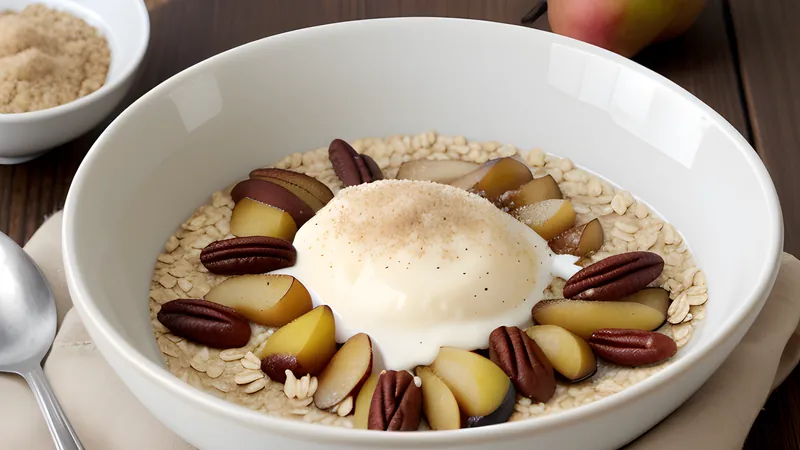
- Spoon into bowls, top with the maple pears and their syrup, drizzle over the reserved brown butter, and finish with the toasted nuts, a pinch of flaky salt and more maple syrup to taste.
The Story
Steel-cut oats are the least processed form the oat commonly reaches the kitchen in, and understanding what they are explains why they behave so differently from the packet porridge most of us grew up on. An oat groat is the whole grain with only the inedible hull removed. To make steel-cut oats, sometimes called pinhead or coarse oatmeal, those groats are chopped into two or three pieces by steel blades and nothing more. Rolled oats, by contrast, are steamed soft and pressed flat between rollers so they cook in minutes, and the quick-cook variety is simply rolled thinner still. The more you flatten and steam an oat, the faster it cooks and the softer and blander it turns.
Porridge made from coarse oatmeal is the older tradition across Scotland and the north of England, where oats grew well in a cool, wet climate that defeated wheat. For centuries it was a daily staple, cooked slowly with water and salt, stirred with a wooden spurtle, and often left overnight to soak so it needed less cooking in a cold morning kitchen. Purists still argue that salt and water alone make the only true porridge, and there is real merit to a plain, savoury bowl. This recipe takes the richer, more indulgent road with milk, butter and fruit, which owes as much to American and Irish habits as to a Scottish croft, but it keeps the coarse grain that gives the dish its backbone.
Pears and oats are an autumn match with quiet logic behind it. Roasting the fruit with maple concentrates its sugars and drives off water, so instead of watery slices you get soft, jammy quarters with burnished edges and a pool of spiced syrup. Cardamom, warm and resinous with a faint citrus lift, keeps the sweetness from turning one-note, and the toasted nuts add a crunch that echoes the chew of the oats underneath. It is a bowl built on contrasts of texture, which is exactly what a good porridge wants and a smooth one lacks.
What can go wrong
The most avoidable mistake is treating steel-cut oats like the quick kind and rushing them. They genuinely need their twenty-five to thirty minutes, and there is no shortcut that gives the same creamy-yet-toothsome result; pull them off after ten and you get a bowl of hard, raw-tasting grit. Keep the heat low once they are simmering, because a hard boil throws the porridge up the sides of the pan and scorches the base before the centres soften. Stir every few minutes rather than constantly, which is enough to stop it catching without knocking all the texture out of it.
The liquid ratio is the other lever. This recipe runs a little loose on purpose, because porridge thickens dramatically as it sits and cools, so a bowl that looks perfect in the pan can set to concrete by the time it reaches the table. Finish it slightly slacker than you want to eat it and keep a jug of warm milk on hand to loosen each serving. If it does over-thicken, a splash of hot milk stirred through brings it straight back; there is no need to panic.
Brown butter, as ever, is a matter of seconds and attention. In a small pan over a medium heat it foams, quietens, and turns from pale gold to hazelnut-brown quickly, and the smell shifts from buttery to toasted at just the right moment. Pull it off the heat the instant it colours and smells nutty, and tip it out of the hot pan so it stops cooking, because a scorched, bitter butter will drag the whole bowl down with it. Watch the pears too: ovens vary, and a syrupy tin can catch and burn in the last few minutes, so check them from the twenty-minute mark.
Storage, make-ahead and variations
Steel-cut oats are a genuine make-ahead friend, which is half of why they are worth the effort. Cook a full batch, cool it, and keep it covered in the fridge for up to five days; it firms into a sliceable block that reheats beautifully with a good splash of milk stirred in over a low heat or in the microwave. This makes them a sound choice for busy mornings, when a portion reheats in a couple of minutes. You can also cook them the old Scottish way, part-simmered the night before and finished in the morning, which shaves time off a cold start.
The pears can be roasted a day ahead and warmed through, or swapped for whatever the season offers: roasted plums or apricots in high summer, spiced apple wedges in deep winter, or a handful of blackberries folded through raw at the end. For a dairy-free bowl, cook the oats in oat or almond milk and brown a plant butter, which browns much like the dairy kind. A spoonful of thick yoghurt on the side cuts the sweetness nicely if you want the whole thing less like a pudding.
If you like a slow, comforting breakfast built on grain and butter, my kaya toast with soft-boiled eggs is a very different but equally cosy morning ritual, and for a fruited, spiced bake to have alongside a pot of tea, my bara brith, Welsh tea loaf with soaked fruit leans on the same autumn palette of dried fruit and warm spice.
Getting the grain right
One practical word on shopping, since the labels confuse people. Steel-cut, pinhead and coarse oatmeal are the same thing under different names, and any of them will work here. Do not substitute rolled or quick oats and expect the same result, because they cook in a fraction of the time and turn to a smooth paste rather than holding the distinct, chewy grains this bowl is built on. Buy the coarse-cut kind, give it the half-hour it asks for, and you end up with the most satisfying porridge in the oat family.
Related Content