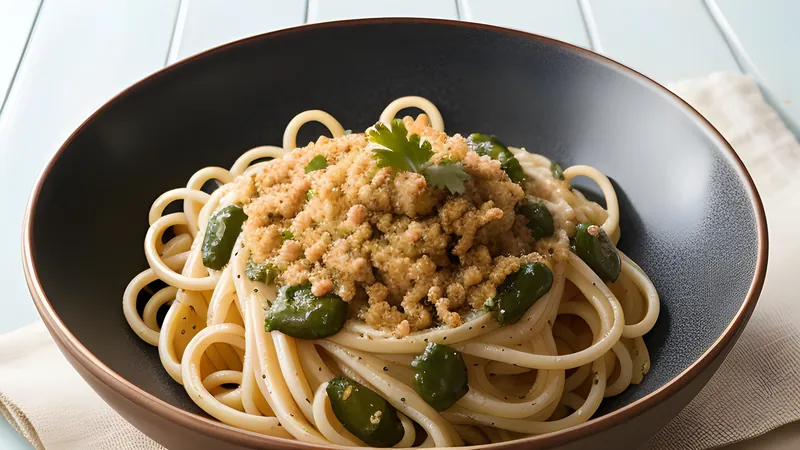
Spaghetti Aglio e Olio with Toasted Breadcrumbs
The midnight pasta, with a crunchy golden lid
Contents
↓ Jump to recipeEvery cook needs a dish they can make with their eyes half closed, from a bare cupboard, at an hour when the shops are shut. For a great many Italians that dish is spaghetti aglio e olio: spaghetti with garlic and oil. It is the food of students, night-shift workers and anyone who gets home hungry with nothing in the fridge, because the ingredients live in every kitchen already. Pasta, olive oil, a head of garlic, a pinch of chilli. Fifteen minutes. That is the whole story, and the fact that so little can taste so good is the reason the dish has survived for generations.
It comes from Naples, where it is sometimes called “aglio, olio e peperoncino” to give the chilli its due, and it belongs to the great tradition of cucina povera, the cooking of the poor, which turned scarcity into some of Italy’s most beloved plates. There is no meat, no cheese in the classic version, no tinned tomato. The pleasure comes entirely from technique: from cooking the garlic to exactly the right point and from emulsifying the oil with starchy pasta water into a sauce that coats every strand. Master it and you have understood something that unlocks half of Italian pasta cookery.
Spaghetti Aglio e Olio with Toasted Breadcrumbs
Ingredients
- 200g dried spaghetti
- 6 tbsp good extra-virgin olive oil
- 6 garlic cloves, thinly sliced
- 1/2 tsp chilli flakes, or 1 dried peperoncino, crumbled
- 40g coarse breadcrumbs from stale bread
- 2 anchovy fillets in oil, finely chopped
- A large handful of flat-leaf parsley, chopped
- Salt for the pasta water
- Grated pecorino or Parmesan, to serve (optional)
Method
- Bring a wide pan of well-salted water to the boil and cook the spaghetti until just shy of al dente. Reserve a large mug of pasta water before draining.
- While the pasta cooks, make the breadcrumbs. Heat 2 tbsp of the olive oil in a frying pan over medium heat. Add the chopped anchovies and let them melt into the oil for 1 minute. Add the breadcrumbs and toast, stirring, for 3–4 minutes until deep golden and crisp. Tip out onto a plate and wipe the pan.
- In the same pan, heat the remaining 4 tbsp olive oil with the sliced garlic over low-medium heat. Cook gently for 3–4 minutes until the garlic turns pale gold and smells sweet. Do not let it brown or it will taste bitter. Add the chilli flakes and cook for 30 seconds.
- Add a ladle of the starchy pasta water to the garlic oil and let it bubble. Add the drained spaghetti and toss hard over medium heat, adding more pasta water a splash at a time, until the oil and water emulsify into a glossy sauce that clings to the strands, about 1–2 minutes.
- Off the heat, toss through most of the parsley. Serve at once, showered with the toasted breadcrumbs, the last of the parsley and cheese if using.
The two things that go wrong
Aglio e olio has a reputation as a beginner’s dish, and it is true that it is simple, but simple food hides its mistakes nowhere. Two errors account for almost every disappointing plate.
The first is burnt garlic. Garlic sliced thin and cooked in hot oil can go from sweet and golden to acrid and brown in a matter of seconds, and once it is bitter there is no saving it. Keep the heat at low to medium and watch it like a hawk. You are looking for a pale gold colour and a mellow, sweet smell. The moment it reaches that point, the chilli and the pasta water go in to stop the cooking. If you are nervous, start the garlic in cold oil and bring them up to temperature together, which gives you a wider margin.
The second error is a broken, oily sauce. Toss drained spaghetti straight into hot oil with no pasta water and you get greasy strands sitting in a slick at the bottom of the bowl. The fix is the same emulsion that powers fettuccine Alfredo and a proper cacio e pepe: starchy pasta water, added a splash at a time and tossed hard, so the starch binds the oil and water into a creamy, glossy sauce. Keep your pasta water cloudy by using a narrow pan and not drowning the spaghetti, and reserve far more than you think you need.
The twist: anchovy breadcrumbs on top
Classic aglio e olio sometimes finishes with a scatter of toasted breadcrumbs, the “pangrattato” that poor southern kitchens used as the parmesan of those who could not afford parmesan. I take that idea one small step further and melt a couple of anchovy fillets into the oil before the breadcrumbs go in. The anchovies dissolve completely and season the crumbs with a deep, savoury note that reads as pure toastiness rather than fish, and the crumbs go on top of the finished pasta as a crisp golden lid. The contrast of crunch against slippery spaghetti is what turns a humble supper into something you actively look forward to. It is the same anchovy magic I lean on in a beef-shin ragù, used here for texture as much as flavour.
Make the crumbs from stale bread you have blitzed or grated coarsely; shop-bought fine crumbs turn to powder. Toast them properly, a good three or four minutes until deep gold and audibly crisp, then keep them separate until the very end so they stay crunchy. Crumbs stirred in too early go soft.
The method, timed to the pasta
Everything here is quick, so get the water boiling first and work to its clock. Salt the water well; this is your only chance to season the pasta itself, though go a touch lighter than usual if you are using the anchovies and cheese, which bring their own salt.
Make the breadcrumbs while the spaghetti cooks, in the same pan you will use for the garlic, so you build flavour and save washing up. Toast them, tip them out, give the pan a quick wipe, then start the garlic gently in the rest of the oil. By the time the garlic is pale gold, your pasta should be a minute short of al dente. Ladle in some pasta water to cool and season the oil, add the drained spaghetti, and toss hard over the heat, loosening with more water until it turns silky. Parsley off the heat, breadcrumbs over the top, and you are eating within a couple of minutes.
Timing is everything, because this dish does not wait. Have your parsley chopped, your breadcrumbs made and your cheese grated before the pasta hits the water, and serve it the instant it comes together, into warm bowls.
Variations, storage and the bigger lesson
Aglio e olio is a template as much as a recipe. A squeeze of lemon and its zest brightens it beautifully. A handful of toasted pine nuts or capers adds another layer. Fold through wilted spinach, purple sprouting broccoli or peas to make it a little more of a meal, or add a tin of good tuna for protein. Vegans can skip the anchovy and cheese and lean on extra garlic, chilli and a little nutritional yeast in the crumbs. If you want something in the same fast, big-flavoured family for another night, my bucatini all’Amatriciana is the guanciale-and-tomato cousin worth learning.
This is a dish to eat the moment it is made; cold leftover garlic pasta is a sad thing, so make only what you will eat in one sitting. What it will give you in return is bigger than one supper. Once you can cook garlic to that sweet golden point without scorching it, and once your hands know the feel of an oil-and-water emulsion coming together under the spoon, you have the two core skills that carry you through carbonara, cacio e pepe, vongole and half the Italian pasta repertoire. A cheap plate of spaghetti has taught you more than an expensive one ever could.
A word on the oil and the garlic
Because there are so few ingredients, each one is fully exposed, and the olive oil especially. This is the place to open your good bottle of extra-virgin, the grassy, peppery one you keep for dressing things raw, because most of it goes in uncooked heat and its character defines the dish. A tired, flavourless oil gives you a tired, flavourless plate. Six tablespoons for two people sounds generous, and it is; the oil is not a cooking medium here so much as the sauce itself, so do not skimp and do not swap in a bland vegetable oil.
The garlic deserves the same respect. Slice it thinly and evenly with a sharp knife rather than crushing it, so it cooks gently and infuses the oil without catching and burning the way minced garlic does. Fresh, firm heads with no green shoots at the centre taste sweetest; older garlic with a developed germ turns harsh and slightly bitter when cooked. Six cloves may look like a lot, but it mellows dramatically as it softens in the warm oil, leaving a rounded sweetness rather than a raw punch. Trust it.
Related Content