Soufflé Omelette with Gruyère and Chives
Whipped whites, brown butter and a molten cheese heart
Contents
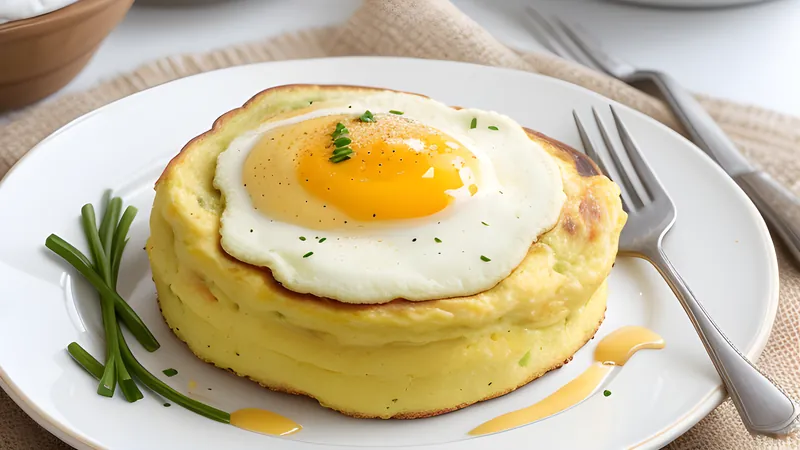
↓ Jump to recipeA soufflé omelette is one of the great high-return, low-cost tricks in cooking. You take the same three eggs you would scramble, separate them, whisk the whites to a foam, fold everything back together and cook it in a hot pan, and what comes out is a golden, quivering pillow twice the height of an ordinary omelette, tender enough to collapse under its own steam. Split it open and it should sigh. It takes ten minutes and the only new skill is whisking egg whites properly, which is worth owning anyway.
My twist is in the fat. Instead of melting the butter plainly, I let it foam and go nut-brown before the eggs go in, so the whole omelette carries a faint, toasty, almost hazelnut background that plays beautifully against the nutty Gruyère. Brown butter and Gruyère are natural allies, and it costs you nothing but thirty extra seconds of patience at the pan.
Soufflé Omelette with Gruyère and Chives
Ingredients
- 3 large eggs, separated
- 1 tbsp full-fat milk
- 0.25 tsp fine salt
- A grind of black pepper
- 1 pinch cream of tartar (optional, helps the whites)
- 20g unsalted butter
- 40g Gruyère, coarsely grated
- 1 tbsp finely chopped chives, plus more to finish
Method
- Separate the eggs, putting the whites in a large, spotlessly clean bowl and the yolks in a smaller one.
- Whisk the yolks with the milk, salt and pepper until smooth.
- Whisk the whites (with the cream of tartar, if using) to soft, glossy peaks that just hold their shape. Do not take them to stiff, dry peaks.
- Fold a third of the whites into the yolks to loosen, then fold in the rest gently, keeping as much air as possible. Fold in the chives.
- Melt the butter in a 20cm non-stick pan over a medium heat and let it foam and turn a pale nut-brown, swirling, until it smells nutty. Tilt to coat the sides.
- Tip in the egg mixture and spread it gently to the edges. Cook, undisturbed, for 2 to 3 minutes until the base is set and golden and the top is still slightly wet.
- Scatter the Gruyère over one half and cover the pan with a lid for 30 to 60 seconds to melt the cheese and set the top through gentle steam.
- Fold the omelette in half over the cheese, slide onto a warm plate, scatter with extra chives and eat at once.
The showman’s omelette
The soufflé omelette has a long and slightly theatrical history in French cooking. Its most famous incarnation is the omelette de la Mère Poulard from Mont-Saint-Michel, where since 1888 the restaurant founded by Annette Poulard has served an enormous, foamy omelette cooked over a wood fire in a long-handled copper pan, the whites whipped to a cloud. Tourists still queue and argue about whether it is worth the price, which is the surest sign a dish has become a legend. The precise method was, for years, a closely guarded secret, and the truth turned out to be gloriously simple: whisk the whites, fold, cook fast and hot.
It belongs to a wider family of aerated egg cookery that runs from the sweet soufflé omelettes served with jam as a pudding in old French households, to the fluffy Japanese * omuraisu* served over rice, to the towering soufflé pancakes of modern Tokyo cafés. The common thread is the same piece of physics: air whipped into egg white, trapped, and then expanded by heat. Everything else is seasoning.
The savoury Gruyère version is the one I come back to on a slow morning. Gruyère is an Alpine cow’s-milk cheese, aged and complex, with a sweet, brothy, faintly nutty character and a genuine melt. Its cousin in the melting-cheese world is Comté, and either works here. What you want is a cheese with real flavour and good flow, so it pools into the folded omelette rather than sitting in stubborn threads.
The science of the pillow
Everything that makes this omelette work happens in the egg whites, so it pays to understand what is going on.
Egg white is mostly water and protein. When you whisk it, you drag those proteins apart and they unfold, then re-bond around the air bubbles you are beating in, forming a stable foam. Whisk too little and there is not enough structure to hold the air; whisk too far, past stiff peaks to dry and grainy, and the protein network over-tightens, squeezes out water and collapses when heated. Soft, glossy peaks that just flop at the tip are the target, because they still have the stretch to expand in the pan.
Two enemies will flatten a foam before it starts. Fat is the main one: even a trace of yolk in the whites, or a greasy bowl, coats the proteins and stops them bonding, so separate carefully and use a scrupulously clean bowl. A pinch of cream of tartar helps by acidifying the whites slightly, which stabilises the foam and makes it more forgiving, though a spotless bowl and a careful hand can do without it.
The folding is where good foams die. You have beaten air in on purpose, and rough stirring knocks it straight back out. Loosen the yolks first with a third of the whites, so the two mixtures are closer in texture, then fold the rest through in slow, patient strokes, turning the bowl and cutting down through the middle, stopping the moment they are just combined. A few streaks of white are far better than a deflated, uniform batter.
Cooking it
Get the brown butter right first. Melt it over a medium heat and let it foam, swirl, and turn the colour of a hazelnut skin, watching closely because it goes from nutty to burnt in seconds. The moment it smells toasty, tip in the eggs; the residual heat and the browned milk solids are what give the underside its flavour.
Spread the mixture gently to the edges and then leave it alone. Two to three minutes, undisturbed, until the base is set and golden and the top is still glossy and slightly wet. This is the point where impatience ruins things: poke it and you deflate it. Scatter the Gruyère over one half, put a lid on the pan, and let gentle steam do the last of the work, melting the cheese and just setting the top without drying it or browning it further.
Fold it over the cheese, slide it onto a warm plate and eat it immediately. A soufflé omelette waits for no one; it starts to sink the moment it leaves the pan, which is the whole charm of it. The window between perfect and merely nice is about ninety seconds, so have your plate, your extra chives and your appetite ready before you separate a single egg.
Tips, swaps and variations
It went flat and dense. The whites were probably over-whisked or knocked down in the fold, or the pan was not hot enough to set and lift the base quickly. Aim for soft peaks, fold gently and preheat properly.
It browned too much underneath. The heat was too high for too long. Medium heat and the lid trick let the top set by steam so you do not have to overcook the base chasing it.
Cheese swaps: Comté, mature Cheddar, Emmental or a soft goat’s cheese all work. For something sharper, a little grated Parmesan folded into the eggs deepens the savour.
Herbs and extras: chives are classic, but tarragon, chervil or parsley all suit. A few sautéed mushrooms or a spoonful of soft spinach can go in before you fold, though keep additions light so they do not weigh the foam down.
Serves one, deliberately. This is a solo, made-to-order dish; the foam does not survive being scaled up and held. If you are cooking for a table, make them one after another and hand each out hot, or turn to a sturdier egg dish that can feed several at once.
For eggs treated as real technique, the layered, dashi-seasoned Japanese tamagoyaki is the disciplined counterpoint to this omelette’s exuberance, while the spiced, custardy Parsi akuri shows what slow heat does for scrambled eggs. If you want something that feeds a crowd from the same egg-and-cheese family, the sliceable potato, chorizo and roasted pepper frittata is the answer.
A soufflé omelette is proof that the difference between an everyday breakfast and a small event is often just technique and thirty seconds of attention. Whip the whites, brown the butter, fold with a light hand, and three ordinary eggs become the most impressive thing you will make all week.
Related Content