Smashed Cucumber with Black Vinegar and Chilli Oil
A five-minute side with a numbing kick
Contents
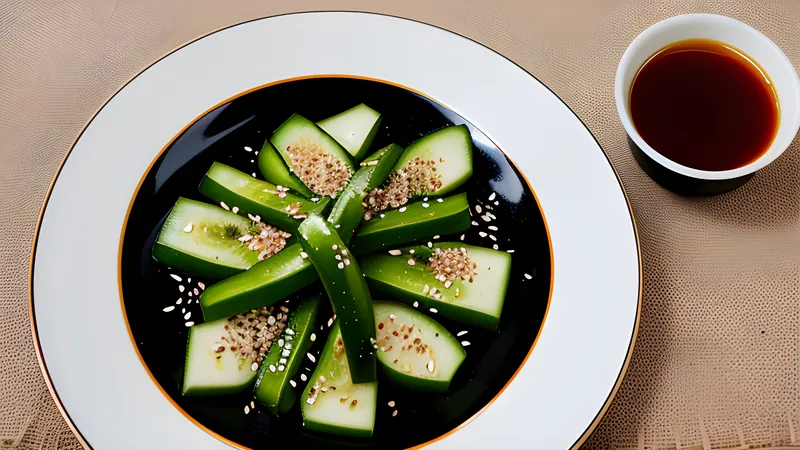
↓ Jump to recipeSmashing a cucumber rather than slicing it is the whole trick: cracking the flesh along its natural fault lines opens up ragged surfaces that a dressing can actually grip, instead of sliding off a smooth cut face. This version leans into the Sichuan side of the dish, building the chilli oil from scratch with whole peppercorns toasted in the oil itself, so the numbing tingle of mala arrives alongside the vinegar’s sourness rather than the milder, peanut-and-sesame style more common further north.
Smashed Cucumber with Black Vinegar and Chilli Oil
Ingredients
- 2 large English cucumbers
- 1 tbsp fine salt, for draining
- 4 tbsp neutral oil (groundnut or sunflower)
- 1 tbsp Sichuan peppercorns
- 3 tbsp dried chilli flakes (Sichuan or Korean gochugaru)
- 3 cloves garlic, finely minced
- 1 tsp fresh ginger, finely grated
- 3 tbsp Chinkiang (black) vinegar
- 2 tsp light soy sauce
- 1 tsp caster sugar
- 1 tsp toasted sesame oil
- 1 tbsp toasted white sesame seeds
Method
- Lay the cucumbers on a chopping board and strike each one firmly along its length 3 or 4 times with the flat side of a heavy knife or a rolling pin, until the skin cracks and the flesh splits.
- Tear the cracked cucumbers by hand into rough, bite-sized chunks, following the natural fracture lines rather than cutting them, and discard any very watery seed cores.
- Toss the torn cucumber with the salt in a colander set over a bowl and leave to drain for 15 minutes, then tip onto a clean tea towel and pat dry.
- Meanwhile, heat the neutral oil in a small pan with the Sichuan peppercorns over a medium-low heat for 3 minutes, swirling often, until the oil smells fragrant and the peppercorns darken slightly, then strain the oil into a heatproof bowl containing the chilli flakes, garlic and ginger; it should sizzle audibly.
- Leave the chilli oil to cool for 5 minutes, then stir in the black vinegar, soy sauce, sugar and sesame oil until the sugar dissolves.
- Toss the drained cucumber with the dressing in a serving bowl, making sure every craggy piece is coated.
- Scatter over the sesame seeds and serve within the hour, while the cucumber is still cold and crisp.
The Story
Pai huang gua, “patted yellow melon”, is one of the oldest cold dishes in Chinese home cooking, a way of turning a watery vegetable into something with texture and bite using nothing more than a knife handle and a few pantry staples. The smacking technique itself is centuries old and shows up across Chinese regional cooking wherever cucumbers meet a punchy dressing, from Beijing-style versions finished with sesame paste to the Sichuan treatments that lean on chilli oil and numbing peppercorn. What all of them share is the physical logic of the smash: cracking rather than slicing.
A cucumber sliced with a knife presents smooth, sealed surfaces to whatever it meets, so a dressing mostly sits on top and slides off. Smashing the cucumber shatters its cell structure unevenly along natural weak points, opening up a mass of jagged edges and internal channels that grip a sauce far more effectively, in exactly the way a rough-torn piece of bread soaks up a vinaigrette better than a neatly cut cube. It also produces bite-sized chunks in seconds, with no knife skills required beyond a firm swing, which is part of why the dish travelled so easily from restaurant kitchens into home cooking.
The mala chilli oil is where this version parts ways from the gentler, more common style built on shop-bought chilli oil and a scattering of crushed peanuts. Toasting whole Sichuan peppercorns directly in the oil, rather than adding chilli flakes alone, extracts the compound hydroxy-alpha-sanshool, which is responsible for the tingling, faintly electric numbness that Sichuan cooking calls “ma”, designed to be felt right alongside “la”, the straightforward heat of chilli. The two together are the mala combination that defines Chongqing and Sichuan street food, and it turns a simple cucumber side into something with real complexity, cold and crunchy on one bite, tingling and warm on the next.
What can go wrong
Skipping the salting-and-draining step is the most common shortcut, and it costs you the texture of the dish. English cucumbers are roughly 95 per cent water, and smashing them ruptures cells that would otherwise weep into the dressing over the next hour, diluting the black vinegar and turning a punchy sauce watery and thin. Fifteen minutes with a tablespoon of salt draws out a genuinely significant amount of liquid before it ever reaches the bowl, so the dressing keeps its concentrated sourness.
The other place this dish goes wrong is the chilli oil itself. If the neutral oil is too hot when it meets the chilli flakes, they scorch instantly and turn bitter rather than releasing their colour and aroma; the peppercorns should sizzle gently as they toast, not spit and smoke. Aim for an oil that shimmers but is well short of smoking, and pull it off the heat the moment the peppercorns darken a shade and the kitchen starts to smell fragrant rather than acrid.
Chinkiang vinegar is not interchangeable with ordinary malt or wine vinegar. It is aged from glutinous rice and has a mellow, faintly smoky sweetness alongside its acidity, closer in character to a good balsamic than to a sharp white vinegar; substituting the wrong bottle leaves the dressing tasting merely sour instead of rounded.
Choosing and prepping the right cucumber
English (or “continental”) cucumbers, long and slim with a thin skin and comparatively few seeds, are the easiest starting point, because there is less watery seed core to discard once the flesh cracks open. Ridged field cucumbers, the kind more common in a British greengrocer’s crate through summer, work just as well and often have a firmer bite, though their thicker skin benefits from a light peel in alternating strips before smashing, so the finished pieces are not tough to chew through. Whatever variety you use, look for one that feels genuinely firm end to end with no soft or spongy patches — a cucumber that has already started to turn soft in the fridge will shatter into mush rather than cracking cleanly into craggy shards, and mush cannot grip a dressing the way a proper fracture can.
The knife-strike itself wants confidence rather than force. A single firm whack with the flat of a cleaver or the base of a rolling pin, repeated three or four times down the length of the cucumber, is enough to crack the skin and split the flesh into a network of fault lines; hitting far too hard just pulps the ends without improving the crack pattern in the middle. Tear along those fault lines with your hands rather than reaching for a knife afterwards — cutting through a smashed cucumber seals the torn surfaces back into smooth-ish planes and undoes exactly the texture the smashing was meant to create.
Serving it as part of a spread
This sits most naturally alongside other cold, punchy dishes rather than as a solitary starter — think a spread of Sichuan cold plates, where a numbing, vinegar-forward cucumber cuts through richer dishes like red-braised pork belly or dan dan noodles the same way pickles cut through a fatty roast in other cuisines. It also holds its own next to plainer grilled or steamed proteins that need a little brightness: a piece of steamed white fish or a simple grilled chicken thigh benefits enormously from a spoonful of this cucumber and its dressing tipped over the top at the table, since the mala oil does a lot of the seasoning work that would otherwise fall to a sauce made separately. Keep portions modest if it is one of several dishes on a shared table — this is a dish built to wake the palate up between richer bites, not to fill a plate on its own.
Storage, make-ahead and variations
This is very much a dish to eat within the hour. Salted, smashed cucumber continues to release water even after draining, and left dressed for more than an hour or two it turns soft and the sauce grows watery. You can, however, get every component ready well ahead: smash and drain the cucumber up to a few hours in advance and keep it covered in the fridge, and the chilli oil itself actually improves after a day, as the flavours of garlic, ginger and peppercorn settle into the oil. Make a larger batch of the oil and keep it in a sealed jar in the fridge for up to two weeks, ready for noodles, dumplings or fried rice as well as this salad.
For variations, add a spoonful of Sichuan preserved vegetable (ya cai) or a few crushed roasted peanuts for extra crunch if you want the dish closer to its Beijing-style cousin. Swap in mini Persian cucumbers if that is what your shop has, since their thinner skin and fewer seeds smash just as well and need no seeding. If mala is not your thing, halve the peppercorn quantity and lean more on the garlic and vinegar for a milder, still punchy, side.
For another cold Chinese classic that lives or dies on a similarly punchy dressing, my smacked cucumber salad, pai huang gua takes the gentler, peanut-and-sesame route through the same technique. And if you want another Asian salad built around chilli, lime and a good pounding, my green papaya salad, som tam is worth the mortar and pestle.
Related Content