Slow-Roasted Lamb Shoulder with Pomegranate and Sumac
Falling-apart lamb under a tangle of herbs and jewels
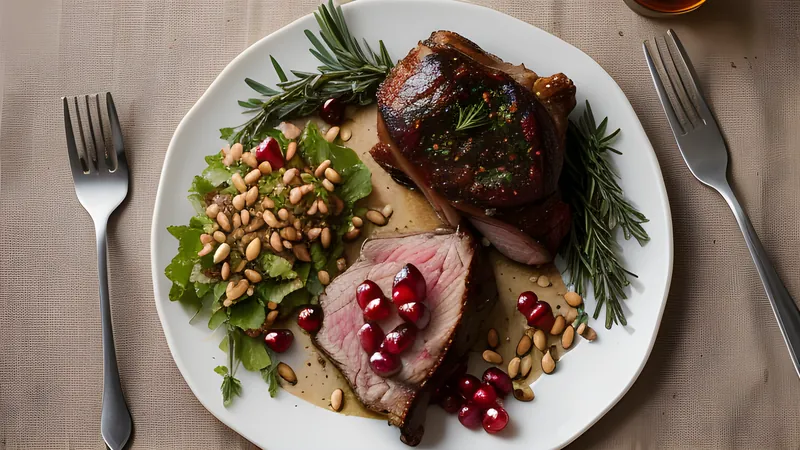
Slow-Roasted Lamb Shoulder with Pomegranate and Sumac
Ingredients
- 1 bone-in lamb shoulder, about 2kg
- 4 garlic cloves, crushed
- 2 tbsp olive oil
- 2 tbsp sumac, plus extra to finish
- 1 tbsp ground cumin
- 1 tsp ground cinnamon
- 2 tsp flaky sea salt
- 1 tsp black pepper
- 2 red onions, thickly sliced
- 300ml chicken or lamb stock
- 2 tbsp pomegranate molasses
- Seeds of 1 pomegranate
- Small handful flat-leaf parsley, roughly chopped
- Small handful mint leaves, torn
- 2 tbsp toasted pine nuts or flaked almonds
Method
- Heat the oven to 160C fan. Pat the lamb dry and slash the skin a few times with a sharp knife.
- Mix the garlic, olive oil, sumac, cumin, cinnamon, salt and pepper into a paste and rub it all over the lamb, working it into the slashes.
- Scatter the sliced onions over the base of a deep roasting tin, sit the lamb on top and pour the stock around it.
- Cover the tin tightly with two layers of foil and roast for 4 hours, until the meat is very tender and pulls easily from the bone.
- Remove the foil, brush the lamb with the pomegranate molasses and turn the oven up to 200C fan.
- Roast uncovered for a further 25 to 30 minutes until the surface is burnished and sticky.
- Lift the lamb onto a board or platter and rest, loosely covered, for 15 minutes. Skim excess fat from the pan juices.
- Shred the lamb roughly with two forks and spoon over some of the strained pan juices.
- Scatter generously with pomegranate seeds, parsley, mint, toasted nuts and a final dusting of sumac before serving.
There are roasts you stand over and roasts you simply trust, and lamb shoulder is firmly the second kind. Where a leg wants careful timing to stay pink, a shoulder asks only to be wrapped up and forgotten for an afternoon, at the end of which it surrenders into soft, dark, intensely savoury shreds. This version dresses that richness in the bright, sour flavours of the eastern Mediterranean: sumac, pomegranate molasses and a final shower of fresh herbs and ruby seeds. The clever twist is the contrast, taking something deeply rich and slow and cutting through it with sharp, almost zinging acidity so that every mouthful resets your appetite for the next.
1 A dish of the Levant
Lamb is the meat of celebration across the Levant and the wider Middle East, and slow cooking a tough, well-worked cut until it falls from the bone is a technique with deep roots in the region’s communal cooking. From Jordanian mansaf to Palestinian qateh, the principle recurs: cheaper, harder-working cuts, transformed by time and gentle heat into something tender enough to eat with bread and fingers. Sumac, the dried and ground berry of a wild shrub, has seasoned these tables for centuries, prized for a clean, lemony sourness that predates the easy availability of citrus. Pomegranate molasses, the thick, tart syrup made by reducing pomegranate juice, plays a similar role, lending sharpness and a dark sweet-sour depth.
Bringing them together over lamb is not so much an invention as a return to type. This is food built for sharing from a single platter, the meat shredded and scattered with whatever is fresh and bright, designed to be scooped up with flatbread among people you like.
2 How it comes together
The method could hardly be simpler. Rub the lamb all over with a spiced paste, sit it on a bed of onions that will sweeten and soften into the pan juices, pour in a little stock, then seal the tin tightly with foil. That foil traps steam and effectively braises the meat as it roasts, which is the secret to lamb that pulls apart rather than dries out. Four hours at a low temperature does the heavy lifting; you genuinely do not need to touch it.
The final flourish is where it earns its looks. Off comes the foil, on goes a brush of pomegranate molasses, and the heat goes up so the surface caramelises into something burnished and sticky. Rest it, shred it roughly, then bury it under pomegranate seeds, torn herbs and toasted nuts. The hot, soft, savoury lamb against cold, crunchy, sour pomegranate is the whole point, so be generous with the toppings.
3 Tips and serving
Buy bone-in shoulder if you can, because the bone adds flavour and helps you judge doneness; when the meat slides off it, you are there. If your shoulder is larger or smaller, adjust the covered cooking time roughly by the hour per kilo, always cooking to tenderness rather than the clock. Do not be tempted to rush it at a higher temperature, since collagen needs slow, gentle heat to melt into gelatine, and that is what makes the meat unctuous rather than stringy.
This is a forgiving dish for entertaining. The lamb can be cooked through the long covered stage a day ahead, then cooled and refrigerated; reheat it covered and do the molasses-glazing stage just before serving. The flavours, if anything, improve overnight. Cooking it ahead also lets the fat set so you can lift it off cleanly, leaving the pan juices rich rather than greasy.
A note on seasoning, because lamb this rich needs a firm hand. Salt the meat properly and taste the pan juices before you spoon them over; they should be savoury and well rounded, and a splash more pomegranate molasses or a squeeze of lemon will lift them if they taste flat. The herbs and pomegranate at the end are not a garnish to be skipped but part of the dish, providing the freshness and acidity that keep it from feeling heavy. Serve it with warm flatbreads, a bowl of garlicky yoghurt, and something sharp like a parsley and red onion salad to echo the herbs. Buttery rice, jewelled with more pomegranate, makes it a feast. Whatever you serve alongside, bring it to the table on its platter and let everyone tear in.
Related Content