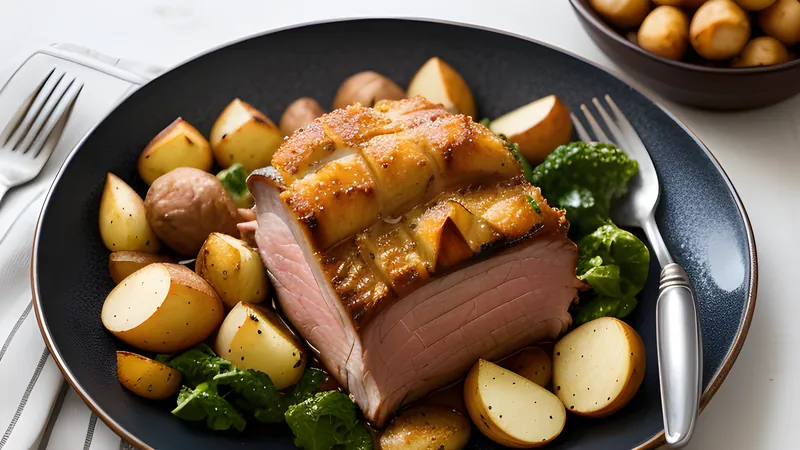
Slow-Roast Pork Shoulder with Apple Sauce
Eight hours low, pull-apart meat, brown-butter apple sauce
Contents
↓ Jump to recipePork shoulder is the cut that teaches you patience pays. It is a hard-working muscle, streaked with fat and connective tissue, and roasted quickly it comes out tough and dry. Given eight low, slow hours in the oven, that same tissue melts into gelatine, the fat renders through the meat, and you’re left with pork so tender you serve it with a spoon. It is cheap, nearly impossible to overcook, and about as hands-off as a roast gets. You put it in the oven in the morning and forget about it until the smell fills the house.
The apple sauce is where I’ve allowed myself one flourish. Instead of the usual pan of stewed Bramleys, I brown the butter first — cook it until the milk solids turn nutty and gold — before the apples go in. That toasted, hazelnut depth against the sharp fruit turns a nursery sauce into something you’ll want to eat by the spoonful. A whisper of cardamom and a splash of cider vinegar keep it lively and stop it cloying against the rich meat.
Slow-Roast Pork Shoulder with Apple Sauce
Ingredients
- 2.5kg bone-in pork shoulder, skin on and scored
- 1 tbsp fine salt, plus flaky salt for the skin
- 1 tbsp fennel seeds, lightly crushed
- 1 tsp black pepper
- 2 onions, thickly sliced
- 1 bulb garlic, halved across
- 500ml dry cider
- 3 bay leaves
- For the apple sauce:
- 4 Bramley apples (about 700g), peeled and chopped
- 40g unsalted butter
- 2 tbsp caster sugar, or to taste
- 1 tbsp cider vinegar
- 1 pinch ground cardamom
Method
- The day before or at least 1 hour ahead, rub the pork with 1 tbsp fine salt, the crushed fennel and pepper. Salt the scored skin with flaky salt and leave uncovered in the fridge to dry.
- Heat the oven to 240 degrees C fan (260 degrees C conventional). Scatter the onions, garlic and bay in a deep roasting tin, sit the pork on top and pour the cider around the base.
- Roast at high heat for 30 minutes to start the crackling.
- Lower the oven to 150 degrees C fan (170 degrees C conventional). Cover the meat loosely with foil, leaving the crackling exposed, and roast 7 to 8 hours, until the meat pulls apart easily and reaches about 90 degrees C internal.
- If the crackling isn't fully crisp, cut it off and blast it separately at 240 degrees C fan for 10 to 15 minutes while the meat rests.
- Rest the meat, loosely covered, for 30 minutes. Skim the fat from the tin juices and reduce them in a pan for gravy.
- Make the apple sauce: melt 40g butter and cook until the solids turn nut-brown, add the apples, sugar, cardamom and a splash of water, cover and cook 12 to 15 minutes until collapsed, then stir in the cider vinegar and beat to your preferred texture.
- Pull the pork apart or carve in thick chunks and serve with crackling, gravy and the warm apple sauce.
Choosing the shoulder
Buy a bone-in shoulder with the skin on and a good layer of fat beneath. The bone conducts heat and adds flavour, and it’s easy to slip out once the meat is cooked. Skin on means crackling, and the fat is what keeps everything moist over the long haul. A 2.5kg joint feeds six generously with leftovers, and the leftovers are half the point.
Ask for the skin to be scored finely, or do it yourself with a very sharp knife or a clean craft blade — close parallel lines through the skin and into the fat, without reaching the meat. As with any crackling, dry skin is the goal, so pat it thoroughly and, if you have time, leave the salted joint uncovered in the fridge overnight.
Salt, fennel and the low oven
Rub the meat all over with fine salt, the crushed fennel seeds and pepper, working into the scored skin with extra flaky salt. Fennel and pork are old friends — the same partnership that drives porchetta with fennel and crackling — and a little goes a long way here.
Sit the shoulder on a bed of sliced onions, halved garlic and bay in a deep roasting tin, and pour the cider around the base so it stays clear of the skin. The cider and onions become a savoury braise beneath the meat, keeping the underside moist and giving you the beginnings of a gravy. As the fat renders down it drips into the cider, and by the end you have a tin of concentrated, appley pork stock.
The oven goes low: 150°C fan for the long stretch. Low and slow is the whole principle. Collagen, the tough connective tissue, only breaks down into soft gelatine when it’s held at temperature for hours. Rush it with high heat and the muscle fibres seize and squeeze out their moisture before the collagen has a chance to melt. Slow it right down and the meat relaxes into tenderness while staying juicy.
Method
- The day before or at least an hour ahead, rub the pork with 1 tbsp fine salt, the crushed fennel and pepper. Salt the scored skin with flaky salt and leave uncovered in the fridge to dry.
- Heat the oven to 240°C fan (260°C conventional). Scatter the onions, garlic and bay in a deep roasting tin and sit the pork on top. Pour the cider around the base.
- Roast at high heat for 30 minutes to start the crackling.
- Lower the oven to 150°C fan (170°C conventional). Cover the meat loosely with foil, leaving the crackling exposed if you can, and roast for 7 to 8 hours, until the meat pulls apart easily and the internal temperature reaches about 90°C.
- If the crackling isn’t fully crisp, cut it off and blast it separately at 240°C fan for 10–15 minutes while the meat rests.
- Rest the meat, loosely covered, for 30 minutes. Skim the fat from the tin juices and reduce them in a pan for gravy.
- Make the apple sauce: melt 40g butter in a pan and cook until it foams and the solids turn nut-brown. Add the apples, sugar, cardamom and a splash of water. Cover and cook 12–15 minutes until collapsed, then stir in the cider vinegar and beat to your preferred texture.
- Pull the pork apart or carve in thick chunks. Serve with crackling, gravy and the warm apple sauce.
The temperature that matters
This is the one roast where you cook well past “done”. A pork joint is safe to eat at 63°C, but at that point a shoulder is still tough. You’re aiming for around 90°C internal, held there long enough for the collagen to dissolve — that’s when the meat stops resisting the fork and falls into shreds. A thermometer helps, though honestly the fork test is enough: when a fork slides in and twists with no resistance, it’s ready. If it’s still firm, give it another hour. You genuinely cannot overcook it within reason; an extra half hour only makes it softer.
Brown-butter apple sauce
Bramleys are the English cooking apple for a reason — they collapse into a fluffy purée the moment they hit heat, needing no effort to break down. Browning the butter first is the small step that lifts the sauce out of the ordinary. Watch it closely once it starts foaming: the change from pale gold to nut-brown to burnt happens in seconds, and you want to catch it at the fragrant, hazelnut stage. Then the apples, sugar and a splash of water go straight in, the pan is covered, and twelve minutes later you have sauce.
The cider vinegar at the end is the balancing act. Pork is fatty and the apple is sweet, so a hit of acid pulls the whole plate into focus. Taste and adjust — some Bramleys are sharper than others, so you may want a touch more sugar or a touch more vinegar. The cardamom should sit right at the edge of noticing.
Sides, leftovers and swaps
Slow-roast pork wants classic supporting acts: roast potatoes, buttered greens, maybe a spoon of wholegrain mustard on the side. The tin juices make a thin, intensely savoury gravy once skimmed and reduced.
- Leftovers are the prize. Pull the cold meat and crisp it in a hot pan for tacos or a hash — the technique behind carnitas, slow-braised and crisped turns leftover shoulder into a second, completely different dinner.
- Rolls: pulled pork, a scrap of crackling and a spoon of the apple sauce in a soft bun is the sandwich of the week.
- Sausage-adjacent comfort: if you love pork and gravy, sausage and mash with red onion gravy scratches the same itch on a weeknight when eight hours isn’t on offer.
- No cider? Use apple juice with a splash of white wine vinegar, or dry white wine. The braise wants a little acidity and sweetness.
- Storage: the cooked meat keeps four days in the fridge and freezes well in its own juices. The apple sauce keeps a week refrigerated and freezes in portions.
Salt it, start it hot for the crackling, drop the heat and walk away for eight hours, then rest it and pull it apart. Few dishes ask so little attention and give back so much, and the brown-butter apple sauce is the detail that will have people asking what you did differently.
Timing it around your day
The beauty of this roast is how well it fits a real schedule. An eight-hour cook at 150°C fan is remarkably forgiving of an extra thirty or forty minutes, so you don’t need to hover. Start it mid-morning for an evening meal, or the night before if you want it for lunch — a shoulder that’s rested and then gently reheated, covered, in a low oven is arguably better than one straight from the roast, because the flavours settle. Reheat the pulled meat with a splash of its own juices so it doesn’t dry.
If you’re feeding a bigger table, size up to a 3.5–4kg joint and add two to three hours, keeping everything else the same; the fork test still tells you when it’s ready. And save the bones. A shoulder blade simmered with the spent onions, garlic and a little of the cider braise makes a stock with real backbone — the base for soups and beans through the week. This is a roast that keeps giving long after Sunday lunch is cleared away, which is exactly what you want from a cut this cheap.
Related Content