Simit: Istanbul's Sesame-Crusted Ring
A chewy grape-molasses-dipped ring buried in toasted sesame
Contents
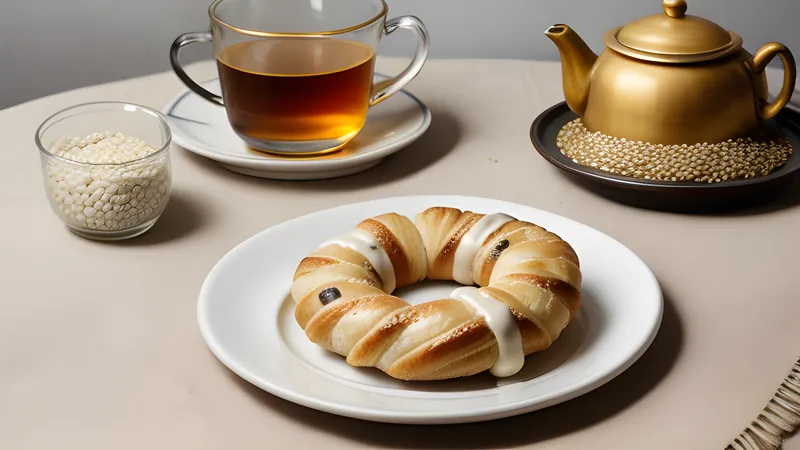
↓ Jump to recipeIf Istanbul has a single defining smell before nine in the morning, it is toasted sesame drifting off a simit cart. The simit is a chewy, twisted ring of bread, glazed with grape molasses and buried in so much sesame that the crust crackles when you tear it, and it is the true breakfast of the city, sold from red-painted carts and glass-fronted trolleys on every corner, eaten on the move with a glass of tea or split and stuffed with white cheese. It is one of the world’s great street breads, and it is far easier to make at home than its street-food glamour suggests. My one small liberty is toasting the sesame before it goes on, which most carts do not bother with; the extra few minutes in a dry pan deepen the nuttiness and stop the seeds tasting raw and papery when the ring bakes.
Simit: Istanbul's Sesame-Crusted Ring
Ingredients
- 500g strong white bread flour
- 8g fine salt
- 7g fast-action dried yeast (1 sachet)
- 1 tsp caster sugar
- 300ml warm water
- 2 tbsp olive oil
- For the dip: 4 tbsp pekmez (grape molasses), or 2 tbsp molasses plus 2 tbsp water
- 4 tbsp water (to loosen the dip)
- For the crust: 150g sesame seeds, lightly toasted
Method
- Whisk the yeast and sugar into the warm water and leave 5 minutes until foamy.
- Combine the flour and salt in a large bowl. Add the yeasty water and olive oil and mix to a dough.
- Knead for 8 to 10 minutes until smooth, firm and elastic. Cover and prove for 1 hour until doubled.
- Toast the sesame seeds in a dry pan over a medium heat, stirring, until pale gold and fragrant, then tip into a wide shallow bowl to cool. In a second wide bowl, stir the pekmez with the water to a runny, dip-able glaze.
- Knock back the dough and divide into 6. Roll each piece into a rope about 55cm long, then fold the rope in half and twist the two strands around each other into a double helix.
- Bring the two ends together to form a ring and pinch firmly to seal, keeping the twist visible.
- Dip each ring fully into the pekmez glaze, turning to coat, letting excess drip off, then press both sides firmly into the toasted sesame until heavily crusted.
- Place the rings on lined trays, cover loosely and prove 20 to 30 minutes until slightly puffy.
- Bake at 210C fan for 15 to 18 minutes until deep golden-brown and the sesame is toasted and aromatic.
- Cool a few minutes on a rack and eat warm, with white cheese, olives and tea.
Five centuries of a street-corner ring
Simit is old. Ottoman palace kitchen records mention it by the early sixteenth century, and by the 1600s it was firmly established as a street food of Istanbul, then Constantinople, sold by wandering simitci who called their wares through the streets. The traveller Evliya Celebi, writing in the seventeenth century, counted the city’s simit bakers and sellers in their hundreds, which tells you the ring was already an institution when the Mughals were still building in India. Its shape and sesame crust link it to a wider eastern-Mediterranean family of ring breads, the Greek koulouri, the Levantine ka’ak, all of them descendants of the same ancient idea of a portable, long-keeping, seed-crusted loop of bread.
The name is thought to come from semid, an old word for fine semolina or white flour, marking the simit out as a bread made from good flour rather than coarse meal. Today it sits at the heart of the Turkish breakfast (kahvalti), torn into a spread of white cheese, olives, tomatoes, cucumber and jam, and it doubles as the all-day snack that keeps the city fed between meals. It belongs in the same great tradition of seeded, savoury breads as the nigella-and-sesame Persian barbari and, in its chewy, boiled-then-baked cousinship, the boiled and blistered bagel, which shares the trick of a treated surface producing a distinctive crust.
Pekmez, and why the dip is not just for looks
The step that makes a simit a simit is the dip. Before the ring is crusted in sesame it is plunged into pekmez, a thick, dark syrup made by boiling down grape must to a molasses-like concentrate. Pekmez has been made in Anatolia for millennia and is a pantry staple across Turkey, sweet with a faint winey tang and a mineral edge. In the simit it does three jobs at once. It is the glue that makes the sesame stick in a heavy, even layer. It is a sugar coat that caramelises in the oven, giving the crust its deep mahogany colour and a whisper of sweetness against the savoury sesame. And it adds a background fruity note you would miss if it were gone.
If you cannot find pekmez, a mix of ordinary molasses or dark treacle let down with water gets you most of the way there for colour and stick, though it lacks the grape tang; a little pomegranate molasses stirred in nudges it back towards the real thing. Loosen whichever you use with water to a thin, runny dip, thin enough to coat the ring in a quick plunge without sitting on it in a sticky slab.
Toast the sesame first. Raw sesame on a simit will pale-bake and taste flat, because the ring’s bake is short. A few minutes in a dry pan until the seeds are golden and smell nutty means every one of them is already flavourful before it hits the oven, and the finished crust tastes twice as good. Press the dipped ring firmly into the seeds on both sides; a proper simit is crusted to the point of excess, and you want the sesame to feel like a coating rather than a scatter.
The twist that gives simit its bite
The characteristic shape is a double helix. You roll a long rope, fold it in half, and let the two halves twist around each other into a two-strand spiral before joining the ends into a ring. This is worth doing properly, and not only for looks. The twist gives the simit its particular chew: the two coiled strands create a crumb with more surface, more crust-to-inside ratio and a satisfying, slightly stretchy tear that a plain ring would not have. Keep the twist visible after you seal the ends by pinching firmly; if you smooth the join too much the ring can spring apart in the oven.
The dough itself is a lean, simple bread dough, water, flour, salt, yeast and a little olive oil, closer to a bagel or a pizza base than to any enriched bun. Knead it well so it is smooth and elastic; a strong gluten network gives the chew that defines the ring. It wants only a short second prove after shaping, twenty to thirty minutes, so the crumb stays firm and chewy. Over-prove it and you lose the density that makes a simit satisfying.
Bake hot and fast. A high oven drives quick colour and sets the crust while keeping the inside chewy and moist. The simit is done when the sesame is toasted and aromatic and the surface is a deep, even golden-brown.
How to eat it, the Istanbul way
Warm, torn, with a wedge of beyaz peynir (Turkish white cheese) tucked inside and a glass of black tea, is the classic street breakfast, and it is very hard to improve on. At the full breakfast table the simit is the bread that anchors everything else. Later in the day, a simit split and filled with cheese, or with the chocolate-hazelnut spread the children go for, is the standard four-o’clock snack. A day-old simit, which firms up as bagels do, is excellent split, toasted and buttered.
Tips, storage and variations
Make-ahead. You can shape the rings, cover and refrigerate them overnight after twisting, then dip, crust and bake in the morning; the cold rest even improves the flavour. The dip and toasted sesame both keep happily for a day.
Storage. Simit is at its best within a few hours of baking, while the crust still crackles. After that it firms up; refresh a day-old ring for a couple of minutes in a hot oven to re-crisp the sesame, or split and toast it. They freeze well, so bake a full batch and reheat from frozen.
Getting the crust heavy enough. The commonest home-baker’s disappointment is a thin, patchy sesame coat. The fixes are a runnier pekmez dip, a fuller bowl of seeds, and a firm press on both sides. Do not be shy; a real simit sheds sesame as you eat it.
Semolina touch. For a slightly finer, paler crumb closer to the “semid” of the name, replace 50g of the bread flour with fine semolina. It gives a subtle sweetness and a lovely tender bite.
Troubleshooting. A ring that springs open in the oven was sealed too loosely or over-proved; pinch the ends firmly and keep the second prove short. A pale, soft simit points to too cool an oven or too long a final prove, both of which rob it of colour and chew. And sesame that tastes raw and dusty despite a good crust means the seeds went on untoasted, which is exactly the small step I would never skip.
The simit has fed Istanbul for five hundred years from a cart on the corner, and there is something quietly satisfying about pulling a tray of them from your own oven, the whole kitchen smelling of toasted sesame and caramelised grape syrup. Twist them properly, crust them heavily, eat them warm with cheese and tea, and you have brought a genuine piece of the city home.
Related Content