Shirazi Salad: Persia's Everyday Chop
Cucumber, tomato and onion cut small, dressed at the table, never wilted
Contents
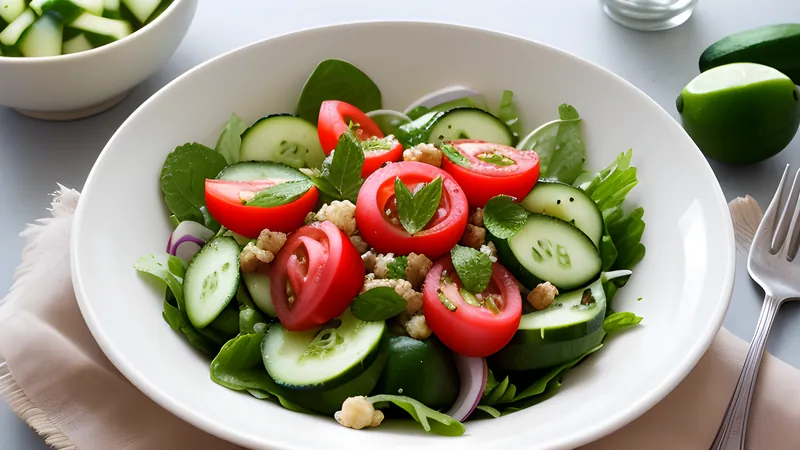
↓ Jump to recipeShirazi salad is not really a recipe so much as a discipline. Cucumber, tomato and onion, cut small, dressed with lime and olive oil, scattered with herbs: that is the whole dish, and it appears at almost every Persian meal I’ve eaten, from a family lunch in Shiraz’s Qavam House gardens to a Tehran kebab counter with a plastic tablecloth. The reason it earns a permanent seat at the table isn’t complexity. It’s that when it’s cut right and dressed at the right moment, it is genuinely the best thing on the plate — cold, sharp, crunchy, and cutting straight through rich grilled meat or a mound of saffron rice. I’ve watched people who claimed not to like salad clear the bowl of this one before the main course arrived.
The name gives away its origin: Shiraz, the southern Iranian city famous for poetry, gardens and, before prohibition, wine. Salads of raw chopped vegetables dressed with citrus and herbs turn up across the wider Persian-influenced world under different names — Turkish çoban salatası, Israeli chopped salad, Lebanese fattoush without the bread — and they likely share a common ancestor in the market produce of the eastern Mediterranean and the Fertile Crescent, where cucumbers, tomatoes and onions have all grown for centuries. But Shirazi salad has its own specific rules, and most people who’ve only had a rough approximation at a takeaway kebab shop have never actually tasted it done properly. The dish also travels well beyond Iran’s borders in the Iranian diaspora, where it’s often the one recipe that survives generations largely unchanged, precisely because it needs no special equipment, no long list of spices, and no oven — just a sharp knife, ripe produce and a bit of patience about when to pour the dressing.
Shirazi Salad: Persia's Everyday Chop
Ingredients
- 3 Lebanese or Persian cucumbers (about 400g), unpeeled if the skin is thin
- 4 firm ripe tomatoes (about 400g), deseeded
- 1 small red onion (about 80g)
- 1 large handful flat-leaf parsley, finely chopped
- 1 small handful fresh mint, finely chopped
- 3 tbsp fresh lime juice (about 2 limes)
- 3 tbsp extra virgin olive oil
- 1/2 tsp dried mint (or sumac, for the twist)
- 1 tsp fine salt, plus more to taste
- 1/4 tsp black pepper
Method
- Halve the cucumbers lengthways and scrape out any watery seed core with a teaspoon, then cut into 5mm dice.
- Halve the tomatoes, squeeze out the seeds and jelly over the sink, then cut the flesh into 5mm dice to match the cucumber.
- Cut the onion into the same fine dice; if it tastes sharp, soak the diced onion in cold water for 10 minutes and drain well.
- Combine the cucumber, tomato, onion, parsley and mint in a wide bowl. Do not dress yet.
- Whisk the lime juice, olive oil, dried mint or sumac, salt and pepper in a small jug.
- Pour the dressing over the vegetables and toss only when you are ready to serve, ideally within 15 minutes.
- Taste and adjust with extra lime juice or salt, then serve immediately, ideally still faintly cold from the fridge.
The cut is the recipe
There is exactly one technical skill in this dish and it’s knife work. Everything gets cut to a uniform 5mm dice — smaller than you think, definitely smaller than a typical Western chopped salad. The reason isn’t aesthetics. At that size, every forkful carries all three vegetables and both herbs in roughly equal proportion, so you taste the salad as a single flavour rather than picking out a chunk of tomato here and a bite of onion there. Cut everything to match, and the salad reads as more than the sum of its parts.
A sharp knife matters more here than in most recipes. A blunt blade crushes rather than slices through soft tomato flesh, bursting the cell walls and releasing juice before the salad is even assembled. Use a knife you’ve actually sharpened recently, cut with a clean forward motion rather than a sawing one, and resist the temptation to rush the dice down to speed. Five minutes of careful cutting produces a noticeably better salad than two minutes of hurried chopping.
Persian cucumbers, or the slim, thin-skinned Lebanese cucumbers sold in most UK supermarkets, matter here. Standard ridged cucumbers carry a soft, wet, faintly bitter seed core that turns the salad watery within minutes; Persian and Lebanese varieties have almost no seed cavity and a firmer, sweeter flesh. If you can only get a regular cucumber, halve it and scrape the seeds out with a teaspoon before dicing — it’s a small extra step that stops the salad drowning in its own juice.
Tomatoes get the same seed-removal treatment for the same reason: the jelly around a tomato seed is mostly water, and diced small it releases fast. Choose tomatoes that are actually ripe and in season if you can — a mealy winter tomato has no acid or sweetness to contribute and will just add bulk. If good tomatoes aren’t available, a well-drained tin of good plum tomatoes, deseeded and diced, beats a flavourless fresh one.
Red onion is the one ingredient with a real bite, and it divides opinion even among Iranian cooks. If you find raw onion aggressive, dice it fine and soak it in cold water for ten minutes before draining — this pulls out some of the sulphurous sharpness without fully cooking it, leaving crunch and a milder onion flavour behind. Some cooks swap in a milder shallot or a few finely sliced spring onions instead, which is a reasonable substitution if red onion isn’t to your taste.
Getting the ratio right
The classic proportion runs roughly equal parts cucumber and tomato by volume, with onion at about a quarter of either, and herbs added generously rather than as a garnish. Skimp on the herbs and the salad tastes like a plain vegetable dice; a proper handful of parsley plus a smaller one of mint gives it the grassy, faintly aniseed lift that makes it recognisably Persian rather than just a diced salad from anywhere. Weigh your vegetables the first time you make this if you can, so you have a mental picture of the ratio for future batches — after that you’ll be able to judge it by eye.
A quick mental shortcut that works in practice: cucumber and tomato should look roughly equal in the bowl before you add anything else, onion should look like a modest accent rather than a third main ingredient, and the herbs should be visible flecked through the whole thing rather than sitting on top as a garnish. If your finished salad looks mostly beige and watery with a few green specks, you’ve under-herbed it.
Dress it last, or don’t bother
This is the rule that separates a good Shirazi salad from a soggy one, and it’s the single biggest thing people get wrong. Salt and acid both draw water out of cut vegetables through osmosis — it’s the same mechanism that lets you salt aubergine to remove bitterness, or salt cucumber slices before a Greek salad. Dress the bowl twenty minutes before serving and you’ll find a pool of pink liquid at the bottom by the time it reaches the table, diluting every flavour and turning crunchy dice into limp ones.
The fix is simple: chop everything, keep the vegetables and the dressing separate right up until the moment people are sitting down, then toss. Fifteen minutes of contact time is fine; an hour is not. If you’re prepping ahead for a dinner party, do the chopping in the afternoon, keep the vegetables covered in the fridge, mix the dressing separately, and combine only at the pass. If you’ve made this mistake before and ended up with a watery bowl, the fix next time isn’t a different dressing — it’s timing, full stop.
The dressing itself is deliberately plain: fresh lime juice (traditionally a Persian dried lime or fresh lime, sometimes cut with a little verjuice), a good olive oil, salt, pepper and either dried mint or, as the twist here, a scatter of sumac. Sumac’s tannic, berry-like sourness layers a second kind of acidity over the lime’s brightness rather than just repeating it, and its faint purple-red dust looks good against the green and red of the vegetables. If you don’t have sumac, dried mint is the traditional choice and works just as well — just don’t skip an acidic element entirely, since it’s what makes the salad taste alive rather than merely diced. I’ve tried this salad with red wine vinegar in place of lime in a pinch, and while it works in an emergency, it pushes the flavour towards a European vinaigrette rather than the citrus-forward brightness that makes the dish taste distinctly Persian. Lime, or a genuine Persian dried lime ground to powder, is worth seeking out.
Use fine salt in the dressing rather than flaky sea salt — it dissolves fully into the lime juice and oil, so the seasoning is even throughout rather than concentrated in whichever bit of salad happens to catch a flake.
What to serve it with
Shirazi salad is built to be a foil for rich, fatty, or heavily spiced food, which is why it turns up alongside kebabs, stews and pilafs rather than as a stand-alone lunch. It’s the traditional partner for Persian saffron tahdig, where the cool acidity cuts through the crisp, buttery rice crust and resets your palate between bites. It does the same job next to anything smoky and charred — try it alongside jerk chicken or any grilled meat where you want a bright, cold contrast rather than another warm, rich flavour on the plate.
It also holds its own next to other Middle Eastern-leaning dishes with a similar logic of raw freshness against heat, like a watermelon and feta salad or a smacked cucumber salad if you’re building a spread. None of these fight for attention; they’re designed to support whatever’s next to them, which is a useful thing to remember when you’re planning a menu — not every dish needs to be the centrepiece.
Variations worth trying
Add cucumber’s cousin, radish. A handful of thinly sliced radish added to the dice brings extra peppery crunch and is common in home versions.
Swap lime for verjuice or pomegranate molasses. A splash of pomegranate molasses in the dressing pushes the salad towards a sweeter, more autumnal flavour and pairs particularly well with lamb.
Bulk it into a meal. Add a tin of drained chickpeas or cubes of good feta and this stops being a side dish and becomes a light lunch on its own, though at that point it drifts closer to a Mediterranean chopped salad than a strict Shirazi salad.
Go heavier on herbs. Some families use as much herb as vegetable — a large bunch each of parsley, mint, and sometimes dill or coriander, finely chopped. It shifts the balance towards something closer to a herb salad with vegetables running through it, which is worth trying if you grow your own herbs and have a surplus.
Add a crumble of feta or a spoon of thick yoghurt on the side. This is a departure from the traditional recipe, though the creaminess is a good match if you’re serving the salad as more of a main.
Char the cucumber skin lightly. A brief pass under a hot grill or over a gas flame before dicing adds a faint smoky note that plays surprisingly well against the raw tomato and onion, though it’s a departure from the classic cold, crunchy version and best treated as an occasional experiment rather than the everyday method.
Storage
This salad does not keep. Once dressed, it’s at its best inside half an hour and noticeably worse by the two-hour mark, watery and dull, the vegetables limp instead of snapping. If you must make it ahead, store the chopped vegetables and the dressing in separate containers in the fridge — the vegetables will hold their crunch for up to a day this way — and combine only just before you eat. Leftover dressed salad is still edible the next day but treat it as a reminder for next time: cut it, chill it, dress it last, and it will earn the seat at the table it deserves.
Related Content