Seville Orange Marmalade, the Bitter Classic
Dark, thick-cut and set properly, with a slug of whisky at the end
Contents
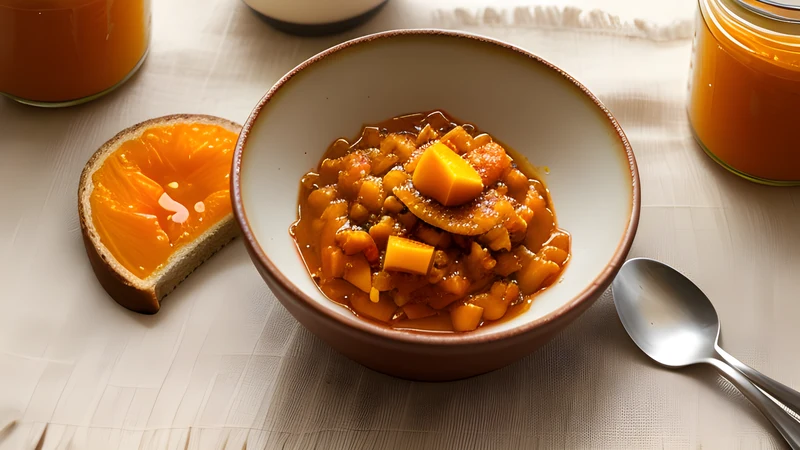
↓ Jump to recipeFor about six weeks a year, usually from early January, greengrocers with any sense of occasion put out crates of knobbly, thin-skinned, sour oranges from around Seville, and a certain kind of British cook gets slightly obsessive. Seville orange marmalade is a seasonal ritual as much as a recipe, a once-a-year window that closes as quickly as it opens, and the marmalade you make in one bitter January morning will sit on your toast right through to the following winter.
Seville Orange Marmalade, the Bitter Classic
Ingredients
- 1kg Seville oranges (about 8), scrubbed
- 2 litres water
- Juice of 1 lemon
- 1.8kg granulated sugar
- 200g dark muscovado sugar
- 3 tbsp Scotch whisky (optional)
Method
- Scrub the oranges, then put them whole into a large pan with the water and lemon juice. Cover and simmer gently for about 2 hours, until the peel is soft enough to pierce easily with a fork.
- Lift the oranges out with a slotted spoon and leave until cool enough to handle. Keep all the cooking water in the pan.
- Halve the oranges and scoop the soft pulp, pips and membranes back into the pan of cooking water. Simmer this for 10 minutes to release the pectin, then strain it back into the pan through a sieve, pressing hard, and discard the solids.
- Slice the peel into thick or thin shreds as you prefer and return them to the pan with the strained liquid.
- Add both sugars and warm gently, stirring, until fully dissolved. Only then bring to a hard rolling boil.
- Boil hard for 15–25 minutes until setting point is reached (104.5°C on a sugar thermometer, or a spoonful wrinkles when pushed on a chilled saucer).
- Take off the heat, skim any foam, and stir in the whisky if using. Rest for 10 minutes so the peel settles, then stir once to distribute it evenly.
- Ladle into warm sterilised jars, seal, and cool. Store in a cool dark place for up to a year.
Why Seville oranges, and why the bitterness
The Seville is a bitter orange, Citrus aurantium, and it is close to inedible raw: sharp, pithy, sour and full of pips. What makes it the marmalade orange above all others is exactly that harshness, plus an unusually high level of pectin in its peel and pips. Sweet dessert oranges make a pleasant enough marmalade, but a dull, one-note one that struggles to set; the Seville’s bitterness gives the preserve its backbone and its grown-up edge, the faint catch at the back of the throat that stops a spoonful of sugar-preserve from being merely sweet.
The link between Scotland, England and the Spanish bitter orange is the stuff of confident legend. The most repeated story credits a Mrs Janet Keiller of Dundee, who around 1797 supposedly turned a cheap job lot of storm-stranded Seville oranges into a chunky orange preserve, and whose family firm went on to make Dundee marmalade famous. Food historians are fairly sure the Keillers commercialised and popularised marmalade rather than inventing it, since orange and quince preserves called “marmalade” existed in Britain long before, the word itself coming from the Portuguese marmelo, meaning quince. What is beyond doubt is that the British breakfast table adopted bitter orange marmalade as its own, and the annual arrival of the Seville crop became a fixture of the preserving calendar.
Letting the fruit do the setting
The technique here rests on one principle: the Seville orange carries its own pectin and acid, so it needs no shop-bought pectin and no additives to set, provided you treat it right. The pectin is concentrated in the peel, the pith and above all the pips and membranes, which is why the method makes such a point of them. Simmering the whole oranges first softens the peel and begins releasing pectin; then the pulp, pips and membranes get simmered separately and strained, extracting the last of that natural gelling power before the sugar goes in.
This is also why you must dissolve the sugar fully before you boil hard, and not a moment sooner. Sugar interferes with pectin’s ability to set if the balance is wrong, and adding it too early or boiling before it dissolves can give you either a syrup that never sets or a marmalade with crunchy sugar crystals through it. Warm gently, stir until you cannot feel any grittiness against the base of the pan, and only then turn the heat up to the rolling boil that drives off water and brings the mixture to setting point.
The twist: muscovado and a slug of whisky
A classic Seville marmalade uses only granulated sugar and turns a clear amber. I swap a couple of hundred grams of that sugar for dark muscovado, which darkens the finished preserve to a deep bronze and lends a faint treacly, almost caramel depth beneath the bitterness. It nudges the marmalade towards the dark, old-fashioned “vintage” style some jars advertise, and it flatters the Seville’s bitterness the way a little brown sugar flatters strong coffee.
The finishing slug of Scotch is the other flourish, and it earns its place. Stirred in off the heat, once the boiling is done, the whisky keeps most of its aroma and adds a warm, smoky, grown-up note that suits the bitter orange perfectly. There is a genuine affinity between Scotch and marmalade, and a spoonful of this on hot buttered toast tastes faintly of a good breakfast in a cold country. Leave it out if you are making the children’s jars, or use a peaty malt if you want the smoke to sing.
Setting point, without fear
Setting point is where nervous marmalade-makers come unstuck, so here are two reliable tests, and use both if you can. A sugar thermometer is the surer guide: setting point is 104.5°C, and once the boiling mixture holds there for a moment you are almost certainly done. The old wrinkle test backs it up: before you start boiling, put a couple of saucers in the freezer, and when you think the marmalade is ready, take the pan off the heat, drop a teaspoonful onto a cold saucer, wait thirty seconds, then push it with a fingertip. If the surface wrinkles and holds a crease, it has reached setting point; if it floods flat, boil for a few more minutes and test again.
Take the pan off the heat while you test, every time, because a marmalade left boiling while you dither can shoot past setting point into something dark and stiff and over-bitter. And once it is done, rest it for ten minutes before jarring; this lets the mixture thicken slightly so the shredded peel stays suspended evenly through the jar instead of all floating to the top.
Troubleshooting, and the frozen-orange trick
Two things go wrong most often, and both are fixable. A marmalade that never sets has almost always been underboiled or was short on pectin; boil it again with the juice of another lemon and it will usually come good, since lemon adds both acid and pectin. A marmalade that sets like a brick was boiled well past setting point, and while you cannot fully reverse it, gently reheating it with a splash of water and re-potting loosens it a little. Sterilise jars properly, in a 120°C oven for fifteen minutes or straight through a hot dishwasher cycle, and fill them while both jars and marmalade are hot; a clean, hot fill is what keeps a jar mould-free on the shelf for a year.
The other useful thing to know is that you need not make marmalade the day the oranges arrive. Seville oranges freeze beautifully whole, so buy a couple of extra kilos in season and stash them in the freezer, and you can make a fresh batch in April or September when the mood takes you. One caveat: frozen-then-thawed oranges lose a little pectin, so add the juice of an extra lemon to the pan to compensate, and the set will be just as firm.
Peel, storage and using it up
The thickness of the shred is entirely a matter of preference, and it is the one truly personal decision in marmalade-making. Thick-cut gives you chewy ribbons of peel and a robust, chunky preserve; fine-cut gives an elegant, more evenly set jar with peel running through it like threads. Slice it while the peel is soft and cool from its first simmer, when it cuts cleanly.
Sealed in sterilised jars, marmalade keeps for a year or more in a cool dark cupboard; the high sugar content is the preservative. Once opened, keep it in the fridge. Beyond toast, it is a wonderful glaze brushed over a ham or a roast duck, the bitterness cutting the fat beautifully, and a spoonful stirred into a steamed sponge or a bread-and-butter pudding is a small revelation. It sits well alongside sharper preserves at breakfast, and if you enjoy the once-a-year preserving rhythm, follow it later in the year with a batch of quince membrillo for the cheeseboard, another fruit that sets on its own pectin, or the deep, savoury caramelised onion marmalade for the other end of the table.
Related Content