Sesame-Ginger Soba Noodle Salad
Cold buckwheat noodles in a ground-sesame dressing with a miso backbone
Contents
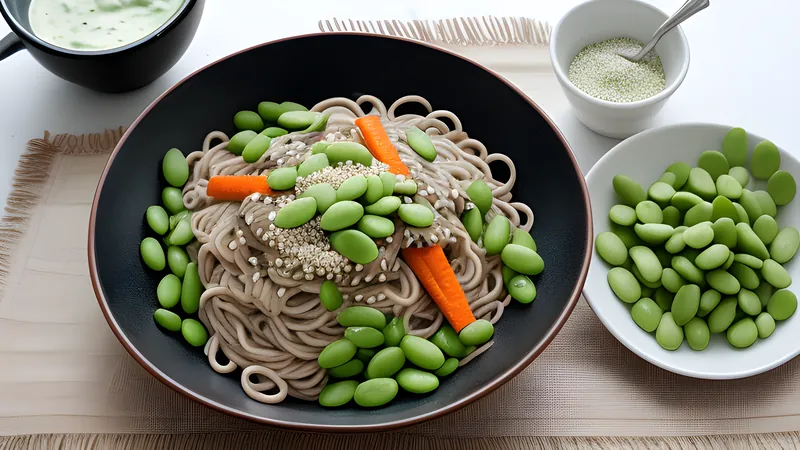
↓ Jump to recipeA cold soba salad lives or dies on its dressing, and most versions lean on a bottle of shop-bought sesame sauce that tastes mainly of sugar. Grinding your own toasted sesame takes five minutes and transforms the bowl: the seeds release their oil and turn nutty and rich, coating each strand of buckwheat noodle in a way a thin, watery dressing never manages. My small addition is a spoonful of white miso, which brings a savoury, faintly funky depth that keeps the whole thing from tipping into blandness on a warm day.
Sesame-Ginger Soba Noodle Salad
Ingredients
- 250g dried soba (buckwheat) noodles
- 4 tbsp white sesame seeds
- 1 tbsp white miso
- 2 tbsp soy sauce (or tamari)
- 1 tbsp rice vinegar
- 1 tbsp toasted sesame oil
- 1 tbsp mirin
- 1 tbsp finely grated fresh ginger
- 1 tsp caster sugar or honey
- 1 to 2 tbsp cold water, to loosen
- 150g frozen edamame beans, defrosted
- 1/2 cucumber, deseeded and cut into fine matchsticks
- 2 spring onions, finely sliced on the diagonal
- 1 medium carrot, cut into fine matchsticks
- 1 tbsp black sesame seeds, to finish
- A small handful of coriander leaves (optional)
Method
- Toast the white sesame seeds in a dry pan over a medium heat for 3 to 4 minutes, shaking constantly, until golden and fragrant. Tip out and cool slightly.
- Grind about three-quarters of the toasted sesame in a mortar (or a small food processor) to a coarse, oily paste, keeping the rest whole for texture.
- Whisk the ground sesame with the miso, soy sauce, rice vinegar, sesame oil, mirin, grated ginger and sugar. Loosen with 1 to 2 tbsp cold water to a pourable but clinging consistency.
- Cook the soba in a large pan of unsalted boiling water for the time on the packet (usually 4 to 5 minutes), stirring at the start so they don't clump.
- Drain and rinse the noodles thoroughly under cold running water, rubbing gently with your hands to wash off the starch, until completely cold. Shake dry.
- In a large bowl, toss the cold noodles with the dressing until evenly coated, then fold through the edamame, cucumber, carrot and most of the spring onion.
- Pile into bowls and finish with the reserved whole toasted sesame, the black sesame, the last of the spring onion and the coriander if using.
The Story
Soba are the thin, brownish-grey noodles made wholly or partly from buckwheat flour, and they have been a staple of Japanese cooking for centuries, particularly in and around Tokyo, where the old capital’s soba shops became a fixture of everyday life during the Edo period. Buckwheat grows fast and tolerates poor mountain soil that would defeat rice, so it fed communities in Nagano and the northern regions where wet paddy farming was difficult, and it carried a reputation as honest, sustaining food. Eaten hot in a dashi broth in winter or cold with a dipping sauce in summer, soba is one of those rare staples that shifts with the seasons without ever changing its identity.
Buckwheat, despite the name, is not a wheat or even a grass; it is the seed of a plant related to rhubarb and sorrel, which is why it is naturally gluten-free (though many commercial soba blend in wheat flour for elasticity, so check the packet if that matters to you). It carries a distinctive earthy, slightly grassy flavour that plain wheat noodles lack, and that flavour is exactly why a cold soba salad rewards a dressing with some depth to meet it. A sweet, one-note sauce fights the buckwheat; a savoury, sesame-heavy one flatters it.
The cold-noodle salad in this style has its clearest ancestor in zaru soba, chilled noodles served on a bamboo mat with a soy-and-dashi dipping sauce. Turning that into a tossed salad with vegetables is more a Western and pan-Asian riff than a strictly traditional Japanese dish, but it borrows the two things that make zaru soba so good in hot weather: noodles served properly cold, and a dressing built on soy, sesame and a little sweetness. Get those right and the additions are yours to play with.
The ground-sesame twist
Toasted sesame seeds have a hard shell that keeps most of their flavour locked inside until they are crushed. Scatter them whole and you get a pleasant crunch and a hint of nuttiness; grind them and you release the oil and the deep, roasted aroma that makes Japanese goma dressings so moreish. This is the same principle behind goma-ae, the classic spinach-and-sesame side, and it is the single biggest upgrade you can make to a sesame noodle salad. A mortar and pestle does it best, giving you a coarse, slightly craggy paste that still has body, but a few pulses in a small food processor works if you are short of time or patience.
I grind three-quarters of the seeds and keep the rest whole so the finished salad has both the rich, clinging sesame flavour and little pops of texture on top. The white miso is my other liberty, and it earns its place by adding umami and a gentle savoury tang that soy alone does not supply. Use a mild white (shiro) miso rather than a dark red one, which would overpower the buckwheat, and whisk it in thoroughly so no salty pockets remain.
Cooking and cooling the noodles
Soba are more delicate than wheat pasta and overcook quickly, going soft and pasty in a way that no dressing can rescue, so treat the packet timing as a maximum and start testing a minute early. Cook them in plenty of unsalted water; unlike Italian pasta, soba is seasoned by its dressing and dipping sauce, and the starch it sheds is useful later. Some traditional cooks even keep the cloudy cooking water, called sobayu, to drink at the end of a meal.
The rinsing step is not optional for a cold salad. Straight from the pan, soba are coated in a sticky starch that makes them clump into a solid mass as they cool. Rinsing under cold running water and rubbing the noodles gently with your fingers washes that starch away, stops the cooking dead, and leaves the strands slippery, separate and properly cold. Shake them as dry as you can before dressing, because trapped water dilutes the sesame dressing and slides it straight off the noodles.
What can go wrong
The commonest failure is a gummy, clumped salad, and it comes from under-rinsing or dressing warm noodles. Warm soba keeps cooking in its own heat and drinks up the dressing so that by the time you serve it, the salad is dry and the noodles are bloated. Rinse until the water runs clear and the noodles feel cold to the touch, then dress. If you must make it ahead and it stiffens in the fridge, a teaspoon of cold water and sesame oil worked through with your hands loosens everything back up.
A dressing that seizes into a thick paste is the second issue, and it happens when the ground sesame is too dry or the mixture too cold. Add the water a little at a time until it flows off the whisk in a ribbon that still clings; it should coat the back of a spoon rather than run off like a vinaigrette. Finally, salt with care. Between the soy, the miso and the mirin there is already a lot of salt in play, so taste before adding more, and let the vegetables and their crunch do some of the balancing work.
Storage, make-ahead and variations
This salad is happiest within a few hours of being made, while the noodles are at their springy best, but it holds overnight in the fridge if you keep the crunchy garnishes back and refresh with a splash of water and oil before serving. The dressing keeps for up to a week in a sealed jar and is worth making in a double batch; it is superb spooned over steamed greens, cold chicken or a bowl of rice.
For variations, poached prawns, shredded leftover chicken or slices of pan-fried tofu turn this from a side into a full lunch, and a handful of shredded nori or a scattering of pickled ginger leans it further towards its Japanese roots. Swap the cucumber for blanched tenderstem in colder months, or add thin ribbons of raw sugar snap for extra bite. If you like a cold, herb-bright salad built on the same sour-savoury logic, my Gỏi Gà, the Vietnamese chicken salad uses a toasted-rice powder where this one uses ground sesame, and for something cleaner and more austere alongside grilled fish, my Sunomono, the Japanese cucumber and wakame salad is the palate-resetter this noodle bowl grew out of.
Related Content