Semolina and Coconut Cake (Namoura) with Orange Blossom Syrup
A syrup-soaked Levantine semolina cake with a coconut lift
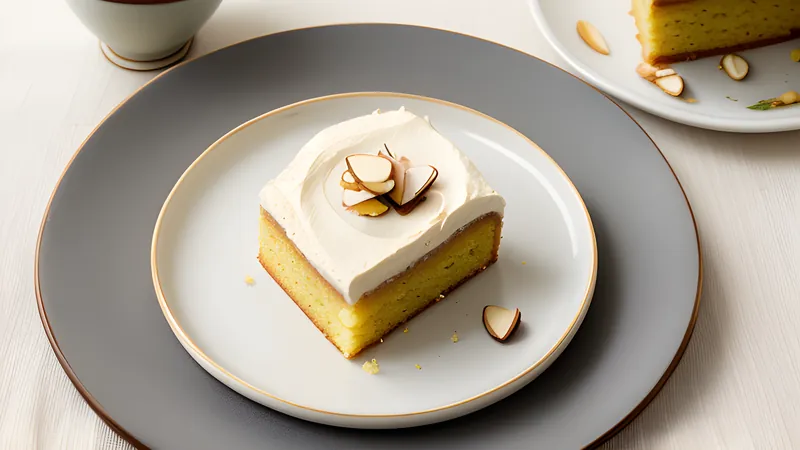
Semolina and Coconut Cake (Namoura) with Orange Blossom Syrup
Ingredients
- 300g coarse semolina
- 100g fine semolina
- 50g desiccated coconut
- 150g caster sugar
- 1.5 tsp baking powder
- 0.25 tsp fine salt
- 120g unsalted butter, melted
- 200ml plain yoghurt
- 60ml milk, plus a little more if needed
- Blanched almonds, to decorate
- 300g caster sugar (for the syrup)
- 250ml water (for the syrup)
- 1 tbsp lemon juice
- 1.5 tsp orange blossom water
Method
- Make the syrup first: bring the sugar, water and lemon juice to a gentle boil, simmer for 8 minutes until slightly thickened, stir in the orange blossom water and leave to cool completely.
- Heat the oven to 180C fan and grease a 20cm square tin.
- In a bowl, combine the coarse and fine semolina, coconut, sugar, baking powder and salt.
- Stir in the melted butter, yoghurt and milk to form a thick, spoonable batter, adding a splash more milk if it is too stiff.
- Spread the batter evenly into the tin and smooth the top, then rest for 15 minutes.
- Score the surface into diamonds and press a blanched almond into the centre of each.
- Bake for 35 to 40 minutes until deep golden and firm.
- As soon as it comes out of the oven, pour the cooled syrup evenly over the hot cake.
- Leave to soak and cool completely, then cut along the scored lines to serve.
Some cakes are about lightness; this one is unapologetically about soak. Namoura is a Levantine semolina cake, dense and golden, cut into neat diamonds and drenched in fragrant syrup the moment it leaves the oven. The contrast between the hot, sturdy crumb and the cool, perfumed syrup is the whole magic, and the cake drinks in the liquid until each piece is moist, tender and glistening. My small twist is a handful of desiccated coconut folded through the batter, which adds a gentle chew and a background sweetness that flatters the orange blossom beautifully.
1 One cake, many names
Walk through bakeries across Lebanon, Syria, Egypt and beyond and you will meet this cake under a string of different names: namoura, basbousa, harissa (no relation to the chilli paste), revani in Turkey and Greece. The details shift from kitchen to kitchen, but the bones are the same: semolina bound with yoghurt and butter, baked until firm, then soaked in a sugar syrup scented with orange blossom or rose water.
It is a cake of celebration and of everyday hospitality alike, the sort of thing kept under a domed cover on the counter and offered with small cups of coffee to anyone who drops in. The diamond shape is traditional, scored before baking so the pieces cut cleanly, with a single blanched almond pressed into the centre of each. That little almond is not just decoration; it marks the portions and gives a pleasing nutty bite against the soft crumb.
In many households the recipe is handed down rather than written, with each cook tweaking the ratio of semolina to yoghurt, the depth of golden colour on top, or the exact perfume of the syrup. That flexibility is part of its charm: namoura forgives a heavy hand and rewards a confident one, and there is no single correct version to live up to.
2 Getting the texture right
The texture of namoura depends almost entirely on the semolina and the soak. I like a blend of coarse and fine semolina: the coarse grains give the cake its characteristic slightly grainy, satisfying bite, while the fine semolina helps everything hold together so the squares do not crumble. Yoghurt brings tang and tenderness, and melted butter carries flavour and richness through the crumb.
The single most important rule is the temperature contrast. Make your syrup first and let it cool completely, because pouring cool syrup over a hot cake is what makes the magic happen. Hot syrup on hot cake, or cold syrup on cold cake, leaves you with something either gummy or dry. Cool syrup hitting a piping-hot crumb is drawn deep inside, soaking evenly all the way through. Pour it slowly and let the cake sit undisturbed while it drinks; do not be tempted to cut it early.
3 Tips, make-ahead and variations
Resting the batter before baking lets the semolina hydrate, which gives a more even, tender crumb, so do not skip the 15-minute pause. Scoring the diamonds before baking, then cutting again along the same lines after soaking, gives you clean pieces without dragging the syrup-soaked crumb around.
Namoura is one of those rare puddings that genuinely improves with time. Made a day ahead and left covered at room temperature, the syrup distributes more evenly and the flavour of the orange blossom deepens. It keeps happily for three or four days and needs no refrigeration, which makes it a generous thing to have around over a holiday.
For variations, swap the orange blossom water for rose water, or use a mix of both. A pinch of ground mahleb or a little lemon zest in the batter adds another layer of fragrance, and some cooks like to spread a thin layer of clotted cream or thick kashta between two thin sheets of batter for a richer version. If you cannot find coarse semolina, fine semolina alone will work, though you lose a little of that signature bite. Serve it as it is with coffee or tea, or alongside a spoonful of yoghurt to cut the sweetness. Just go easy on the orange blossom water itself, because it is potent and a heavy hand turns a perfumed cake into something that tastes of soap rather than blossom.
Related Content