Seeded Rye Crackers with Smoked Salt
Thin, shattering crispbreads with a smoky finish
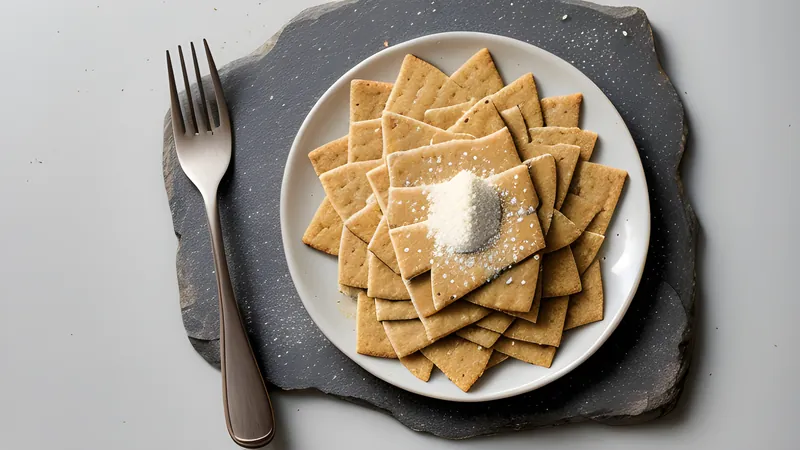
Seeded Rye Crackers with Smoked Salt
Ingredients
- 150g wholemeal rye flour
- 50g plain flour, plus extra for rolling
- 1 tsp fine salt
- 2 tbsp mixed seeds (sunflower, pumpkin, linseed)
- 1 tbsp sesame seeds
- 1 tbsp caraway seeds
- 2 tbsp olive oil
- 100ml cold water, plus a little more if needed
- Smoked sea salt flakes, to finish
Method
- Heat the oven to 180C fan and line two baking trays with parchment.
- In a bowl, combine the rye flour, plain flour, fine salt, mixed seeds, sesame and caraway.
- Add the olive oil and most of the cold water, and bring together into a firm dough, adding more water a teaspoon at a time only if it will not come together.
- Knead briefly until smooth, then divide into two pieces.
- Roll the first piece directly on a sheet of floured parchment as thinly as you possibly can, ideally 2mm.
- Lift the parchment onto a tray, brush the dough lightly with water and scatter generously with smoked salt flakes.
- Score into rough squares or shards with a knife or pizza wheel, pressing right through the dough.
- Repeat with the second piece of dough on the other tray.
- Bake for 20 to 25 minutes, swapping the trays halfway, until deep brown, dry and crisp.
- Watch the edges towards the end, as the thinnest pieces brown fastest and can catch.
- Cool completely on the trays, then snap along the scored lines into individual crackers.
A really good cracker is a small triumph: thin enough to see light through, crisp enough to shatter, and just savoury enough to disappear with a wedge of cheese. These rye crispbreads have a deep, nutty earthiness from the wholemeal rye and a satisfying crunch from a tangle of seeds. The twist is finishing them with smoked salt, which lends a faint bonfire warmth that makes people pause and ask what is in them. They are far cheaper and better than anything in a packet, and once you have made a batch you will be quietly smug every time you put out a cheeseboard.
1 The crispbread tradition
Thin, crisp rye breads are woven deep into the food culture of Scandinavia, where they go by names like knäckebröd in Sweden and the older flatbreads of Norway and Finland. In a cold climate with a long history of needing to store food through hard winters, a bread baked bone-dry was a practical answer. Rye grows well in the north where wheat struggles, and a dry crispbread keeps almost indefinitely, making it the perfect larder staple long before refrigeration.
Traditional Swedish knäckebröd was often baked in great rounds with a hole punched in the centre, so the discs could be threaded onto a pole and hung from the rafters to keep. The dimpled surface, made with a spiked rolling pin, was not just decoration; it helped the bread bake evenly and snap cleanly. These crackers were eaten daily, topped with butter, cheese, cured fish or whatever the household had. They remain a fixture of the Nordic table today, served alongside soups, smoked salmon and the long ritual of an open-sandwich lunch.
Caraway is the classic seasoning for rye in this part of the world, its gentle aniseed-and-citrus note an old companion to the grain. Here it joins a mix of sunflower, pumpkin, linseed and sesame for crunch and goodness, while the smoked salt nods to the Nordic love of all things cured and smoked. It is a humble, thrifty bake with centuries of cold-weather wisdom behind it.
2 Rolling them out
The whole game with these crackers is thinness, and the easiest way to get there is to roll the dough directly on the parchment you will bake on. That way you never have to lift and tear a fragile sheet. Mix everything to a firm, slightly stiff dough, being sparing with the water, then roll each piece as thin as you dare, aiming for around two millimetres.
Brush the surface with a little water so the smoked salt sticks, scatter it generously, and score the dough into squares or rough shards before baking so they snap apart cleanly later. Bake until deep brown and properly dry, keeping an eye on the thinner patches, which colour first. Let them cool completely on the trays, where they finish crisping, then break along the scored lines.
3 Tips and keeping them
Unevenly rolled dough bakes unevenly, with thin edges catching while thick centres stay soft, so try to keep the thickness consistent. If the very middle of a batch is still a touch bendy after cooling, return it to a low oven for five minutes to dry out fully.
The seed mix is endlessly adaptable. Use whatever you have: nigella, poppy, fennel, hemp or chopped nuts all work. A teaspoon of cracked black pepper or some dried chilli flakes gives them a savoury kick. If you cannot find smoked salt, plain flaky sea salt is fine, or add a pinch of smoked paprika to the dough for that smoky note.
Stored in an airtight tin, they stay crisp for a good week or two, which makes them perfect for having on hand. Serve with strong cheese, soft goat’s curd, smoked salmon, or simply a smear of good salted butter. They also make a lovely edible gift, packed into a jar with a length of ribbon.
One last practical note: rye dough behaves differently from wheat dough because rye has very little gluten, so it never becomes stretchy and springy in the way a wheat dough does. Do not worry if it feels short and a touch crumbly; that is exactly right, and it is what gives the finished crackers their clean, brittle snap rather than a chewy bite. Press any cracks back together as you roll, and lean on the parchment trick to move the fragile sheet without it tearing.
Related Content