Seafood Paella with a Proper Socarrat
The Valencian rice done right, with the toasted crust the Spanish prize above everything
Contents
↓ Jump to recipeAsk a Valencian what makes a paella and, once they have finished telling you that seafood paella is not really paella at all, they will get to the socarrat. It is the layer of rice at the very base of the pan that toasts against the hot metal in the last minutes of cooking, going crisp, caramelised and faintly nutty while the rice above stays tender. Spanish families argue over the seafood and the saffron, but the socarrat is the part everyone scrapes for, the reward for cooking rice in a wide, shallow pan over direct heat and having the nerve to leave it alone. Get it right and the difference between a decent rice dish and a proper paella is written on the bottom of the pan.
Seafood Paella with a Proper Socarrat
Ingredients
- 1.2 litres good fish or shellfish stock
- Large pinch saffron threads (about 30 threads)
- 300g bomba or Calasparra paella rice
- 4 tbsp olive oil
- 1 onion, finely chopped
- 4 garlic cloves, minced
- 1 ripe tomato, halved and coarsely grated (skin discarded)
- 1 tsp sweet smoked paprika (pimentón dulce)
- 12 mussels, scrubbed and debearded
- 8 clams, purged in salted water
- 8 raw shell-on king prawns
- 200g cleaned squid, bodies sliced into rings
- 1 tsp salt, plus more to taste
- 1 lemon, cut into wedges
- Small handful flat-leaf parsley, chopped
Method
- Warm the stock in a saucepan. Crush the saffron threads between your fingers, stir them into a ladleful of the hot stock and leave to bloom for 10 minutes, then return it to the pan and keep the stock at a gentle simmer throughout.
- Heat the olive oil in a 34cm paella pan or wide shallow frying pan over medium heat. Add the squid rings and fry for 2 minutes until just opaque, then remove and set aside.
- Add the onion and a pinch of salt and cook gently for 8 minutes until soft. Add the garlic and cook for 1 minute.
- Stir in the grated tomato and cook, stirring, for 6 to 8 minutes until it darkens to a jammy paste (the sofrito). Take the pan off the heat and stir in the smoked paprika for 20 seconds so it doesn't scorch.
- Return to the heat, add the rice and stir for 1 minute to coat every grain in the sofrito and oil.
- Pour in all the simmering saffron stock and the salt. Spread the rice into an even layer and bring to a lively simmer. From this point, do not stir the rice again.
- Cook over medium heat for 10 minutes, rotating the pan occasionally for even heat, then nestle in the mussels, clams and prawns and scatter the reserved squid over the top.
- Continue cooking for 8 to 10 minutes, lowering the heat as the liquid disappears, until the stock is absorbed and the rice is nearly tender with a little bite.
- Turn the heat up to medium-high for the final 1 to 2 minutes to form the socarrat, the toasted crust on the base. Listen for a faint crackle and stop the moment you smell toasted, nutty rice on the edge of catching.
- Turn off the heat, cover the pan loosely with foil or a clean tea towel and rest for 5 minutes. Serve straight from the pan with lemon wedges and parsley.
Where paella comes from
Paella is Valencian, and the original is not a seafood dish at all. It grew in the rice paddies and farmland around the Albufera lagoon south of Valencia, cooked over orange-wood fires by farm labourers using what was to hand: rabbit, chicken, sometimes snails, flat green beans and a large white butter bean called garrofó. The word paella is Valencian for the pan itself, from the Latin patella, a shallow dish — so a paella is, literally, whatever is cooked in the paella. Seafood paella (paella de marisco) came later, from the coast, and while purists in Valencia treat it as a separate thing, it has become the version most of the world pictures. This recipe is unapologetically the coastal one, built on the same technique the farmers used inland.
That technique is the constant across every version, and it is worth stating plainly: paella is a rice dish cooked in a thin, even layer in a wide pan, without stirring, so that the grains cook in the flavoured stock and the base toasts. It is closer in spirit to a risotto’s opposite. Where a risotto is stirred hard to release starch and turn creamy, a paella is never stirred once the stock goes in, so each grain stays separate and dry-edged and the bottom is free to catch and crisp. Reach for a spoon and you sabotage both the socarrat and the texture in one move.
Saffron gives paella its colour and its faint, honeyed, hay-like aroma, and it is the ingredient people most often get wrong by under-treating it. Saffron is the dried stigma of a crocus, hand-picked, which is why it is the most expensive spice by weight in the world — and why cheap “paella” often cheats with turmeric or artificial colouring for the yellow without the flavour. To get everything out of the real thing, the threads want to be crushed and steeped in a little warm liquid before they go in, which brings us to the first technique that matters.
Blooming the saffron
Dropping whole saffron threads straight into a pan of stock wastes most of what you paid for. The colour and aroma compounds — crocin for colour, safranal and picrocrocin for flavour and that distinctive bitter-honey scent — are locked inside the dried threads and release slowly. Crush the threads between your fingers to break them up, steep them in a ladleful of hot stock for ten minutes, and you draw out a deep orange infusion that stains the whole dish evenly and carries far more perfume than undissolved threads ever would. Some cooks lightly toast the threads first in a dry pan for a few seconds to make them brittle enough to crumble, which works well as long as you stop before they scorch.
Choosing the rice
The rice is not negotiable, and it is where home paella most often falls down. Use bomba or Calasparra, short, stubby Spanish varieties grown in Valencia, Murcia and the Ebro delta and protected by their own denominations of origin. Their virtue is that they absorb a great deal of liquid — bomba takes up around three times its volume — while staying firm and separate rather than collapsing into stickiness. That high absorption is exactly what you want, because it means the grains soak up all the saffron-and-shellfish stock without turning to mush, and they are forgiving about timing. Risotto rice like arborio is the usual substitute, but it releases far more starch and turns creamy and clumpy, which fights the dry, separate texture and the crisp base you are aiming for. Long-grain rice is worse still — it will not drink the stock in the same way and gives you flavourless, fluffy grains. If you can find only one Spanish rice, bomba is the one to hunt down.
Building flavour: the sofrito and the stock
Two things carry the flavour before any rice goes in. The first is the sofrito — onion, garlic and grated tomato cooked down slowly in olive oil until dark and jammy, with the smoked paprika stirred in off the heat at the end so it blooms without scorching, the same discipline paprika demands anywhere. The sofrito is the flavour base of most of Spanish cooking, and rushing it leaves the paella tasting thin. The second is the stock. Because the rice cooks in the stock and absorbs almost all of it, the finished paella can only taste as good as the liquid it drank — a proper fish or shellfish stock, ideally made from the prawn shells and heads, is where the depth comes from. If you buy stock, buy a good fish one and consider simmering it with the prawn shells for twenty minutes to lift it.
The socarrat, and how to hear it
The socarrat forms in the final minute or two, once the stock has been absorbed and the rice is nearly tender. Turn the heat up to medium-high and the layer of rice touching the hot base begins to toast and caramelise through the Maillard reaction, exactly the browning that makes toast and roast potatoes taste of more than their raw selves. The trouble is that toasting and burning sit only seconds apart, and you cannot see the base — so you cook by ear and nose. Listen for a faint crackle rising from the pan and, a moment later, catch the smell of toasted, nutty rice; the instant it shifts toward acrid or genuinely burnt, kill the heat. A short rest under foil then lets the whole thing settle and the crust firm up. Scrape the pan when you serve and you will find it.
The recipe
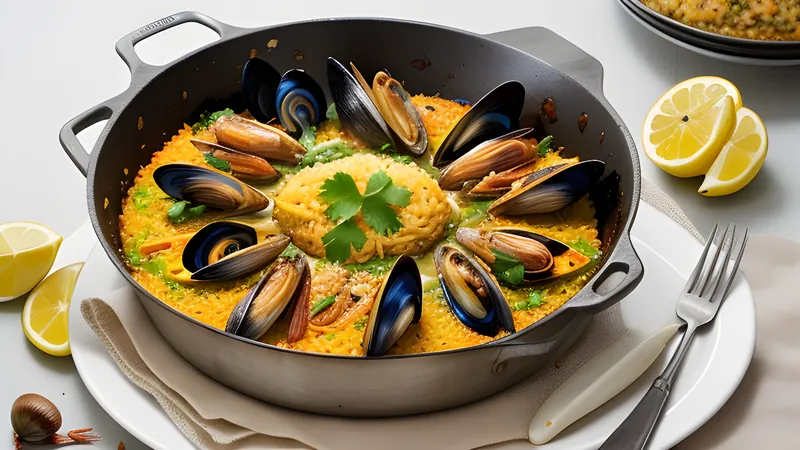
Bloom crushed saffron in hot stock. Fry the squid briefly and set aside, then make a dark sofrito of onion, garlic and grated tomato and stir in smoked paprika off the heat. Coat the rice in the sofrito, pour in all the simmering saffron stock, spread the rice flat and never stir it again. Simmer ten minutes, then nestle in mussels, clams and prawns and scatter over the squid. Cook until the stock has gone and the rice is nearly tender, then blast the heat for a minute or two to form the socarrat, cooking by crackle and smell. Rest five minutes under foil and serve from the pan with lemon.
Tips, substitutions and getting ahead
The pan matters more than any single ingredient: paella wants a wide, shallow, flat-bottomed pan so the rice sits in a thin layer, which is what lets it cook evenly and toast underneath. A 34cm paella pan feeds four; if you only have a large frying pan, use the widest one you own and resist piling the rice deep. Cook over a burner that reaches the edges, or rotate the pan every couple of minutes so no one patch overcooks. Purge clams in cold salted water for an hour to spit out their grit, and discard any mussels or clams that stay open when tapped raw, or that stay shut after cooking. A splash of dry white wine or a spoon of aïoli alongside are both traditional — aïoli, the garlic emulsion, is the classic Spanish partner to rice dishes and worth making from scratch.
Paella is meant to be eaten straight away, while the socarrat is crisp — it does not keep or reheat gracefully, since the crust softens and the rice dries. Make the stock and the sofrito ahead by all means, but cook the rice to order. If you love the combination of prawns and Spanish smoked paprika, prawn and chorizo linguine plays the same flavours over pasta, and for shellfish cooked simply the right way, mussels in white wine, garlic and cream is a lesson in not overcooking them. The rest is nerve: spread it thin, leave it be, and listen for the crackle.
Related Content