Scotch Pancakes (Drop Scones) with Butter and Jam
Thick, fluffy little pancakes off a hot griddle, with brown butter folded through the batter
Contents
↓ Jump to recipeA drop scone is the pancake of a Scottish childhood: small, thick, faintly sweet, cooked on a girdle over the fire and eaten warm off a folded tea towel with butter melting into the top and a smear of jam. In Scotland they are drop scones or dropped scones; south of the border they became Scotch pancakes, sold in packs of six in every supermarket and never as good as the ones you make. They take ten minutes, need nothing more exotic than a frying pan, and turn a dull morning into a small occasion.
My twist is to brown the butter before it goes into the batter. Most recipes use melted butter or none at all; taking that butter a shade further, letting the milk solids toast to hazelnut, folds a warm, nutty depth right through the crumb. Nobody will place it, but the pancakes taste less like plain flour and more like the best bit of a buttered crumpet.
Scotch Pancakes (Drop Scones) with Butter and Jam
Ingredients
- 40g unsalted butter, plus extra for the griddle and to serve
- 200g self-raising flour
- 1 tsp baking powder
- 2 tbsp caster sugar
- 1/4 tsp fine salt
- 1 large egg
- 200ml whole milk
- 1 tsp lemon juice
- Raspberry or strawberry jam, to serve
Method
- Melt the butter in a small pan over medium heat and cook until it foams, then turns golden and smells nutty, 3-4 minutes. Pour into a bowl and cool slightly.
- Whisk the self-raising flour, baking powder, sugar and salt in a large bowl.
- Stir the lemon juice into the milk and leave for 2 minutes to thicken. Beat in the egg and the cooled brown butter.
- Pour the wet into the dry and whisk to a smooth, thick, pourable batter. Rest for 10 minutes.
- Heat a heavy griddle or non-stick pan over medium-low. Wipe with a little butter.
- Drop tablespoons of batter, spaced apart. Cook 1.5-2 minutes until bubbles rise and burst across the surface and the edges look set.
- Flip and cook the other side for 1 minute until golden and risen. Keep warm in a clean tea towel while you cook the rest.
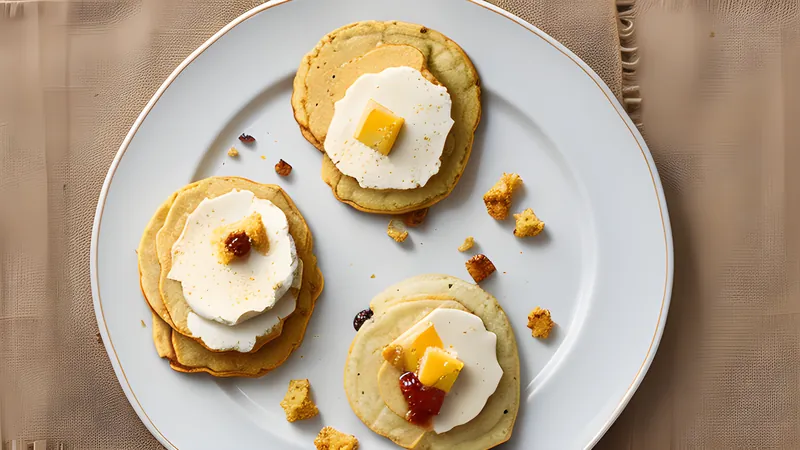
- Serve warm, spread with cold butter and jam.
The girdle and the griddle
These little pancakes come from the tradition of the girdle, the flat iron plate that hung over a Scottish hearth long before most homes had an oven. Bread, oatcakes, bannocks and drop scones were all cooked on it, which is why so much traditional Scottish baking is griddle baking rather than oven baking. The word girdle is simply the old Scots form of griddle, and the technique is ancient: a hot flat surface, a spoonful of batter, a quick cook on each side.
The drop scone earns its name honestly. Where a normal scone is rolled and cut, this one is dropped, a spoonful of loose batter let fall onto the hot plate where it spreads into a small round. It sits somewhere between an American pancake and an English crumpet: thicker and cakier than the first, smoother and sweeter than the second. It is teatime food as much as breakfast food, and it keeps well enough to travel in a lunch tin.
There is even a royal footnote. A recipe for drop scones written out by Queen Elizabeth II, sent to President Eisenhower in 1960 after he admired them at Balmoral, is one of the more charming documents in the history of British baking. Her version uses caster sugar, a little cream of tartar and bicarbonate of soda for lift. The principle across all of them is the same: a self-raising batter with real leavening muscle, cooked fast on a hot plate so it puffs before it sets.
Getting the rise right
A good drop scone is thick and airy, and the airiness comes from the leavening working hard the moment the batter hits the heat. Self-raising flour alone will lift them, but I add a teaspoon of baking powder on top for extra insurance, because you want them to dome and hold rather than spread thin.
The other lift comes from a trick borrowed from soda bread and buttermilk pancakes: souring the milk. Stir a teaspoon of lemon juice into the whole milk and leave it a couple of minutes until it thickens and curdles slightly. The acid reacts with the raising agents to throw off more carbon dioxide, and it tenderises the crumb into the bargain, giving a softer, more delicate pancake with a gentle tang. If you keep buttermilk in, use that straight in place of the milk and lemon.
The batter should be thick and pourable, closer to double cream than to single. Too thin and the pancakes spread into flat, chewy discs; too thick and they cook to little cannonballs, raw in the middle. Whisk until just smooth, then stop, because overworking develops gluten and toughens them. Rest the batter for ten minutes. This lets the flour hydrate fully and the raising agents get going, and it is the difference between a batter that sits flat and one that is already showing a few bubbles when you come back to it.
Browning the butter
The step that lifts these above the packet version. Melt the butter in a small pan over medium heat. It will melt, then foam up white, and as the foam subsides the milk solids beneath sink and toast, turning the butter golden and then amber and filling the kitchen with a smell like toasted nuts and caramel. This is beurre noisette, and it takes three to four minutes; watch it closely at the end because it goes from perfect to burnt in seconds. Pull it off the heat the moment it smells nutty and looks the colour of weak tea, scraping in all the toasty brown flecks, which carry most of the flavour.
Let it cool a little before it joins the batter, so it does not cook the egg on contact. Folded into the mix, it does two jobs: it enriches the crumb and it lends that nutty, browned-butter warmth that makes each bite taste more considered than the effort deserves.
Cooking them
Heat a heavy, flat griddle or a good non-stick frying pan over medium-low. The temperature matters more than anything, and it is where most people go wrong by cooking too hot. A fierce pan burns the outside before the inside sets, giving you a scorched, doughy scone. You want a steady, moderate heat: a drop of batter should take a good few seconds to colour, not seize instantly.
Wipe the surface with the barest film of butter, then wipe off any excess with kitchen paper, because pooled butter fries the edges unevenly and leaves them lacy. Drop tablespoons of batter, well spaced, and leave them alone. After a minute and a half to two minutes, bubbles will rise across the surface and begin to burst, and the edges will look dry and set. That is your cue. Flip once, cook the second side for about a minute until golden and puffed, and resist the urge to press them down, which knocks the air out.
Stack them as they come off inside a clean, folded tea towel. The trapped steam keeps them soft and stops the edges drying out while you work through the batter. Cook a test one first to check your heat and adjust; the first pancake is always the sacrifice.
Serving, storing and variations
Eat them warm, split slightly and spread with cold butter that softens into the heat, then a spoon of good raspberry or strawberry jam. That is the classic, and it is hard to beat. A drizzle of honey or golden syrup, a spoon of lemon curd, or clotted cream and jam for a fuller teatime treat all work beautifully.
They keep for a day in an airtight tin and reheat well in a toaster or a warm pan, which makes them handy for a lunchbox. You can freeze them in a stack with greaseproof between each one and toast them straight from frozen.
For variations, fold a handful of blueberries or sultanas into the rested batter, or a grating of lemon zest for brightness. A pinch of ground cinnamon or cardamom in the dry mix suits an autumn morning. If you want to lean into the teatime spirit, serve them alongside a slice of the fruit-studded Bara Brith, the Welsh tea loaf with soaked fruit, which shares the same buttered, jam-friendly logic. And if you have a taste for small griddled pancakes with a continental accent, the butter-and-icing-sugar poffertjes, the Dutch mini pancakes, are their close cousins from across the North Sea.
Make a batch on a slow Saturday and you will understand why generations of Scottish cooks kept a girdle by the fire. They cost pennies, they come together while the kettle boils, and warm off the pan with butter sinking in, they are one of the quiet pleasures of a British kitchen.
Related Content