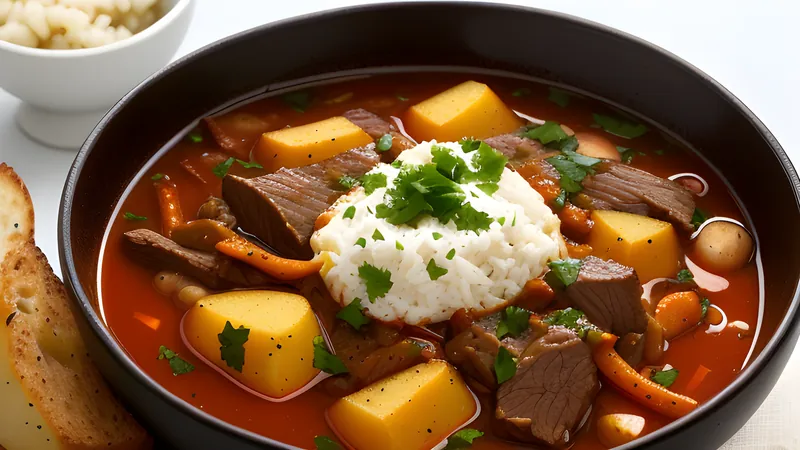
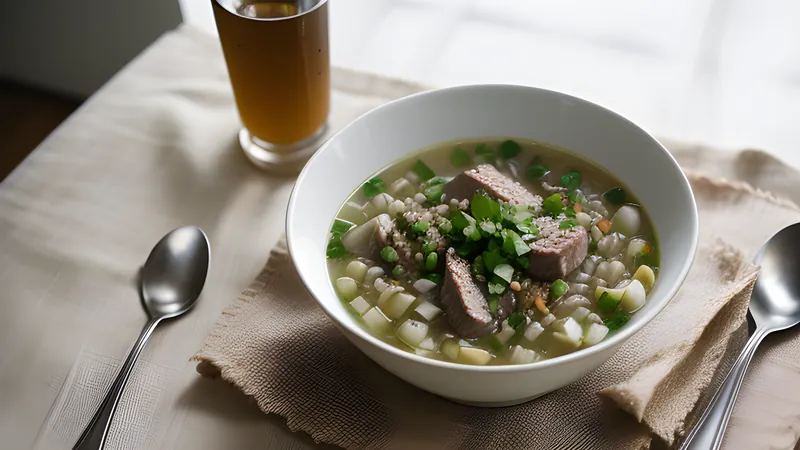
Scotch Broth with Barley and Lamb
A thrifty Scottish pot thickened by grain and time
Contents
↓ Jump to recipeThere is a particular kind of December cold that only a spoon can fix, the sort that gets into your hands on the walk home and refuses to leave. Scotch broth is the answer my kitchen keeps returning to: a big, unhurried pot of lamb, barley and root vegetables that costs almost nothing, feeds a crowd, and improves every day it sits in the fridge. It is peasant cooking in the best sense, built to stretch a cheap cut across many bowls.
Calling it a soup undersells it. A good Scotch broth sits somewhere between a soup and a stew, thick enough to stand a spoon in, the barley having quietly given up its starch to bind everything together. My grandmother made a version every winter and never once measured a thing. What follows is my attempt to pin down what she did by feel, with one small change of my own that earns its place.
Scotch Broth with Barley and Lamb
Ingredients
- 1kg lamb neck on the bone (or scrag end / shoulder chops)
- 150g pearl barley
- 2 onions, finely diced
- 3 carrots, diced
- 2 leeks, sliced
- 0.25 small swede (about 250g), diced
- 2 celery sticks, diced
- 0.5 small white cabbage, shredded
- 2 bay leaves
- 1 tbsp neutral oil
- 2.5 litres cold water
- 1.5 tsp fine sea salt, plus more to taste
- Large handful flat-leaf parsley, chopped
- Black pepper, to taste
Method
- Put the lamb in a large pot, cover with the cold water and bring slowly to a bare simmer. Skim off the grey foam that rises for the first 10 minutes.
- Add the bay leaves and 1.5 tsp salt, half-cover, and simmer gently for 1 hour 30 minutes until the meat is loosening from the bone.
- Meanwhile, toast the pearl barley in a dry frying pan over medium heat for 4-5 minutes, shaking often, until it smells nutty and turns a shade darker.
- Lift the lamb out to cool. Skim the fat from the surface, then add the toasted barley, onion, carrot, swede and celery. Simmer for 30 minutes.
- Pull the lamb from the bones in bite-sized pieces, discarding fat and gristle, and return the meat to the pot. Add the leeks and cabbage and simmer 20 minutes more until the barley is plump and tender.
- Season with salt and plenty of pepper, stir through the parsley, and rest 10 minutes before serving with bread.
The dish and its thrifty history
Scotch broth belongs to the long tradition of Scottish hearth cookery, where a single cut of meat had to do a great deal of work. The classic base is mutton or lamb neck, the hard-working, bony, flavourful end of the animal that the well-off passed over and the canny cook prized. Boiled slowly, that cheap meat gives up gelatine, marrow and deep savour, and the bones make the broth itself worth eating before a scrap of vegetable goes in.
Barley is the other pillar, and it is the older of the two. Long before potatoes reached Scotland, barley was the grain that got people through winter, grown in poor soil and stored dry for months. In the broth it does double duty, providing both body and a gentle chew, its starch thickening the liquid into something that clings to the vegetables. The vegetables themselves are whatever the kailyard offered: swede, carrot, leek, onion, cabbage, the storage crops that last through a Scottish winter. It is a close cousin to the other great British lamb-and-barley pot, and if you like this you should try my Lancashire hotpot with barley and lamb, which sends the same ingredients in a very different direction under a lid of sliced potato.
The one twist: toast the barley
Here is my single departure from tradition. Before the barley goes anywhere near the pot, I toast it dry in a frying pan until it smells like popcorn and warm bread and turns a shade or two darker. It takes four or five minutes of shaking the pan, and it changes the finished broth more than you would expect.
Toasting develops the same nutty, roasted flavours you get from browning meat or bread, through the Maillard reaction on the barley’s surface starches. The grains hold their shape a touch better in the long simmer too, staying plump rather than dissolving into mush. The broth ends up with a rounder, deeper flavour that tastes cooked-down and complex, even though the method is otherwise as plain as it comes. It is a thirty-second habit that costs nothing and I now do it every time.
Which cut to buy
Lamb neck is my first choice, sold either as whole neck on the bone or as neat rounds the butcher calls neck fillet-on-bone. It has the ideal balance of meat, bone and connective tissue, so it gives up plenty of gelatine for body while leaving you real chunks of meat to pull. Scrag end, the bonier top of the neck, is even cheaper and makes wonderful broth if you do not mind picking around the bones. Shoulder chops work too. Whatever you use, insist on the bone, since a boneless cut makes a thinner, flatter broth that never quite tastes of enough. Mutton, if you can find it, is the truly traditional choice and rewards an extra half-hour of simmering with a deeper, gamier flavour.
Building the broth in two stages
The secret to a clear, deep-flavoured broth is patience at the start. Cover the lamb with cold water, not hot, and bring it up slowly. Starting cold draws the flavour out of the meat and bones into the liquid, and it makes the scum rise in a manageable grey raft you can lift off with a spoon. Skim diligently for the first ten minutes and your broth will be clean-tasting and light in colour rather than muddy.
Once skimmed, the lamb simmers gently with bay and salt for an hour and a half. A bare tremble is what you want, never a rolling boil, which would toughen the meat and cloud the liquid. When the meat is loosening from the bone, lift it out to cool and skim the fat that has risen. This is also your chance to chill the pot overnight and lift a solid disc of fat off the top the next day, which gives the cleanest result of all.
The vegetables and toasted barley go in for the second stage, the hardy roots first since they need longest. The barley needs a good fifty minutes to soften fully, so it goes in early with the swede, carrot, onion and celery. The delicate leek and cabbage come in near the end, keeping their sweetness and a little bite rather than collapsing. Meanwhile you pull the cooled lamb from the bones into rough, bite-sized pieces and return it to warm through. Everything finishes together, the barley plump, the meat tender, the broth thickened.
Getting the seasoning and texture right
Salt matters more here than in almost anything else I cook, because there is so much liquid to season and barley is bland on its own. Add a good teaspoon and a half early to help draw flavour from the lamb, then taste again at the end and be braver than feels comfortable. An under-seasoned broth tastes of nothing; the right amount makes the meat and vegetables ring.
Texture is a matter of the barley-to-liquid ratio. A hundred and fifty grams of barley in two and a half litres of water gives a broth with real body that still pours. If you like it thicker, add another fifty grams, but keep an eye on the liquid, since barley drinks it up greedily and a pot left overnight will set almost solid. Loosen it with a splash of water when you reheat.
The final flourish is a fistful of chopped parsley stirred through at the end. It sounds like a small thing, but a raw green herb cuts across the deep, meaty richness and stops the whole bowl feeling heavy. A little grated lemon zest does the same job if you want to push it.
Make-ahead, storage and variations
Scotch broth is one of those dishes that genuinely tastes better on day two, once the flavours have had a night to marry and the barley has fully swollen. It keeps for four days in the fridge and freezes well, though the barley will continue to thicken it, so freeze with a little extra liquid or plan to loosen it later. Reheat gently and check the seasoning again, as chilling dulls salt.
For variations, a beef shin instead of lamb makes a heartier, sweeter broth; my beef shin and ale stew with herb dumplings shows how well that cut rewards a long, slow simmer. A ham hock in place of the lamb turns it into a smoky pea-and-barley broth. And if you find yourself with leftover cooked lamb from a roast, skip the first stage entirely, make a quick stock from the bones, and build the broth around it in under an hour. However you make it, serve it steaming, in deep bowls, with a heel of bread for the bottom of the pot.
Related Content