Scallops with Black Pudding and Pea Purée
The great British starter, three elements timed to the second
Contents
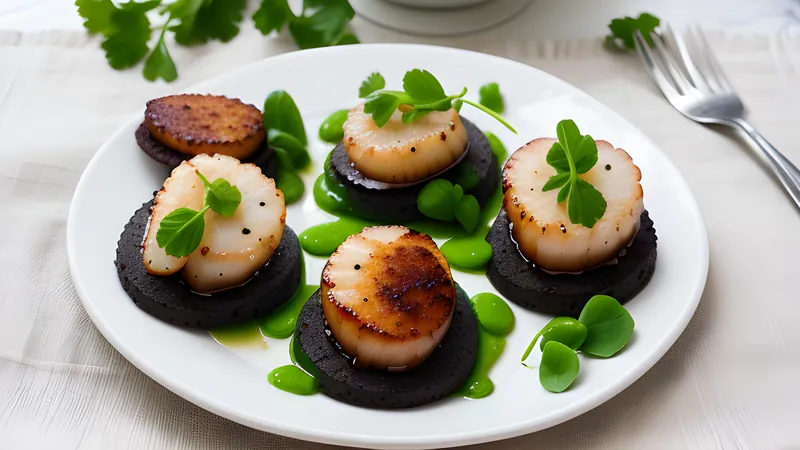
↓ Jump to recipeThis is the starter that launched a thousand gastropubs, and for once the ubiquity is deserved. Scallops with black pudding and pea purée earns its place on every chalkboard from Cornwall to the Cairngorms because it is a genuinely brilliant combination: sweet, tender shellfish; dark, spiced, iron-rich pudding; and a purée the colour of a cricket pitch in June to cut through both. Three elements, each simple, each ready in fifteen minutes, and a plate that looks like you tried much harder than you did.
The catch is timing. A scallop is forgiving of almost nothing. Overcook it by thirty seconds and the money you spent turns to rubber. So this dish is really an exercise in getting three things to arrive hot at the same moment, which is a skill worth having and easier than it sounds once you have a plan.
Scallops with Black Pudding and Pea Purée
Ingredients
- 12 large king scallops, cleaned, roe removed if preferred
- 150g good black pudding (Stornoway or Bury), skin removed, cut into 12 discs
- 300g frozen peas
- 25g butter, plus 15g for the scallops
- 1 small shallot, finely chopped
- 2 tbsp double cream
- Small handful mint leaves
- 1 tbsp neutral oil
- 1/2 lemon
- Flaky sea salt and black pepper
- Pea shoots or watercress, to garnish (optional)
Method
- Make the pea purée: soften the shallot in 25g butter for 3-4 minutes. Add the frozen peas and 4 tbsp water, cover and cook for 3 minutes until bright and tender.
- Tip into a blender with the cream and mint, blitz until smooth, season, and pass through a sieve if you want it silky. Keep warm.
- Pat the scallops very dry on both sides with kitchen paper and season with salt just before cooking.
- Fry the black pudding discs in a dry or lightly oiled pan over medium heat for 2 minutes each side until crisp. Keep warm.
- Heat the oil in a heavy frying pan until almost smoking. Add the scallops one at a time, spaced apart, and sear undisturbed for 90 seconds until a deep golden crust forms.
- Turn each scallop, add 15g butter, and cook for a further 60-90 seconds, spooning the foaming butter over. The centre should be just opaque.
- Squeeze over a little lemon off the heat.
- Spoon pea purée onto warm plates, sit 3 scallops and 3 discs of black pudding on each, garnish and serve at once.
An unlikely marriage, and where it came from
Scallops and black pudding is a modern British pairing, part of the great rediscovery of native ingredients that swept through restaurant kitchens from the 1990s onwards. Chefs like Marco Pierre White and, later, a whole generation of gastropub cooks looked at what these islands actually produced, hand-dived scallops off the Scottish coast, black pudding from Bury and the Outer Hebrides, and started putting them on the same plate. The logic is the classic surf-and-turf instinct, the sweetness of shellfish set against something dark and savoury, but rendered in a wholly British accent.
Black pudding itself is ancient, one of the oldest prepared foods we have. A sausage of blood, fat and grain was being made across Europe and beyond for millennia; the Romans ate it, and versions turn up from Spain’s morcilla to France’s boudin noir to the Korean soondae. The British style is oaty and coarse, spiced with pennyroyal or allspice depending on where it is made. Stornoway black pudding, from the Isle of Lewis, has protected geographical status, which tells you how seriously the north takes it.
The peas are the modern flourish. A sweet, minty purée turns what could be a heavy, brown plate into something fresh and spring-like, and the colour contrast, gold, black and green, is half the reason the dish photographs so well and sells so hard.
Buying scallops, and the diver question
Buy the biggest, freshest king scallops you can, and buy them dry-packed. This matters more than almost anything else. Cheaper scallops are often “wet” or soaked in a phosphate solution that plumps them with water; they leach that water into the pan, refuse to brown, and stew rather than sear. Dry-packed, hand-dived scallops cost more and are worth every penny for a dish where the sear is the whole point. Your fishmonger will know which they sell; ask.
If your scallops still have their orange roe (the coral) attached, you can leave it on or remove it. It is edible and some people love its stronger flavour, though it cooks faster than the white muscle and can burst. For a clean, restaurant-style plate I remove it, though that is a matter of preference.
Whatever you buy, the golden rule is dryness. Lay the scallops on kitchen paper and pat them thoroughly top and bottom. A wet scallop cannot caramelise because the pan’s energy goes into boiling off the surface water before browning can begin. Dry them, season them with salt only at the last second (salt draws out moisture if it sits), and you are halfway to a good crust.
The pea purée, made properly
Frozen peas are not a compromise here; they are the right choice. They are frozen within hours of picking, at peak sweetness, and are more reliable than most “fresh” peas that have been sitting around losing sugar to starch. Soften a chopped shallot in butter, add the peas and a splash of water, and cook them for just three minutes so they stay vivid green. Overcook peas and they turn khaki and dull, both in colour and taste.
Blitz them hot with a little cream and mint until smooth. For a truly silky, professional finish, pass the purée through a sieve to catch the skins, though for a home supper I often skip that and enjoy the slight texture. Season assertively; peas can take more salt than you think, and a purée that tastes bland on the spoon will taste blander still under a rich scallop. Keep it warm, covered, with a piece of clingfilm on the surface so it does not form a skin.
Searing, the moment that matters
Here is my one twist, and it is a small one: I brown the black pudding first in the same pan I will use for the scallops, then wipe it out and sear the scallops in the flavour that pudding leaves behind. A faint smokiness clings to the scallops that way, tying the two together before they even reach the plate. Cook the black pudding discs for two minutes a side until the edges crisp and the middle is hot, then set them aside somewhere warm.
Now the scallops. Get a heavy pan properly hot, almost smoking, with a thin film of neutral oil that can take the heat (butter alone would burn at this temperature; it comes in later). Lay the scallops in one at a time, working clockwise so you remember the order, spaced so they never touch. A crowded pan drops in temperature and the scallops steam. Then leave them alone. Do not poke, do not shuffle, do not peek. Ninety seconds of stillness builds a deep, glassy, caramel crust; every early lift resets the clock.
Turn each one, add a knob of butter, and cook for another sixty to ninety seconds while spooning the foaming, nut-brown butter over the tops. You are looking for a scallop that is just opaque in the centre with a hint of translucency at the very core; it will finish cooking on the warm plate. Press one gently: it should feel like the pad of your thumb, springy with a little give; if it has gone firm like the tip of your nose it is overdone. A squeeze of lemon off the heat, and you are done.
Plating and timing
Warm your plates; cold plates undo all your careful cooking. Smear or spoon the pea purée down first, sit three scallops and three discs of black pudding on top per person, and finish with a few pea shoots or watercress and a scatter of flaky salt. Serve the instant it is assembled. This is a dish that punishes dawdling.
The whole sequence, if you have prepped, runs like this: purée made and kept warm, black pudding crisped and resting, then the scallops in and out in three minutes flat. Have everyone sitting down before the scallops hit the pan.
Tips, swaps and getting ahead
- Make-ahead. The pea purée can be made a few hours in advance and gently reheated; it also freezes well. Everything else is last-minute.
- No black pudding? Crisp pancetta or chorizo gives a different but excellent salty-savoury foil, though you lose the iron depth.
- Scaling up. For more than four, sear the scallops in two batches rather than crowding one pan; a cool, crammed pan is the classic failure.
- The roe. Save any removed corals, dry them and blitz to a powder to season future seafood dishes, or fry them crisp as a cook’s treat.
- Wine. A dry, mineral white, a Chablis or a crisp English bacchus, is the natural partner.
If you like this balance of sweet shellfish against something rich and savoury, you will enjoy the buttery hit of garlic-butter prawns with sourdough, and for another British classic where humble ingredients turn into something greater than the sum of their parts, look at sausage and mash with red onion gravy. For a whole-fish showpiece with the same fresh, green, herb-forward instinct as the pea purée, try grilled whole sea bass with salsa verde.
Get the three elements timed and this is one of the most impressive things you can put in front of people for a fraction of the effort it appears to take. Sweet, dark and green, all at once, and gone in four happy mouthfuls.
Related Content