Scallion Pancakes with Ginger-Soy Dip
Flaky, laminated layers from one coiled dough
Contents
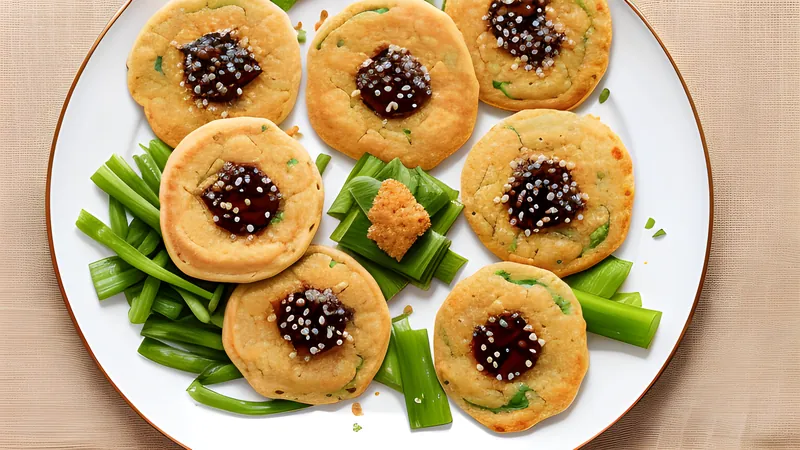
↓ Jump to recipeA good scallion pancake should shatter a little when you bite it, then give way to soft, layered dough with a savoury, oniony hit running through it, not a flat, dense disc that tastes like an afterthought. The difference between the two is entirely technique — specifically, whether the dough gets rolled, oiled and coiled into a spiral before its final roll, or just flattened once and fried. This version does the coil, which is what gives you those genuine flaky, laminated layers rather than a chewy flatbread. Alongside it, a sharp ginger-soy dip cuts straight through the pancake’s richness, and the two together make one of the better things you can put on a table with drinks.
Scallion Pancakes with Ginger-Soy Dip
Ingredients
- 300g plain flour, plus extra for dusting
- 180ml just-boiled water
- 1/2 tsp fine salt
- 4 tbsp neutral oil, divided, plus extra for cooking
- 6 spring onions, very finely chopped
- 1 tsp toasted sesame oil
- 1/2 tsp five-spice powder (optional)
- 1/2 tsp fine salt, for the layers
- 3 tbsp light soy sauce
- 1 tbsp black rice vinegar (or rice vinegar)
- 1 tsp toasted sesame oil, for the dip
- 1 tbsp finely grated fresh ginger
- 1 garlic clove, finely grated
- 1/2 tsp caster sugar
- 1 tsp chilli oil (optional)
Method
- Put the flour and 1/2 teaspoon of salt in a bowl, pour in the just-boiled water while stirring with chopsticks or a spoon, then bring together into a shaggy dough once cool enough to handle.
- Knead on a lightly floured surface for 6 to 8 minutes until smooth and elastic, then cover and rest for 30 minutes.
- Divide the dough into 4 pieces. Roll one piece into a thin rectangle, about 2mm thick.
- Brush the surface with oil, then sprinkle with salt, five-spice if using, and a quarter of the chopped spring onions.
- Roll the rectangle up tightly into a long log, then coil the log into a flat spiral like a snail shell, tucking the end underneath.
- Rest the coiled dough for 10 minutes, then roll out gently into a round pancake about 18cm across and 5mm thick, taking care not to tear the layers.
- Repeat with the remaining dough pieces.
- Heat a thin film of oil in a heavy frying pan over medium heat and cook each pancake for 3 to 4 minutes per side, pressing gently with a spatula, until deep golden and crisp, adding a little more oil for each pancake.
- Drain briefly on kitchen paper, then cut into wedges while hot.
- For the dip, whisk together the soy sauce, vinegar, sesame oil, grated ginger, garlic, sugar and chilli oil if using.
A street-food staple with a surprisingly technical dough
Scallion pancakes — cong you bing in Mandarin, literally “green onion oil cake” — are a fixture of northern Chinese street food and breakfast stalls, though versions of the dish spread across the country and beyond, with Shanghai-style versions often thinner and crispier and Taiwanese versions frequently thicker and chewier, sometimes stuffed with an egg cracked into the middle as it fries (dan bing). The dish’s roots are usually traced back over a thousand years to flatbreads made along the Silk Road and adapted through Chinese regional cooking, part of a broader family of laminated, oil-and-flour-layered breads that also produced things like Indian paratha — cultures on opposite ends of Asia arriving independently, or through shared trade-route influence, at the same trick of rolling fat between layers of dough to create flakiness.
Unlike a yeasted bread, scallion pancakes are unleavened, made from a simple hot-water dough — flour mixed with boiling or near-boiling water rather than cold. That single choice determines almost everything about the final texture. Hot water partially gelatinises the starch in the flour immediately on contact and denatures some of the proteins that would otherwise form tough, elastic gluten strands, giving a dough that’s pliable, easy to roll paper-thin, and tender rather than chewy once cooked, without any need for yeast or a long ferment.
The dish sits in a well-populated Chinese category of “cong you” (scallion oil) cooking — the same principle of frying spring onions in oil until fragrant and slightly caramelised, then using that infused oil as a flavour base, turns up in cong you ban mian (scallion oil noodles) and countless other dishes. Spring onion, cheap, fast-growing and available year-round even in colder northern regions, has long been one of the workhorse aromatics of Chinese home cooking, the way garlic and onion anchor so much of Western cooking.
How the layers actually form
The trick that separates a flaky scallion pancake from a flat one is lamination — the same principle behind puff pastry or croissant dough, just achieved by a completely different, much faster method. Instead of folding cold butter between sheets of dough over several hours, you roll the dough thin, brush it with oil, scatter it with salt and spring onion, then roll it up into a tight log and coil that log into a spiral before flattening it out again.
What that coiling does is create dozens of thin, oil-separated layers of dough stacked on top of each other, arranged in a spiral cross-section rather than the straight stack you’d get from folding a rectangle. The oil layer between each turn of dough is the crucial part: oil doesn’t mix with the dough and doesn’t turn to steam the way water does, so as the pancake fries, that thin oil film physically keeps adjacent dough layers from fusing back into one solid mass, letting them puff and separate slightly as they cook and crisp independently at their edges. Skip the oiling step, or roll the dough too thick to coil properly, and you just get a plain flatbread with onion mixed through it — pleasant, but not the thing this dish is meant to be.
The resting periods matter as much as the folding. Dough that’s just been kneaded is tight with gluten that’s been stretched and wants to spring back, which makes it fight you when you try to roll it thin and tears the layers apart. The 30-minute rest after kneading, and the shorter 10-minute rest after coiling, let that gluten relax so the final roll-out is gentle and even rather than a wrestling match that rips the spiral’s structure.
Cooking is a two-stage job even though it looks like a simple fry: a real film of oil in the pan (not a dry non-stick sear) both fries the exterior crisp and helps carry heat into the layers so they cook through and separate rather than steaming into a dense middle. Pressing gently with a spatula as it cooks encourages even contact and helps those separated layers puff slightly at the edges.
The recipe
Makes 4 pancakes, enough for four as a side or two as a light meal.
Mix 300g plain flour with 1/2 teaspoon salt in a bowl. Pour in 180ml just-boiled water while stirring with chopsticks or a spoon until it forms clumps, then, once cool enough to handle, bring it together into a shaggy dough with your hands. Knead on a lightly floured surface for 6 to 8 minutes until smooth and elastic. Cover and rest for 30 minutes.
Divide the dough into four pieces. Working with one piece at a time (keep the rest covered), roll into a thin rectangle roughly 2mm thick. Brush generously with oil, then scatter with a pinch of the second measure of salt, a pinch of five-spice powder if using, and a quarter of the finely chopped spring onions. Roll the rectangle up tightly from one long edge into a log, then coil the log flat into a spiral, like a snail shell, tucking the loose end underneath to seal it. Rest 10 minutes, then gently roll the coil out into a round pancake about 18cm across and 5mm thick — press evenly and don’t force it, or you’ll tear the layers. Repeat with the remaining three pieces.
Heat a thin film of neutral oil in a heavy frying pan over medium heat. Fry each pancake for 3 to 4 minutes per side, pressing gently with a spatula, until deep golden brown and audibly crisp at the edges, topping up the oil slightly between pancakes. Drain briefly on kitchen paper and cut into wedges while still hot.
For the dip, whisk together 3 tablespoons light soy sauce, 1 tablespoon black rice vinegar, 1 teaspoon toasted sesame oil, 1 tablespoon finely grated ginger, 1 finely grated garlic clove, 1/2 teaspoon caster sugar, and a teaspoon of chilli oil if you want heat.
Tips, substitutions, storage
Roll the dough thinner than feels natural for the first fold — the thicker the initial rectangle, the fewer distinct layers you get in the coil. If the dough tears while rolling, patch it by pinching the edges back together and let it rest a further five minutes before continuing; torn dough is almost always under-rested dough. Black rice vinegar (Chinkiang vinegar) gives the dip its proper malty depth, but a good balsamic in a pinch gets closer than plain rice vinegar alone.
Uncooked pancakes freeze well: stack them with a sheet of baking paper between each, wrap tightly, and freeze for up to two months, frying from frozen with an extra minute or two per side. Cooked pancakes keep in the fridge for two days and reheat best in a dry frying pan over medium heat rather than a microwave, which turns the layers soft and steamy instead of crisp. The dip keeps in the fridge for about a week, though the ginger and garlic get sharper the longer it sits, so taste and rebalance with a little sugar before serving if it’s been a few days.
Variations
A Shanghai-style thinner pancake, rolled almost to translucency before frying, gives a crackling, cracker-like exterior with barely any chew — good for a snack rather than a meal. For a Taiwanese-style egg version, crack a beaten egg into the pan just before the pancake finishes its second side and let it set against the surface, folding the pancake over to encase it. If you want a heartier version to serve as a light lunch, add a very finely diced strip of streaky bacon or a spoon of dried shrimp to the oiled layer before rolling — traditional in some regional versions and genuinely good with the sharpness of the ginger-soy dip.
These sit well on a table alongside vegetable gyoza or a bowl of egg fried rice for a simple, mostly hands-off spread, and the same rolled-and-coiled lamination trick, once you have it in your hands, is worth remembering for any dough that wants flaky, distinct layers without the fuss of butter and folding.
Related Content