Savoury Dutch Baby with Bacon and Gruyère
A puffed, brown-butter batter that rises into a bowl of its own
Contents
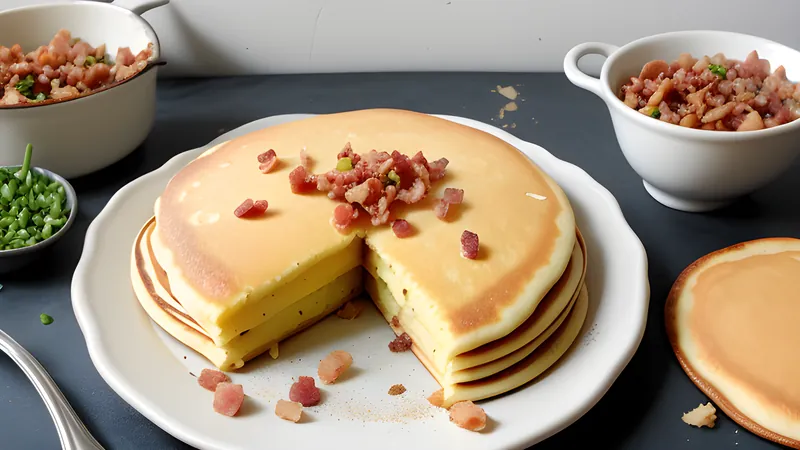
↓ Jump to recipeThe showpiece here is the puff, that dramatic rise up the sides of a hot pan that collapses into a crisp-edged bowl within a minute of leaving the oven. The clever part is browning the butter first: instead of just greasing the pan, you cook it to a nutty gold, so the batter bakes on a base of toasted milk solids that carries straight up into every custardy fold.
Savoury Dutch Baby with Bacon and Gruyère
Ingredients
- 3 large eggs, at room temperature
- 90g plain flour
- 120ml whole milk, at room temperature
- 1/2 tsp fine salt
- A good grating of nutmeg
- 40g unsalted butter
- 120g smoked streaky bacon, cut into lardons
- 60g Gruyère, coarsely grated
- 2 tbsp finely chopped chives
- Black pepper
Method
- Put a 25cm ovenproof skillet or cast-iron pan into the oven and heat to 220C (200C fan) until genuinely hot.
- Blend the eggs, flour, milk, salt and nutmeg until completely smooth, then rest the batter while the oven heats.
- Cook the bacon lardons over medium heat for 6 to 8 minutes until crisp and the fat has rendered; drain on kitchen paper.
- Take out the hot skillet, add the butter and swirl until it foams and turns nutty golden-brown, about a minute.
- Pour the batter straight into the hot foaming butter, scatter over the bacon and return to the oven at once.
- Bake for 18 to 20 minutes without opening the door, until puffed, climbing the sides and deeply golden.
- Scatter over the Gruyère, bake 2 minutes more until melted, finish with chives and black pepper and serve immediately.
The Story
The Dutch baby is American, and its name is a small linguistic accident. The dish descends from the German Pfannkuchen, a family of oven or skillet pancakes that German immigrants brought to the United States in the nineteenth century. The popular account traces the modern version and its name to Manca’s Café, a family-run restaurant in Seattle in the early 1900s, where the story goes that the owner’s daughter mangled “Deutsch” into “Dutch” and the name stuck to the small pancakes they served. Whether or not every detail of that tale holds, the dish took root in the American Pacific Northwest and has stayed there in spirit ever since.
Its closest relatives make the family tree clear. The Yorkshire pudding, the popover and the Dutch baby are all the same idea at heart: a thin egg batter poured into a screaming-hot, well-greased vessel, where the water in the batter flashes to steam and inflates the structure before the eggs and flour set around it. The difference is mostly one of scale and occasion. A Yorkshire pudding is a small savoury adjunct to a roast, a popover a single American dinner roll, and a Dutch baby a whole pancake filling the pan, usually served sweet with lemon and sugar for a lazy breakfast.
Turning it savoury is an old move and a sound one. The batter is barely sweet to begin with, so it takes readily to bacon, cheese, herbs and a grating of nutmeg, becoming something closer to a fast, freeform quiche without the pastry. Gruyère earns its place because it is a proper melting cheese with a nutty, faintly sweet edge that stands up to smoked bacon; a milder cheese would vanish under it. Eaten straight from the pan while it is still dramatically puffed, it is the sort of thing that draws people to the kitchen the moment it comes out.
What can go wrong
Everything about the puff depends on heat, and a lukewarm pan is the commonest failure. The skillet must go into the oven empty and come out genuinely hot, so that the butter browns on contact and the batter starts cooking the instant it lands. Pour cold batter into a cool pan and you get a dense, flat, leathery pancake with no rise at all. For the same reason, do not open the oven door while it bakes: the rush of cool air can make a half-set pancake sink, and once it collapses it will not climb again.
Cold ingredients are the next hazard. Straight-from-the-fridge eggs and milk drop the batter’s temperature and slow the rise, which is why they come to room temperature first and why the batter rests while the oven heats. Lumpy batter is a lesser problem but still worth avoiding; a blender makes short work of it, and a hard minute with a whisk does the same, so long as you scrape the flour from the sides and beat until it is entirely smooth.
Pan size matters more than it looks. This batter is calibrated to a 25cm pan; in a much wider skillet it spreads thin and the puff is shallow and quick to slump, while in a smaller one it climbs high but bakes with a wetter, more custardy middle. Cast iron holds and radiates heat better than thin aluminium, which is why it gives the most reliable rise, but any heavy ovenproof pan will do so long as you let it get properly hot. Weigh the flour rather than scooping it: an extra packed spoonful stiffens the batter and holds the puff back, and this is one of those batters where the ratio of egg to flour to milk is doing all the work.
The brown butter is the one moment that asks for attention. It goes from foaming to nutty-gold to acrid-brown in the space of thirty seconds in a pan that hot, so have the batter poured and ready to go the instant it colours. If it tips over into dark brown and starts to smell sharp rather than toasty, it will taste bitter, and there is no rescuing it once the batter is in; better to wipe the pan, reheat it and start the butter again. Finally, add the Gruyère only near the end. Cheese baked in from the start for the full twenty minutes tends to scorch and go greasy, whereas two minutes at the finish gives you a clean, molten layer.
Storage, make-ahead and variations
A Dutch baby is at its best in the first two minutes out of the oven and never really recovers from being kept, so this is not a make-ahead dish in the usual sense. What you can do is mix the batter the night before and keep it covered in the fridge; bring it back to room temperature and give it a quick re-whisk before baking. Crisping the bacon ahead of time is fine too, which leaves only the pour-and-bake to do in the morning. If you do end up with leftovers, a slice reheated in a hot dry pan for a couple of minutes crisps up better than the microwave will manage, though it stays flat and is best treated as a snack.
The batter is a reliable base for other savoury fillings once you have the method. Wilted spinach and a scrape of nutmeg with the Gruyère makes a fine vegetarian version; sautéed wild mushrooms and thyme suit an autumn morning; a little grated Cheddar and a scatter of spring onion is a good weekday default. When you branch the fillings, render any raw, wet ingredient first — mushrooms cooked until their liquid has gone, spinach wilted and wrung out in a cloth — because water released into the batter mid-bake is the quiet enemy of the rise. Cured, dry, already-cooked additions behave best, which is why bacon lardons crisped in advance are the safe default. Keep the weight of add-ins modest, since too much filling weighs down the puff. A thin smear of Dijon over the base of the hot pan before the batter goes in, or a handful of peppery watercress thrown over at the table, both push it further towards lunch. If you would rather go sweet, leave out the salt-forward extras and finish the plain puffed pancake with lemon juice, a dusting of icing sugar and perhaps some macerated berries.
For another oven-puffed egg dish that leans on Gruyère, my soufflé omelette with Gruyère and chives chases the same airy lift on the hob rather than in the oven. And if it is the theatrical, batter-in-a-hot-pan trick you enjoy, my poffertjes, Dutch mini pancakes with butter and icing sugar work a smaller, sweeter version of the same delight.
Serving it right
Bring it to the table in the pan. A Dutch baby is a bit of a performance, and half the pleasure is watching it deflate slowly while everyone digs in, the crisp risen edges giving way to a soft, custardy centre pooled with melted Gruyère. A sharp green salad dressed with a mustardy vinaigrette cuts the richness beautifully and turns it from a breakfast into a light lunch. Have your plates warm and your eaters ready, because this is one dish that genuinely will not wait.
Related Content