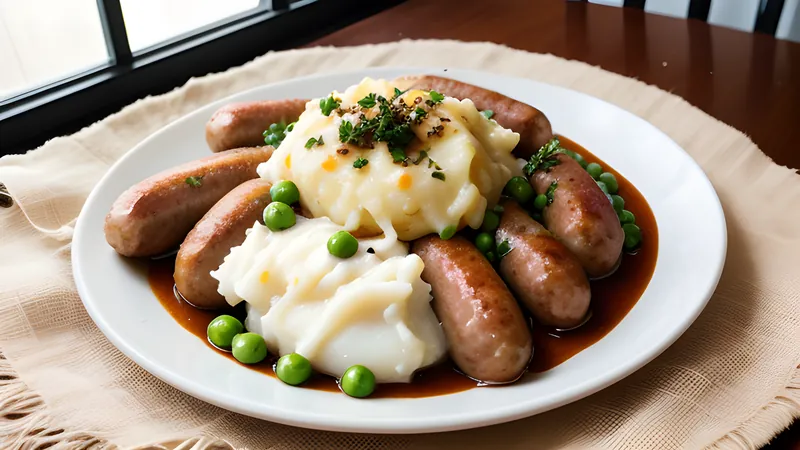
Sausage and Mash with Red Onion Gravy
Fat sausages, silky mash, a slow onion gravy with a Marmite trick
Contents
↓ Jump to recipeSausage and mash is the dinner I’d choose for my last meal on a cold night. It asks nothing exotic of you — three components, all cheap, all in most kitchens already — and it forgives a great deal. Yet done properly it’s as satisfying as anything with a fancier name. The gap between a decent plate and a great one comes down to three details: the sausages you buy, how patiently you make the gravy, and whether you’re honest with yourself about how much butter goes in the mash.
My one trick, and it’s the sort of thing that gets asked about at the table, is a teaspoon of Marmite stirred into the onion gravy. Marmite is concentrated yeast extract, which means it’s essentially pure savoury depth — the same umami hit you get from a long-reduced stock, in a jar. A single teaspoon dissolves invisibly and makes the gravy taste like it simmered all afternoon. Nobody will guess. They’ll just have seconds.
Sausage and Mash with Red Onion Gravy
Ingredients
- 8 good-quality pork sausages
- 1 tbsp sunflower oil
- 1kg floury potatoes (Maris Piper or King Edward)
- 80g unsalted butter
- 120ml whole milk, warmed
- Fine salt and white pepper
- 3 large red onions, thinly sliced
- 30g butter, for the gravy
- 1 tbsp olive oil
- 1 tsp caster sugar
- 1 tbsp balsamic vinegar
- 1 tbsp plain flour
- 400ml beef or chicken stock
- 1 tsp Marmite
- 2 sprigs thyme
Method
- Heat the oven to 190 degrees C fan (210 degrees C conventional). Toss the sausages with 1 tbsp oil in a roasting tin and roast 30 to 35 minutes, turning once, until golden and cooked through.
- Meanwhile start the gravy: melt 30g butter with 1 tbsp olive oil over low-medium heat, add the red onions and a pinch of salt and cook gently 15 to 20 minutes until soft and deep brown.
- Add 1 tsp sugar and 1 tbsp balsamic and cook 3 minutes. Stir in 1 tbsp flour and cook 1 minute, then gradually add 400ml stock, the thyme and 1 tsp Marmite. Simmer 10 minutes until thickened, and season.
- Peel and chop the potatoes into even chunks. Put in a pan of cold salted water, bring to the boil and simmer 15 to 18 minutes until tender.
- Drain and steam-dry 2 minutes, then mash or rice and beat in 80g butter and 120ml warm milk. Season with salt and white pepper.
- Pile the mash onto warm plates, sit the sausages on top and spoon over plenty of red onion gravy.
Start with the sausages
No amount of technique rescues a bad sausage. Buy the best you can: a high meat content, at least 85 to 90 per cent pork, from a butcher or a good brand. Cheap sausages are padded with rusk and water, they shrink and weep in the pan, and they taste of salt and not much else. A proper Cumberland, Lincolnshire or a plain coarse-cut pork sausage is worth the extra pound.
Cook them gently. The instinct is to blast them on a high heat, which splits the skins and chars the outside before the middle is done. I roast mine in the oven at a moderate temperature, turning once, so they colour evenly and cook through without bursting. A little oil in the tin stops them sticking. Roughly 30 to 35 minutes at 190°C fan gives you burnished, juicy sausages with the skins intact.
The red onion gravy — take your time
This is where the patience pays off. Red onions have more sugar than brown, and cooked slowly they collapse into a sweet, jammy tangle that’s the backbone of the gravy. The single most common mistake is rushing them. You want a low heat and fifteen to twenty minutes of near-neglect, stirring now and then, until they’re soft, deep purple-brown and sweet. Turn the heat up too high and they scorch and turn bitter before they’ve had a chance to caramelise.
Melt the butter with the oil, add the sliced onions and a pinch of salt, and let them go. The salt draws out water and speeds the softening. When they’re properly soft, add the sugar and balsamic and cook another few minutes to caramelise — the vinegar sharpens the sweetness and gives the gravy its glossy, almost sticky quality.
Stir in the flour and cook it out for a minute so the gravy doesn’t taste raw and pasty. Then pour in the stock a little at a time, stirring, followed by the thyme and the teaspoon of Marmite. Simmer gently for ten minutes until it thickens to a coating consistency. Taste before you season — the Marmite and stock bring their own salt.
Mash that’s actually silky
Good mash is mostly about two choices: the right potato and enough fat. Use floury varieties — Maris Piper or King Edward — which have a dry, fluffy flesh that mashes to a smooth cloud. Waxy potatoes turn gluey and heavy no matter what you do to them.
Cut them into even chunks so they cook at the same rate, and start them in cold, salted water — this cooks them evenly from the outside in, rather than blasting the outsides while the centres stay hard. Boil until a knife slides through with no resistance, then drain and let them steam-dry in the colander for a couple of minutes. Dry potato drinks up butter; wet potato makes watery mash.
Mash them, or better, push them through a ricer for a lump-free finish. Beat in the butter first, then the warmed milk. Warming the milk keeps the mash hot and stops it seizing. Season with salt and a little white pepper. Be generous with the butter — this is not the dish to be virtuous about. A good mash should taste faintly, gloriously indulgent.
Method
- Heat the oven to 190°C fan (210°C conventional). Toss the sausages with 1 tbsp oil in a roasting tin and roast 30–35 minutes, turning once, until golden and cooked through.
- Meanwhile, start the gravy: melt 30g butter with 1 tbsp olive oil in a pan over a low-medium heat. Add the red onions and a pinch of salt and cook gently for 15–20 minutes until soft and deep brown.
- Add 1 tsp sugar and 1 tbsp balsamic; cook 3 minutes. Stir in 1 tbsp flour and cook 1 minute. Gradually add 400ml stock, then the thyme and 1 tsp Marmite. Simmer 10 minutes until thickened; season.
- Peel and chop the potatoes into even chunks. Put in a pan of cold salted water, bring to the boil and simmer 15–18 minutes until tender.
- Drain and steam-dry 2 minutes. Mash or rice, then beat in 80g butter and 120ml warm milk. Season with salt and white pepper.
- Pile the mash onto warm plates, sit the sausages on top and spoon over plenty of red onion gravy.
The little things that go wrong
Split sausages mean the heat was too high or they went in cold — let them come to room temperature and cook them gently. Gluey mash means either waxy potatoes or over-working them; a ricer and a light hand fix it, and never put mash in a food processor, which whips the starch into wallpaper paste. Thin, pale gravy means the onions didn’t cook long enough or the flour wasn’t given its minute — both need patience more than ingredients.
If the gravy reduces too far and turns claggy, loosen it with a splash more stock or water. If it’s too thin, simmer it a few minutes longer, uncovered. It should coat the back of a spoon and slide slowly off.
Swaps, sides and make-ahead
- Sausages: Cumberland or Lincolnshire are classic; a coarse Toulouse-style sausage takes the dish towards France and suits the onion gravy beautifully. Vegetarian sausages work with the same gravy — swap the stock for a good vegetable one and keep the Marmite.
- No Marmite? A dash of soy sauce or a spoon of yeast extract of any kind does the same umami job. Miso works too.
- Green thing: buttered peas or greens on the side lighten the plate. A spoon of English mustard on the rim is traditional and welcome.
- Make-ahead: the gravy reheats perfectly and even improves overnight, so it’s worth making a double batch. Mash can be made ahead and reheated with a splash of milk over a low heat, beaten smooth again.
Sausage and mash sits in the same family as the big pork roasts — a slow-roast pork shoulder with apple sauce or a porchetta with fennel and crackling — humble pork made wonderful by care rather than expense. It just does it in forty-five minutes on a Tuesday. Buy proper sausages, cook the onions slowly, don’t skimp on the butter, and hide a teaspoon of Marmite in the gravy. That’s the whole thing, and it’s very hard to beat.
A short word on bangers
The nickname “bangers” is a First World War story. Wartime shortages left sausages padded out with extra water and cereal, and the trapped moisture made them hiss, spit and pop loudly in the pan — sometimes bursting outright. The name stuck long after rationing ended, an affectionate reminder that the British sausage has known leaner days. Today a good one has no need to bang: high in meat, gently cooked, it stays whole and quiet.
Sausage and mash has been pub-and-kitchen comfort food for well over a century precisely because it made a little meat go a long way, stretched by potatoes and lifted by a savoury gravy. That thrift is still its charm. Four people eat well for the price of a couple of coffees, and the leftovers — cold sausages sliced into a sandwich, mash fried into crisp potato cakes the next morning — carry into another meal. It’s the kind of cooking that rewards attention rather than money, which is the sort of cooking I like best. Get the three parts right and it earns its place on any table, however grand the competition.
Make it once with cheap sausages and again with good ones, and you’ll never go back. The difference is the whole argument for cooking from scratch: a few pounds and forty-five minutes buys you a dinner far better than anything that arrives in a box.
Related Content