Salted Honey and Oat Biscuits
Crisp, golden and built on real honey
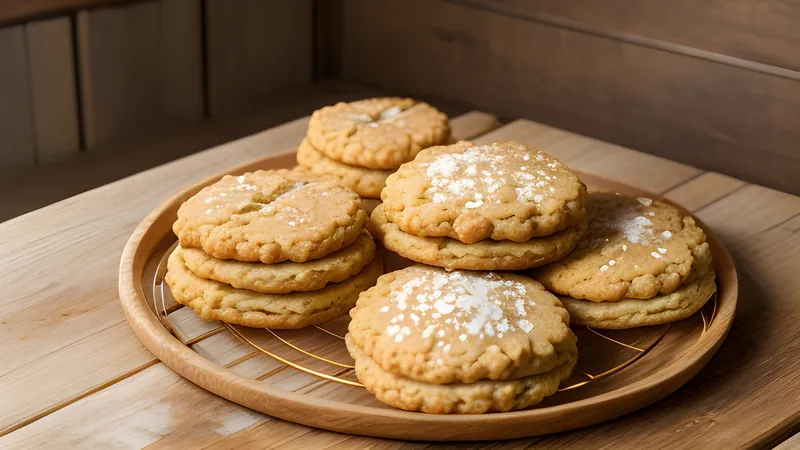
Salted Honey and Oat Biscuits
Ingredients
- 150g unsalted butter
- 100g runny honey
- 100g soft light brown sugar
- 1 large egg
- 150g porridge oats
- 175g plain flour
- 1/2 tsp bicarbonate of soda
- 1 tsp baking powder
- 3/4 tsp fine sea salt
- Flaky sea salt, for scattering
- 1 tbsp extra honey, for brushing
Method
- Preheat the oven to 175C fan and line two baking trays with parchment.
- Gently melt the butter with the honey in a small pan until just combined, then leave to cool for 10 minutes.
- Whisk the brown sugar into the warm honey butter, then beat in the egg until glossy.
- Stir in the oats, then fold in the flour, bicarbonate of soda, baking powder and fine salt to a soft dough.
- Roll the dough into 30g balls and space them well apart on the trays, then flatten each one slightly with damp fingers.
- Bake for 12 to 14 minutes until the edges are deep golden and the centres are set but still soft.
- Brush each hot biscuit with a little extra honey and scatter with flaky salt.
- Leave on the tray for 5 minutes to firm up, then cool fully on a wire rack.
These are the biscuits I bake when I want something honest and golden in the tin without much fuss: crisp at the edge, chewy in the middle, and tasting unmistakably of honey rather than just generic sweetness. Oats give them a homely, hearty bite, while a proper hit of flaky salt across the top stops the whole thing tipping into cloying. They are the sort of biscuit that goes with a mug of tea on a grey afternoon, but good enough that people ask for the recipe. There is nothing clever about them in the technical sense; the cleverness is in taking honey seriously and treating salt as an ingredient rather than an afterthought.
1 Honey as the headline, not a hint
Most honey-flavoured biscuits use honey as a vague background note, with the sugar doing the real lifting. I wanted the opposite. Here, honey makes up a third of the sweetness, melted gently with the butter so its floral character carries right through the dough, and then brushed on again while the biscuits are hot so the top tastes of it most of all. The kind of honey you choose genuinely shows. A mild, clear acacia or blossom honey keeps things delicate; a darker chestnut, heather or wildflower honey brings a deeper, almost caramelised, slightly bitter edge that I love against the oats. Avoid the squeezy supermarket blends that taste mostly of sweetness and little else, because there is nowhere for them to hide here.
Honey is also hygroscopic, meaning it holds on to moisture, which is part of why these biscuits stay chewy in the centre for days rather than drying to a snap overnight. It browns readily too, so they take on that gorgeous deep-gold colour faster than a plain sugar biscuit. Keep half an eye on the oven for the last few minutes; the line between perfectly golden and a shade too dark is a minute or two.
2 Why oats earn their place
Oats do more than make these feel virtuous. Porridge oats, the rolled kind, give a chewy, slightly nubbly texture and a toasty flavour that pairs naturally with honey, the same way a flapjack does. They also soak up some of the moisture from the honey and butter, which keeps the dough from spreading into thin, lacy biscuits. If you only have jumbo oats, give them a brief blitz in a processor so they are not too coarse, or the biscuits will struggle to hold together. I would not use instant oats; they turn to paste and you lose all the texture that makes these worth baking.
3 The salt that makes it sing
The defining touch is the flaky salt, scattered on after a glaze of warm honey. This is the same principle behind salted caramel and salted chocolate chip cookies: salt does not just season, it amplifies, throwing the sweetness and the honey’s floral notes into sharper relief. Because the salt sits on top in brittle flakes, you get little bursts of it against the soft, sweet crumb rather than an evenly salty biscuit. Use a proper flaky sea salt for this, the large pyramid-shaped flakes, not fine table salt, which would just dissolve in and make everything taste seasoned rather than thrilling.
The honey brush before salting is a small step that pays off twice. It glues the salt flakes in place so they do not roll off, and it lays down one more layer of honey flavour right where your tongue meets it first. Do it while the biscuits are hot so the honey loosens and spreads thinly.
4 Getting the texture you want
These are forgiving, but the bake time is where you steer them. Pull them at 12 minutes and they stay soft and chewy through the middle, more like an American cookie. Leave them to 14 and the centres firm up into a proper crisp British biscuit you can dunk without losing half of it to your tea. They firm considerably as they cool, so always judge by the colour of the edges, deep golden, rather than poking the soft middle. Let them rest on the tray for five minutes before moving; straight out of the oven they are too fragile to lift cleanly.
5 Keeping and varying them
Stored in an airtight tin they keep their chew for the best part of a week, and the flavour arguably improves on day two as the honey settles. For variations, a teaspoon of ground cinnamon or ginger in the dry mix makes them more autumnal, and a handful of toasted chopped walnuts or pecans folded in plays beautifully with both the honey and the oats. If you want them snappier still, roll the balls smaller and flatten them more before baking. But the plain version, honey and oats and salt, is the one I come back to, because there is nowhere for it to hide and nothing it needs to.
Related Content