Salted-Caramel Apple Crumble with an Oat-Almond Topping
Bubbling fruit under a crunchy lid
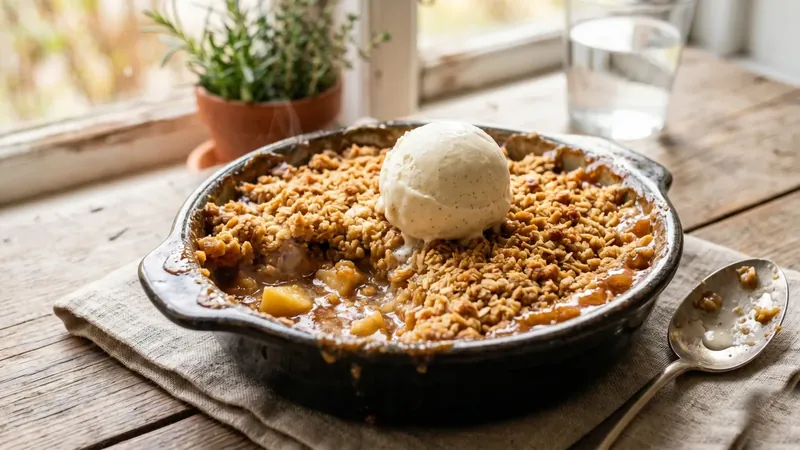
A proper apple crumble is hard to beat, but a layer of salted caramel poured over the fruit takes it somewhere special. The caramel melts into the apples as they soften, turning the juices glossy and rich, while the flaky sea salt keeps it from cloying. Up top, oats and flaked almonds give the crumble a deeper crunch than flour and butter alone. Serve it hot with cold custard or vanilla ice cream.
Salted-Caramel Apple Crumble with an Oat-Almond Topping
Ingredients
- 900g Bramley apples, peeled, cored and chopped
- 1 tbsp lemon juice
- 100g caster sugar (for the caramel)
- 50g unsalted butter (for the caramel)
- 75ml double cream
- 0.5 tsp flaky sea salt
- 150g plain flour
- 100g cold unsalted butter, cubed (for the topping)
- 75g soft light brown sugar
- 75g rolled oats
- 50g flaked almonds
Method
- Heat the oven to 180C fan. Toss the chopped apples with the lemon juice in a baking dish.
- For the caramel, melt the caster sugar in a dry pan until amber, then stir in the butter.
- Carefully pour in the double cream, whisk smooth, then stir in the flaky sea salt.
- Pour the salted caramel over the apples and turn to coat.
- Rub the cold cubed butter into the flour until it resembles breadcrumbs.
- Stir the brown sugar, oats and flaked almonds through the rubbed-in mixture.
- Scatter the topping evenly over the apples without pressing it down.
- Bake for 40 to 45 minutes until the topping is golden and the caramel bubbles at the edges. Rest for 10 minutes before serving.
3 The Story
The crumble is a thoroughly British pudding, and a relatively young one. It rose to popularity in the United Kingdom during the Second World War, when rationing made the pastry for a traditional pie a luxury few could justify. A rubbed-in topping of flour, fat and sugar stretched scarce ingredients much further than a full crust, and required neither the skill nor the butter that pastry demanded. The result was so good that it long outlived the shortages that created it, becoming a fixture of school dinners, Sunday lunches and pub menus.
The apple is the natural partner for a crumble, and Bramley apples in particular are the British baker’s standby. Bred in the early nineteenth century from a tree grown from a pip in Nottinghamshire, the Bramley is a true cooking apple: sharp, high in acid, and prone to collapsing into a fluffy purée when heated. That breakdown is exactly what a crumble wants, giving a soft, tart cushion of fruit beneath the crisp lid rather than firm slices that stay separate.
The salted caramel layer is a modern flourish. Caramel and apple have always been close companions, from toffee apples to tarte Tatin, where apples are cooked directly in a caramel in the pan. Pouring a soft caramel over the fruit before baking borrows that affinity and threads it through the whole dish. The salt is not just for seasoning; it sharpens and lengthens the caramel flavour, tempering the sweetness so the pudding tastes balanced rather than sugary.
The topping has been given more texture than the classic version too. Rolled oats add a chewy, toasted bite as they crisp in the oven, while flaked almonds turn golden and brittle, scenting the whole dish as it bakes. Both are common additions to crumbles across the country, where every household seems to have its own preferred ratio.
The key to a good crumble lies in restraint with the topping. Scattering it loosely, rather than packing it down, lets steam escape and keeps the surface crunchy. Pressed too firmly, it bakes into a solid cap. Left airy, it shatters under the spoon into the bubbling, caramel-rich fruit below, which is exactly where this pudding earns its keep.
Related Content