Salsa Verde, Italian-Style, with Capers
The green sauce that fixes everything, hand-chopped and given a sharp edge of fresh horseradish.
Contents
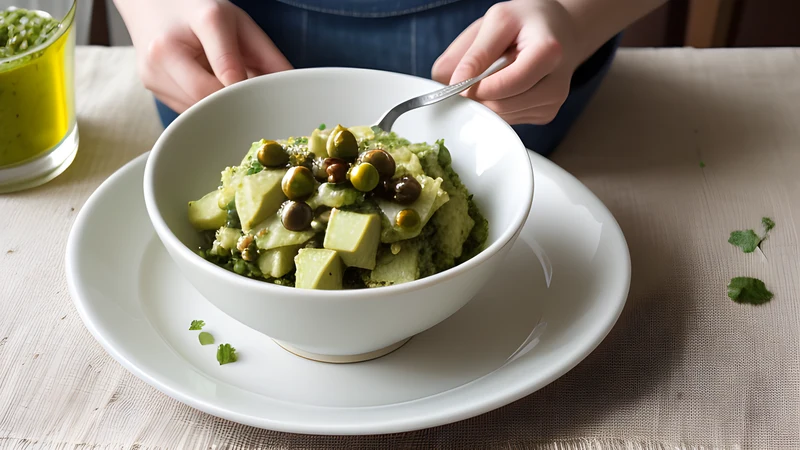
↓ Jump to recipeSalsa verde is the green sauce I make more than any other, because it rescues almost anything. A dull roast chicken, a plain piece of grilled fish, boiled potatoes, a slab of poached beef, a fried egg — all of them come alive under a spoonful of this: bright, salty, herbal and sharp, with the capers and anchovy providing a savoury depth that keeps it from being merely a herb dressing. The Italian version is coarser and punchier than its French cousins, and the small change that makes this one sing is a teaspoon of freshly grated horseradish, which adds a clean, sinus-lifting heat that plays beautifully against the parsley and cuts through anything rich.
Salsa Verde, Italian-Style, with Capers
Ingredients
- 1 large bunch flat-leaf parsley (about 60g), leaves and fine stalks
- 2 tbsp capers in brine (about 20g), drained
- 4 anchovy fillets in oil, drained
- 1 small garlic clove
- 1 tsp Dijon mustard
- 1 tsp finely grated fresh horseradish (or 1 tsp jarred horseradish, drained)
- 1 tbsp red wine vinegar
- 120ml extra-virgin olive oil
- A handful of basil or mint leaves (optional, about 10g)
- Flaky sea salt and black pepper
Method
- Wash and thoroughly dry the parsley — wet herbs make a watery sauce that splits. Pick the leaves and the finer, tender stalks; discard only the thick, woody lower stems.
- Pile the parsley on a large chopping board with the capers, anchovies and peeled garlic. Chop everything together, gathering and re-chopping the pile several times, until it is finely and evenly minced but still has visible texture — you want flecks, not a purée.
- Scrape the chopped mixture into a bowl. Stir in the Dijon mustard, grated horseradish and red wine vinegar.
- Add the olive oil a little at a time, stirring with a spoon, until you have a loose, spoonable sauce that just holds together. Do not use a blender — it turns the sauce muddy green and bitter.
- Taste. The anchovies and capers bring a lot of salt, so season carefully — a little flaky salt if it needs lifting, plenty of black pepper. Add a touch more vinegar if it needs sharpening.
- Stir in the optional basil or mint at the last minute if using. Rest the sauce for 15–20 minutes before serving so the flavours meld; it is best the day it is made but keeps overnight.
The green sauce with a very long memory
Green herb sauces are ancient, and versions turn up all across Europe under different names, but the Italian salsa verde has a particularly deep history in the north, especially Piedmont and Lombardy, where it is the traditional partner to bollito misto — the grand boiled-meat feast of mixed cuts, tongue, sausage and capon simmered slowly and served from a trolley with a row of condiments. Salsa verde is the essential one on that trolley, its sharpness the counterweight to all that soft, rich boiled meat. The pairing is so established that a good bollito without a good salsa verde beside it would be considered half-dressed.
The sauce’s building blocks tell you about preservation before refrigeration. Anchovies, capers and vinegar are all ways of holding onto flavour through a long winter, and salsa verde folds all three into a single condiment alongside the first fresh green herbs of the season. Capers themselves are the unopened flower buds of the caper bush, Capparis spinosa, which grows wild across the Mediterranean in the cracks of walls and rocky ground; the buds are picked by hand before they flower and cured in salt or brine, which develops their distinctive sharp, floral, faintly mustardy tang. The tiny ones (nonpareil) are prized, though the larger ones chop up perfectly well for this.
There is a persistent argument, the sort I enjoy, about whether salsa verde should contain bread. Some old recipes call for a slice of stale bread soaked in vinegar and squeezed out, then chopped into the herbs to soften and bind the sauce. It makes a rounder, gentler version, and it is genuinely traditional in parts of Italy. I leave it out here because I like the sauce loose and sharp, but if you find this version too fierce, a little soaked bread tames it without dulling the flavour.
Why you chop it by hand, and why horseradish belongs here
The single most important instruction in this recipe is to chop by hand and never blitz. A food processor seems like the obvious shortcut, and it is a trap. Blades bruise the parsley and whip air into the oil, which does two things: it turns the sauce a dull, muddy khaki instead of a lively green, and it releases bitter compounds from the herbs that make the finished sauce taste harsh and grassy. Hand-chopping keeps the leaf cells more intact, so the sauce stays bright green and the flavour clean. It takes five minutes with a big knife and a big board, and it is worth every second.
Drying the parsley properly is the other quiet make-or-break step. Water and oil do not mix, so any moisture clinging to the leaves will cause the finished sauce to separate into a puddle, with a thin green liquid weeping out around the herbs. Wash the parsley well — it is often gritty — then dry it thoroughly in a salad spinner or between clean tea towels before you chop. This is the difference between a sauce that sits glossy and cohesive on the plate and one that slumps into a watery mess.
The horseradish is the twist, and it earns its place. Horseradish and beef are old friends, so a horseradish note in the sauce you serve with boiled or roast beef is a natural extension of a pairing everyone already trusts. Grated fresh from the root it brings a volatile, mustardy heat that hits the back of the nose and fades quickly, lifting the whole sauce without adding lasting fire. Grate it just before using, because that heat starts to dissipate within an hour of grating; if you only have the jarred sort, drain it well so it does not thin the sauce, and expect a milder effect.
The recipe
Makes about 250ml, enough for six. Prep 15 minutes, no cooking.
Ingredients
- 1 large bunch flat-leaf parsley (about 60g)
- 2 tbsp capers, drained
- 4 anchovy fillets, drained
- 1 small garlic clove
- 1 tsp Dijon mustard
- 1 tsp freshly grated horseradish
- 1 tbsp red wine vinegar
- 120ml extra-virgin olive oil
- Optional basil or mint
- Flaky salt and black pepper
Method
Wash and thoroughly dry the parsley, keeping the leaves and fine stalks. Pile it on a big board with the capers, anchovies and garlic, and chop everything together, gathering and re-chopping several times, until finely minced but still flecked with texture. Scrape into a bowl and stir in the mustard, horseradish and vinegar. Add the oil a little at a time, stirring, until loose and just holding together. Taste and season carefully — the anchovies and capers are salty — adding black pepper and a touch more vinegar if needed. Stir in the optional basil or mint at the end, and rest for 15–20 minutes before serving.
Tips, substitutions and storage
Salt is the thing to watch, because the salt is already built into the ingredients. Anchovies, capers and horseradish all carry it, so always taste before adding any, and add flaky salt only at the very end and only if the sauce genuinely needs lifting. If you overshoot, an extra squeeze of oil and a few more chopped parsley leaves will pull it back.
For a vegetarian version, drop the anchovies and add an extra tablespoon of capers plus a small pinch of salt — you lose some savoury depth, so a scant teaspoon of white miso stirred through restores the umami convincingly. If you dislike horseradish, a little grated lemon zest gives a different but equally welcome lift.
Salsa verde is best the day it is made, while the herbs are at their brightest, but it keeps in the fridge for up to two days under a thin film of oil; the colour dulls slightly and the horseradish softens, though the flavour stays good. Bring it back to room temperature and give it a brisk stir before serving. It does not freeze — the parsley collapses to a slime on thawing.
What to spoon it over
This is a sauce that wants to be used generously. Its natural home is with boiled or grilled meat and fish, but it is just as good over roast new potatoes, folded through white beans or lentils, spooned onto grilled bread, or stirred into a plain grain bowl to wake it up. It sits happily on a table of sauces beside a nutty, brick-red romesco — the two together will dress almost any spread of grilled vegetables or fish. For a herb-forward, creamy contrast on the same table, a cool green goddess dressing makes a fine companion, sharing the anchovy backbone but going soft and rich where salsa verde goes sharp. Make it once and you will find yourself reaching for it every week.
Related Content