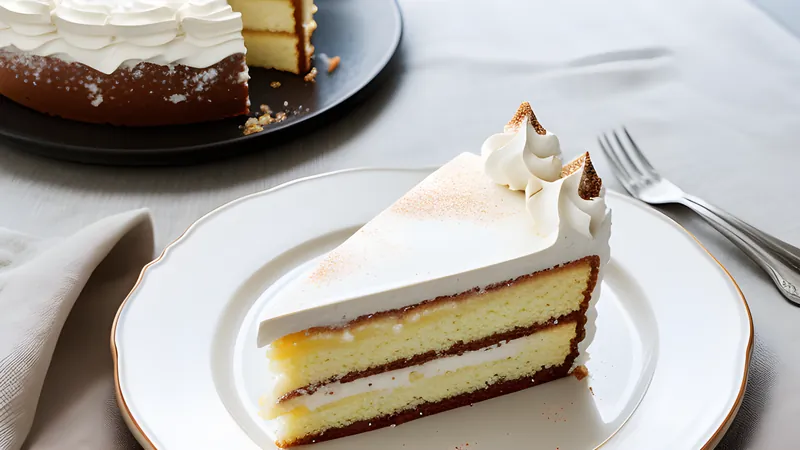
Sally Lunn Bun with Clotted Cream
Bath's giant brioche-brioche, split and buttered while warm
Contents
↓ Jump to recipeThere is a bun in Bath that has been arguing with history for three hundred years, and it is delicious enough that nobody minds who wins. The Sally Lunn is a tall, pale, faintly sweet enriched bread, somewhere between a brioche and a very good teacake, baked in a round and served split and buttered while still warm. It arrives at the table looking almost plain, and then you tear it and the crumb is so tender and eggy that the argument about where it came from suddenly seems beside the point. My one change to the traditional method is a small pan of brown butter worked into the dough, which gives the crumb a background hum of toasted hazelnut that clotted cream sets off perfectly.
Sally Lunn Bun with Clotted Cream
Ingredients
- 60g unsalted butter
- 150ml whole milk
- 7g fast-action dried yeast (1 sachet)
- 400g strong white bread flour
- 40g caster sugar
- 7g fine salt
- 3 medium eggs, at room temperature
- 1 egg yolk beaten with 1 tbsp milk, to glaze
- Clotted cream and good jam, to serve
Method
- Melt the butter in a small pan over a medium heat and keep cooking, swirling, until it smells nutty and the milk solids turn golden-brown, about 4 minutes. Pour into a bowl and cool for 10 minutes.
- Warm the milk to blood temperature, stir in the yeast and a pinch of the sugar, and leave for 5 minutes until foamy.
- In a large bowl or stand mixer, combine the flour, remaining sugar and salt. Add the yeasty milk, the eggs and the cooled brown butter.
- Mix to a shaggy dough, then knead for 8 to 10 minutes by machine (or 12 by hand) until smooth, glossy and elastic. It is a soft, slightly sticky dough; resist adding flour.
- Cover and prove at room temperature for 1.5 to 2 hours until doubled and puffy.
- Knock back gently. For one large bun, shape into a smooth ball and drop into a buttered 15cm round deep tin or cake tin. For individual buns, divide into 6 and place in a lined muffin tin or on a tray.
- Cover loosely and prove again for 45 to 60 minutes until risen to fill the tin and wobbly to a nudge.
- Brush with the egg-yolk glaze. Bake at 180C fan for 28 to 32 minutes (18 to 20 for individuals) until deep golden and hollow-sounding underneath. Cover with foil if browning too fast.
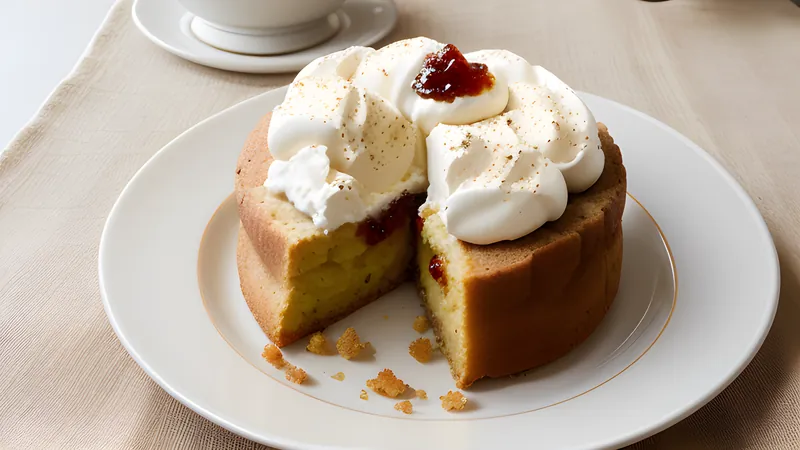
- Cool for 15 minutes, then turn out. Split horizontally while still warm, toast the cut sides if you like, and heap with clotted cream and jam.
A bun with a disputed birth certificate
The romantic story, told on tea-room placemats across Somerset, is that a young Huguenot refugee named Solange Luyon fled religious persecution in France in the 1680s, arrived in Bath, found work in a bakery on Lilliput Alley, and began making a rich brioche-style bread the locals could not pronounce, so “Solange Luyon” softened into “Sally Lunn”. It is a lovely tale and there is a house in Bath, one of the oldest in the city, that trades happily on it.
The trouble is that no contemporary record of any Solange Luyon has ever surfaced, and food historians tend to raise an eyebrow. The earliest printed references to “Sally Lunn” as a cake or bread appear in the 1770s and 1780s, decades after the supposed refugee. A likelier root is the French soleil et lune, sun and moon, describing a bread with a golden domed top and a paler base, or simply that Sally Lunn was a real Bath baker or hawker whose name attached to her wares. William Dawe advertised “Sally Lunn” cakes in Bath newspapers in the 1780s, and by the Regency period they were a fashionable part of the city’s tea-drinking, spa-visiting social whirl. Jane Austen, who lived in Bath and grumbled about it, would have known them.
What is beyond dispute is the bread itself: a lightly enriched yeast dough, richer than a teacake but leaner than a full brioche, baked tall and served warm. It belongs to the same broad British family as the Cornish saffron bun and the fruited Bara Brith, all of them descendants of the moment enriched breads became affordable enough for ordinary teatime. The Sally Lunn is the plainest and, to my mind, the most versatile of the three, because it takes savoury toppings as happily as sweet.
Why brown butter, and why so many eggs
The character of a Sally Lunn lives in its enrichment. Three whole eggs to 400g of flour is a lot, and they do real work: the yolks bring fat and emulsifiers that keep the crumb soft for days, while the whites set into a fine, cottony structure that tears in sheets rather than crumbs. If you have made tangzhong milk rolls you already know how far enrichment can push softness; the Sally Lunn gets there by richness alone, without a flour paste.
Browning the butter first is my small liberty, and it earns its place. Ordinary melted butter gives you fat and little else. Brown butter has been transformed: as it heats past the point where the water boils off, the milk proteins and lactose caramelise into hundreds of new aromatic compounds, the nutty, biscuity smell that makes brown butter cakes so good. Worked into an otherwise gently flavoured dough, it reads not as “buttery” but as toasted and faintly caramel, which is exactly the direction a warm bun heading for clotted cream wants to go. You lose a little water in the browning, so the milk quantity is set to account for it.
Do not skip the room-temperature eggs. Cold eggs straight from the fridge will seize the brown butter and slow the yeast, and a sluggish first prove is the difference between a tall, airy bun and a dense one.
Method, in more detail
Get the dough properly developed. This is a wet, enriched dough and it needs a strong gluten network to trap gas and hold that tall shape, so knead until it passes a windowpane test: a walnut of dough stretched between your fingers should go thin and translucent without tearing. In a stand mixer this takes eight to ten minutes on medium; by hand, closer to twelve, using a slap-and-fold rhythm rather than adding flour. The dough will be tacky throughout. That tack is the enrichment, and flouring it away gives you a drier, tighter crumb.
The first prove wants to be generous. Enriched doughs rise more slowly than lean ones because the fat coats the gluten and the sugar competes with the yeast for water, so give it the full two hours if your kitchen is cool. You are looking for a clear doubling and a dough that feels billowy.
For shaping, decide early whether you want the showpiece or the practical version. The traditional Bath article is a single large bun baked in a round tin and cut into wedges at the table, which looks magnificent and stays moist. Individual buns in a muffin tin are easier to portion and freeze. Either way, shape with a tight surface: for the big bun, cup and drag the ball on an unfloured surface to build tension so it rises up rather than out.
Bake until it is properly deep gold and sounds hollow when you tap the base. Underbaking is the classic Sally Lunn error, because the pale, plush look tempts you to pull it early, and then the centre gum-lines. A large bun genuinely needs close to half an hour; an instant-read thermometer should show 92 to 94C in the middle.
The clotted cream question
Serve it warm, split horizontally, with clotted cream and jam. Real Devon or Cornish clotted cream, with its wrinkled crust and 55 per cent-plus fat, is the honest partner here, thick enough to sit on the warm crumb without sliding off and rich enough to stand up to the eggy bread. Toast the cut sides briefly under a grill if you like a little contrast; the caramelised surface against cool cream is very good.
The old Bath tradition splits the bun into a “top” and “bottom” and butters both simply, sometimes with a spiced or lemon butter rather than cream. That is worth knowing because it points to the Sally Lunn’s real trick: it is a blank, beautiful canvas. I have taken a savoury half, toasted it, and used it as the base for poached eggs and hollandaise in the manner of proper English muffins, and it was arguably better than the muffin because the crumb is finer.
Tips, storage and variations
Make-ahead. After the first prove, you can refrigerate the shaped dough overnight; the cold slows the yeast and deepens the flavour. Bring it back to room temperature and let it complete its second prove before baking, which will take longer than an hour from cold.
Storage. Sally Lunns stay soft for two or three days in a tin thanks to the enrichment. Refresh a day-old bun by warming it through in a low oven for five minutes; the fat re-softens and it tastes freshly baked. They freeze beautifully sliced, so you can toast portions straight from frozen.
Lemon and spice. Add the finely grated zest of a lemon and half a teaspoon of ground mace to the dough for a Regency-leaning version that goes especially well with a sharp jam.
Savoury. Leave the sugar at 20g, add a good grind of black pepper, and you have a bun that makes an outrageous bacon sandwich or a base for melted cheese.
Troubleshooting. A dense, low bun almost always means an under-proved or under-kneaded dough, or eggs and butter that went in cold. A bun that domes and then collapses was over-proved, so the gluten stretched past its strength before the oven could set it. Aim for a second prove that is puffy and wobbly but still has a little spring left when you press it.
Three centuries of Bath tea-rooms have not settled the question of who Sally Lunn was, and I suspect they never will. What they have settled is that a tall, tender, brown-buttered bun, split while warm and heaped with clotted cream, is one of the finest things you can put on a plate at four in the afternoon. Bake one large enough to cut at the table and let the history look after itself.
Related Content